Nwankwo Eugene C, Chen Fangyu, Nettles Dana L, Adams Samuel B
Department of Orthopaedic Surgery, Duke University Medical Center, USA.
Case Rep Orthop. 2019 Nov 26;2019:7571013. doi: 10.1155/2019/7571013. eCollection 2019.
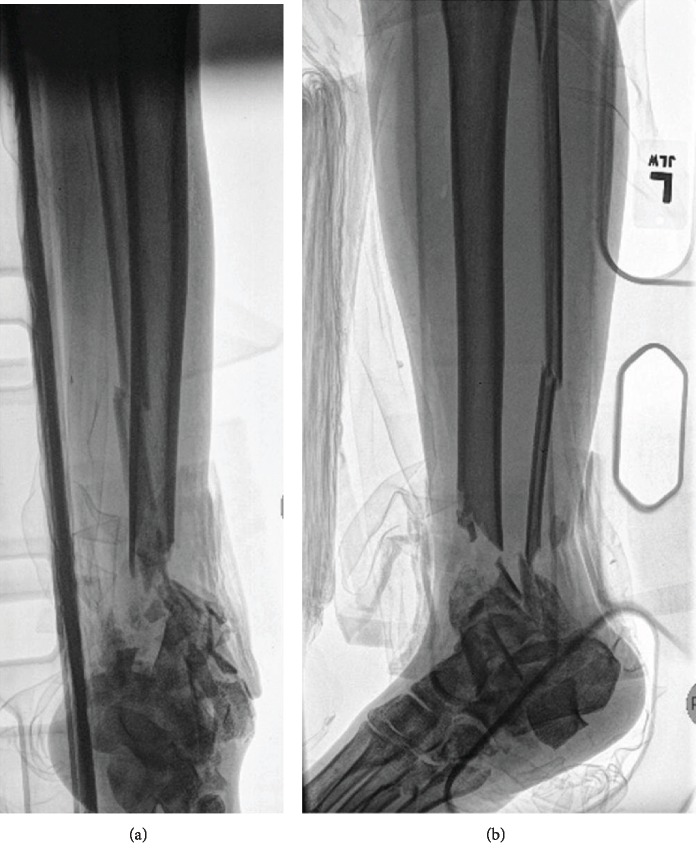
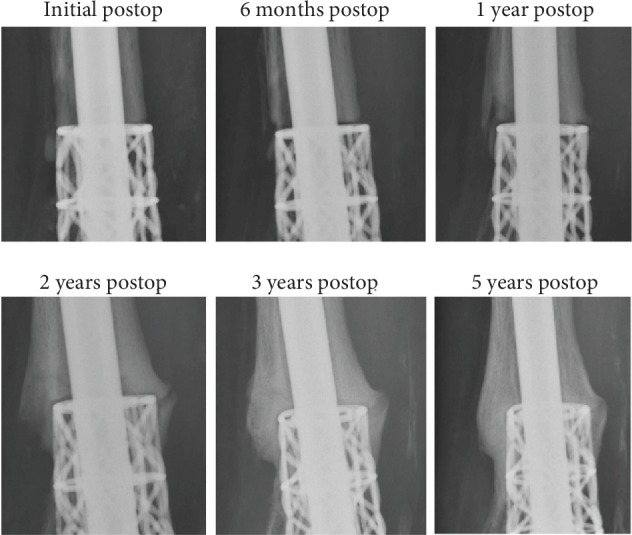
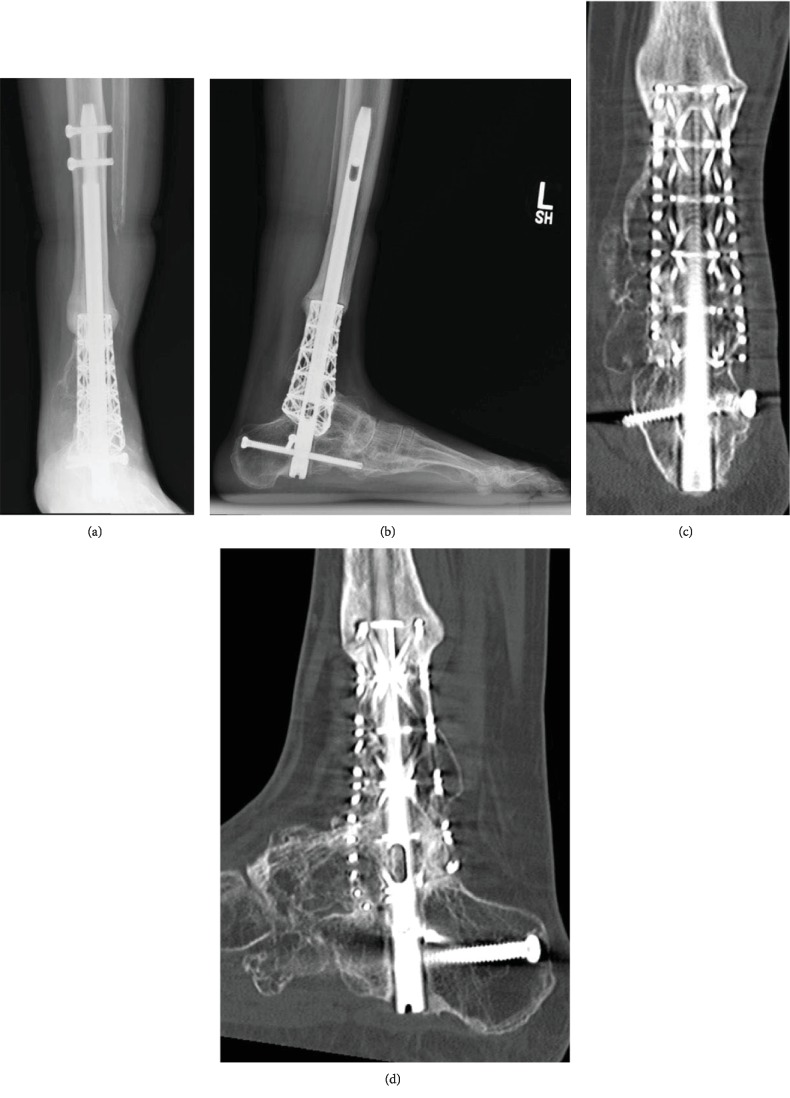
Large bone defects from trauma or cancer are difficult to treat. Current treatment options include the use of external fixation with bone transport, bone grafting, or amputation. These modes of therapy continue to pose challenges as they are associated with high cost, failure, and complication rates. In this study, we report a successful case of bone defect treatment using personalized 3D-printed implant. This is the longest known follow-up using a 3D-printed custom implant for this specific application. Ultimately, this report adds to existing literature as it demonstrates successful and maintained incorporation of bone into the titanium implant. The use of patient-specific 3D-printed implants adds to the available arsenal to treat complex pathologies of the foot and ankle. Moreover, the technology's flexibility and ease of customization makes it conducive to tailor to specific patient needs.
创伤或癌症导致的大骨缺损难以治疗。目前的治疗选择包括采用骨搬运的外固定、骨移植或截肢。这些治疗方式仍然存在挑战,因为它们伴随着高成本、失败率和并发症发生率。在本研究中,我们报告了一例使用个性化3D打印植入物成功治疗骨缺损的病例。这是已知针对该特定应用使用3D打印定制植入物的最长随访。最终,本报告丰富了现有文献,因为它证明了骨成功且持续地融入钛植入物。使用患者特异性3D打印植入物增加了治疗足踝复杂病变的可用手段。此外,该技术的灵活性和易于定制使其有利于根据特定患者的需求进行定制。