• 文献检索
  • 文档翻译
  • 深度研究
  • 学术资讯
  • Suppr Zotero 插件Zotero 插件
  • 邀请有礼
  • 套餐&价格
  • 历史记录
应用&插件
Suppr Zotero 插件Zotero 插件浏览器插件Mac 客户端Windows 客户端微信小程序
定价
高级版会员购买积分包购买API积分包
服务
文献检索文档翻译深度研究API 文档MCP 服务
关于我们
关于 Suppr公司介绍联系我们用户协议隐私条款
关注我们

Suppr 超能文献

核心技术专利:CN118964589B侵权必究
粤ICP备2023148730 号-1Suppr @ 2026

文献检索

告别复杂PubMed语法,用中文像聊天一样搜索,搜遍4000万医学文献。AI智能推荐,让科研检索更轻松。

立即免费搜索

文件翻译

保留排版,准确专业,支持PDF/Word/PPT等文件格式,支持 12+语言互译。

免费翻译文档

深度研究

AI帮你快速写综述,25分钟生成高质量综述,智能提取关键信息,辅助科研写作。

立即免费体验

预测针对精神病的在线心理社会干预的参与度:探索个体层面和干预层面的预测因素。

Predicting engagement with an online psychosocial intervention for psychosis: Exploring individual- and intervention-level predictors.

作者信息

Arnold Chelsea, Villagonzalo Kristi-Ann, Meyer Denny, Farhall John, Foley Fiona, Kyrios Michael, Thomas Neil

机构信息

Centre for Mental Health, Swinburne University of Technology, Melbourne, Australia.

Department of Psychology and Counselling, La Trobe University, Melbourne, Australia.

出版信息

Internet Interv. 2019 Aug 15;18:100266. doi: 10.1016/j.invent.2019.100266. eCollection 2019 Dec.

DOI:10.1016/j.invent.2019.100266
PMID:31890619
原文链接:https://pmc.ncbi.nlm.nih.gov/articles/PMC6926321/
Abstract

BACKGROUND

Individuals with psychosis demonstrate positive attitudes towards utilising digital technology in mental health treatment. Although preliminary research suggests digital interventions are feasible and acceptable in this population, little is known about how to best promote engagement with these resources. Candidate predictors include therapist support, sources of motivation and recovery style. Understanding what factors predict engagement will aid more effective design and implementation of digital interventions to improve clinical benefits.

OBJECTIVE

This study aimed to investigate demographic, psychological, and treatment variables that predict overall and type of engagement with a psychosocial, online intervention for individuals with psychosis.

METHODS

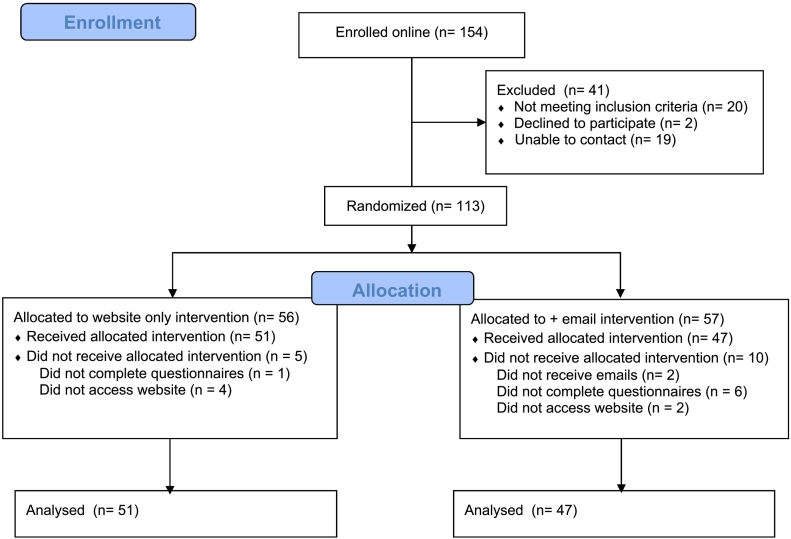
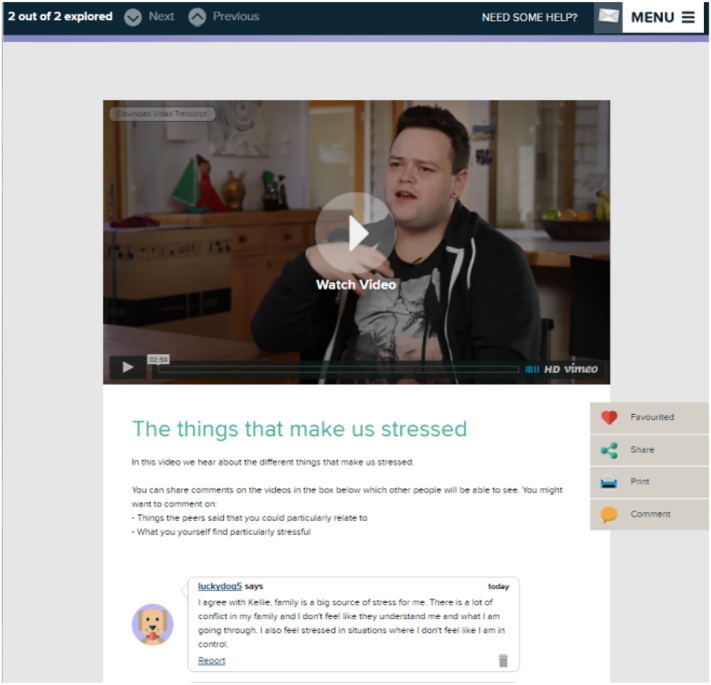
Ninety-eight participants with a history of psychosis were given access to a web program containing modules on self-management and recovery, which they were asked to use flexibly at their own pace. Activity was automatically logged by the system. Baseline measures of demographics, recovery style and motivation were administered, and participants were randomised to receive either website access alone, or website access plus weekly, asynchronous emails from an online coach over 12 weeks. Log and baseline assessment data were used in negative binomial regressions to examine predictors of depth and breadth of use over the intervention period. A logistic regression was used to examine the impact of predictor variables on usage profiles (active or passive).

RESULTS

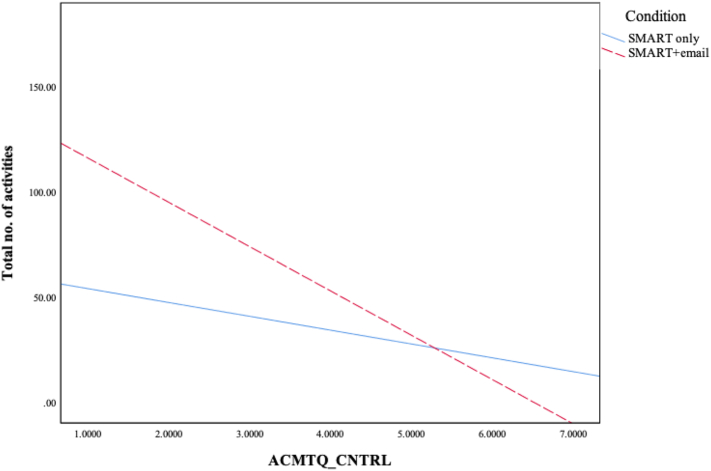
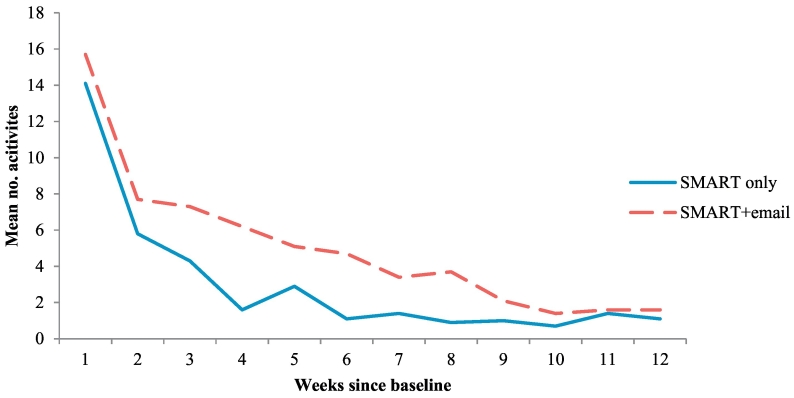
Depth and breadth of engagement were positively predicted by receiving email support, low levels of externally controlled motivations for website use, older age, and having a tertiary education. There was a significant interaction between level of controlled motivation and condition (+/-email) on breadth and depth of engagement: receiving asynchronous emails was associated with increased engagement for individuals with low, but not high, levels of externally controlled motivations. Receiving email support and more autonomous motivations for treatment predicted more active use of the website.

CONCLUSIONS

Asynchronous email support can promote engagement with online interventions for individuals with psychosis, potentially enabling self-management of illness and improving clinical outcomes. However, those using online interventions due to external motivating factors, may have low levels of engagement with the intervention, irrespective of coaching provided. These findings may guide design and implementation of future online interventions in this population.

摘要

背景

患有精神病的个体对在心理健康治疗中使用数字技术持积极态度。尽管初步研究表明数字干预在该人群中是可行且可接受的,但对于如何最好地促进对这些资源的参与了解甚少。候选预测因素包括治疗师支持、动机来源和康复方式。了解哪些因素可预测参与度将有助于更有效地设计和实施数字干预措施,以提高临床效益。

目的

本研究旨在调查预测患有精神病的个体对心理社会在线干预的总体参与度和参与类型的人口统计学、心理和治疗变量。

方法

98名有精神病病史的参与者可以访问一个包含自我管理和康复模块的网络程序,要求他们按照自己的节奏灵活使用。系统自动记录活动情况。进行了人口统计学、康复方式和动机的基线测量,参与者被随机分为仅获得网站访问权限,或在12周内获得网站访问权限并加上来自在线教练的每周异步电子邮件。日志和基线评估数据用于负二项回归,以检查干预期间使用深度和广度的预测因素。使用逻辑回归来检查预测变量对使用情况(主动或被动)的影响。

结果

收到电子邮件支持、网站使用的外部控制动机水平较低、年龄较大和拥有高等教育学历可正向预测参与的深度和广度。在参与的广度和深度方面,控制动机水平与条件(有无电子邮件)之间存在显著交互作用:对于外部控制动机水平低而非高的个体,收到异步电子邮件与参与度增加相关。收到电子邮件支持和更多自主治疗动机可预测对网站的更积极使用。

结论

异步电子邮件支持可促进患有精神病的个体对在线干预的参与,可能有助于疾病的自我管理并改善临床结果。然而,那些由于外部激励因素而使用在线干预的人,无论提供何种指导,对干预的参与度可能都较低。这些发现可能会指导该人群未来在线干预措施的设计和实施。
https://cdn.ncbi.nlm.nih.gov/pmc/blobs/4e94/6926321/b569a0b43527/gr4.jpg
https://cdn.ncbi.nlm.nih.gov/pmc/blobs/4e94/6926321/51789e170938/gr1.jpg
https://cdn.ncbi.nlm.nih.gov/pmc/blobs/4e94/6926321/0c22fbcbfaf7/gr2.jpg
https://cdn.ncbi.nlm.nih.gov/pmc/blobs/4e94/6926321/411efea557cc/gr3.jpg
https://cdn.ncbi.nlm.nih.gov/pmc/blobs/4e94/6926321/b569a0b43527/gr4.jpg
https://cdn.ncbi.nlm.nih.gov/pmc/blobs/4e94/6926321/51789e170938/gr1.jpg
https://cdn.ncbi.nlm.nih.gov/pmc/blobs/4e94/6926321/0c22fbcbfaf7/gr2.jpg
https://cdn.ncbi.nlm.nih.gov/pmc/blobs/4e94/6926321/411efea557cc/gr3.jpg
https://cdn.ncbi.nlm.nih.gov/pmc/blobs/4e94/6926321/b569a0b43527/gr4.jpg

相似文献

1
Predicting engagement with an online psychosocial intervention for psychosis: Exploring individual- and intervention-level predictors.预测针对精神病的在线心理社会干预的参与度:探索个体层面和干预层面的预测因素。
Internet Interv. 2019 Aug 15;18:100266. doi: 10.1016/j.invent.2019.100266. eCollection 2019 Dec.
2
Randomised controlled trial of a digitally assisted low intensity intervention to promote personal recovery in persisting psychosis: SMART-Therapy study protocol.一项关于数字辅助低强度干预促进持续性精神病患者个人康复的随机对照试验:SMART-疗法研究方案。
BMC Psychiatry. 2016 Sep 7;16(1):312. doi: 10.1186/s12888-016-1024-1.
3
Engaging With a Web-Based Psychosocial Intervention for Psychosis: Qualitative Study of User Experiences.参与基于网络的精神病心理社会干预:用户体验的定性研究。
JMIR Ment Health. 2020 Jun 19;7(6):e16730. doi: 10.2196/16730.
4
Social recovery therapy for young people with emerging severe mental illness: the Prodigy RCT.针对有严重精神疾病早期症状的年轻人的社会康复治疗:Prodigy RCT 研究。
Health Technol Assess. 2021 Nov;25(70):1-98. doi: 10.3310/hta25700.
5
A web-based, peer-supported self-management intervention to reduce distress in relatives of people with psychosis or bipolar disorder: the REACT RCT.一项基于网络的、由同行支持的自我管理干预措施,旨在减轻精神病或双相情感障碍患者亲属的痛苦:REACT RCT。
Health Technol Assess. 2020 Jun;24(32):1-142. doi: 10.3310/hta24320.
6
Engagement with online psychosocial interventions for psychosis: A review and synthesis of relevant factors.参与针对精神病的在线心理社会干预:相关因素的综述与综合分析
Internet Interv. 2021 Jun 5;25:100411. doi: 10.1016/j.invent.2021.100411. eCollection 2021 Sep.
7
8
Demographic, behavioral, and psychosocial correlates of using the website component of a worksite physical activity and healthy nutrition promotion program: a longitudinal study.工作场所身体活动与健康营养促进项目网站组件使用情况的人口统计学、行为学和社会心理相关因素:一项纵向研究
J Med Internet Res. 2010 Sep 30;12(3):e44. doi: 10.2196/jmir.1402.
9
A contingency management intervention to reduce cannabis use and time to relapse in early psychosis: the CIRCLE RCT.一项旨在减少早期精神病患者大麻使用和复发时间的权变管理干预措施:CIRCLE RCT。
Health Technol Assess. 2019 Aug;23(45):1-108. doi: 10.3310/hta23450.
10
Structured, intensive education maximising engagement, motivation and long-term change for children and young people with diabetes: a cluster randomised controlled trial with integral process and economic evaluation - the CASCADE study.结构化、强化教育最大限度地提高糖尿病患儿和青少年的参与度、积极性和长期改变:一项具有整体过程和经济评估的群组随机对照试验 - CASCADE 研究。
Health Technol Assess. 2014 Mar;18(20):1-202. doi: 10.3310/hta18200.

引用本文的文献

1
Applying models of self-regulated learning to understand engagement with digital health interventions: a narrative review.应用自我调节学习模型来理解对数字健康干预措施的参与度:一项叙述性综述。
Front Digit Health. 2025 May 9;7:1380088. doi: 10.3389/fdgth.2025.1380088. eCollection 2025.
2
Psychosocial Interventions in the Rehabilitation and the Management of Psychosis and Schizophrenia: A Systematic Review on Digitally-Delivered Interventions.精神病和精神分裂症康复与管理中的心理社会干预:关于数字交付干预的系统评价
Actas Esp Psiquiatr. 2025 Mar;53(2):379-421. doi: 10.62641/aep.v53i2.1851.
3
Feasibility, acceptability and preliminary clinical outcomes of a brief coping-focused intervention for delusions blended with smartphone-based ecological momentary assessment and intervention in persons with schizophrenia spectrum disorders: A pilot single-arm trial.

本文引用的文献

1
Examining Predictors of Real-World User Engagement with Self-Guided eHealth Interventions: Analysis of Mobile Apps and Websites Using a Novel Dataset.考察现实世界中用户对自我引导式电子健康干预措施的参与度预测因素:使用新数据集对移动应用程序和网站进行分析。
J Med Internet Res. 2018 Dec 14;20(12):e11491. doi: 10.2196/11491.
2
Real-World Technology Use Among People With Mental Illnesses: Qualitative Study.精神疾病患者的现实世界技术使用情况:定性研究
JMIR Ment Health. 2018 Nov 23;5(4):e10652. doi: 10.2196/10652.
3
Measuring Engagement in eHealth and mHealth Behavior Change Interventions: Viewpoint of Methodologies.
针对精神分裂症谱系障碍患者妄想的简短应对聚焦干预与基于智能手机的生态瞬时评估和干预相结合的可行性、可接受性及初步临床结果:一项单臂试点试验。
Internet Interv. 2025 Jan 27;39:100804. doi: 10.1016/j.invent.2025.100804. eCollection 2025 Mar.
4
Barriers and Facilitators of User Engagement With Digital Mental Health Interventions for People With Psychosis or Bipolar Disorder: Systematic Review and Best-Fit Framework Synthesis.精神病或双相情感障碍患者对数字心理健康干预措施的参与障碍与促进因素:系统评价与最佳拟合框架综合分析
JMIR Ment Health. 2025 Jan 20;12:e65246. doi: 10.2196/65246.
5
Smartphone-based serious games for mental health: a scoping review.基于智能手机的心理健康严肃游戏:一项范围综述。
Multimed Tools Appl. 2024;83(36):84047-84094. doi: 10.1007/s11042-024-18971-w. Epub 2024 Apr 6.
6
Leveraging Personal Technologies in the Treatment of Schizophrenia Spectrum Disorders: Scoping Review.利用个人技术治疗精神分裂谱系障碍:范围综述。
JMIR Ment Health. 2024 Sep 30;11:e57150. doi: 10.2196/57150.
7
The engagement problem: A review of engagement with digital mental health interventions and recommendations for a path forward.参与度问题:关于数字心理健康干预措施参与度的综述及未来发展路径建议
Curr Treat Options Psychiatry. 2023 Sep;10(3):119-135. doi: 10.1007/s40501-023-00297-3. Epub 2023 Aug 25.
8
Dance/movement therapy for improving metabolic parameters in long-term veterans with schizophrenia.舞蹈/动作疗法对改善长期患精神分裂症退伍军人的代谢参数的作用
Schizophrenia (Heidelb). 2024 Feb 22;10(1):23. doi: 10.1038/s41537-024-00435-7.
9
Development of a digital intervention for psychedelic preparation (DIPP).一种用于迷幻剂准备的数字干预措施(DIPP)的开发。
Sci Rep. 2024 Feb 19;14(1):4072. doi: 10.1038/s41598-024-54642-4.
10
Perinatal Women's Perspectives of, and Engagement in, Digital Emotional Well-Being Training: Mixed Methods Study.围产期妇女对数字情绪健康培训的看法和参与情况:混合方法研究。
J Med Internet Res. 2023 Oct 17;25:e46852. doi: 10.2196/46852.
衡量电子健康和移动健康行为改变干预中的参与度:方法论视角
J Med Internet Res. 2018 Nov 16;20(11):e292. doi: 10.2196/jmir.9397.
4
Single-Session Mobile-Augmented Intervention in Serious Mental Illness: A Three-Arm Randomized Controlled Trial.单疗程移动增强干预严重精神疾病:三臂随机对照试验。
Schizophr Bull. 2019 Jun 18;45(4):752-762. doi: 10.1093/schbul/sby135.
5
Blending Face-to-Face and Internet-Based Interventions for the Treatment of Mental Disorders in Adults: Systematic Review.融合面对面和基于互联网的干预措施治疗成人精神障碍:系统评价
J Med Internet Res. 2017 Sep 15;19(9):e306. doi: 10.2196/jmir.6588.
6
Characterizing Smartphone Engagement for Schizophrenia: Results of a Naturalist Mobile Health Study.精神分裂症患者智能手机使用情况的特征分析:一项自然主义移动健康研究的结果
Clin Schizophr Relat Psychoses. 2017 Aug 4. doi: 10.3371/CSRP.JTPS.071317.
7
Improving Adherence to Web-Based and Mobile Technologies for People With Psychosis: Systematic Review of New Potential Predictors of Adherence.提高精神病患者对基于网络和移动技术的依从性:依从性新潜在预测因素的系统评价
JMIR Mhealth Uhealth. 2017 Jul 20;5(7):e94. doi: 10.2196/mhealth.7088.
8
Ecological Momentary Assessment and Intervention in the Treatment of Psychotic Disorders: A Systematic Review.生态瞬时评估与干预在精神障碍治疗中的应用:系统评价。
Psychiatr Serv. 2017 Nov 1;68(11):1172-1181. doi: 10.1176/appi.ps.201600523. Epub 2017 Jul 3.
9
Connectivity to computers and the Internet among patients with schizophrenia spectrum disorders: a cross-sectional study.精神分裂症谱系障碍患者使用电脑及互联网的情况:一项横断面研究。
Neuropsychiatr Dis Treat. 2017 Apr 27;13:1201-1209. doi: 10.2147/NDT.S130818. eCollection 2017.
10
Use of mobile technologies in patients with psychosis: A systematic review.移动技术在精神病患者中的应用:系统评价。
Rev Psiquiatr Salud Ment. 2017 Jul-Sep;10(3):168-178. doi: 10.1016/j.rpsm.2017.01.003. Epub 2017 Mar 1.