Mahoney Emily R, Dumitrescu Logan, Seto Mabel, Nudelman Kelly N H, Buckley Rachel F, Gifford Katie A, Saykin Andrew J, Jefferson Angela J, Hohman Timothy J
Vanderbilt Memory and Alzheimer's Center, Vanderbilt University Medical Center, Nashville, TN, USA.
Vanderbilt Genetics Institute, Vanderbilt University Medical Center, Nashville, TN, USA.
Alzheimers Dement (N Y). 2019 Dec 9;5:883-890. doi: 10.1016/j.trci.2019.11.003. eCollection 2019.
While telomere shortening, a marker of cellular aging, may impact the progression of age-related neurodegenerative diseases, its association with cognition is unclear, particularly in the context of Alzheimer's disease (AD) pathology.
Telomere, cognitive, and CSF data from 482 participants in the AD Neuroimaging Initiative (148 cognitively normal, 283 mild cognitive impairment, 51 AD) was leveraged to assess telomere length associations with cognition (measured by memory and executive function) and interactions with CSF amyloid-β, tau, and . Secondary analyses assessed brain volume and thickness outcomes.
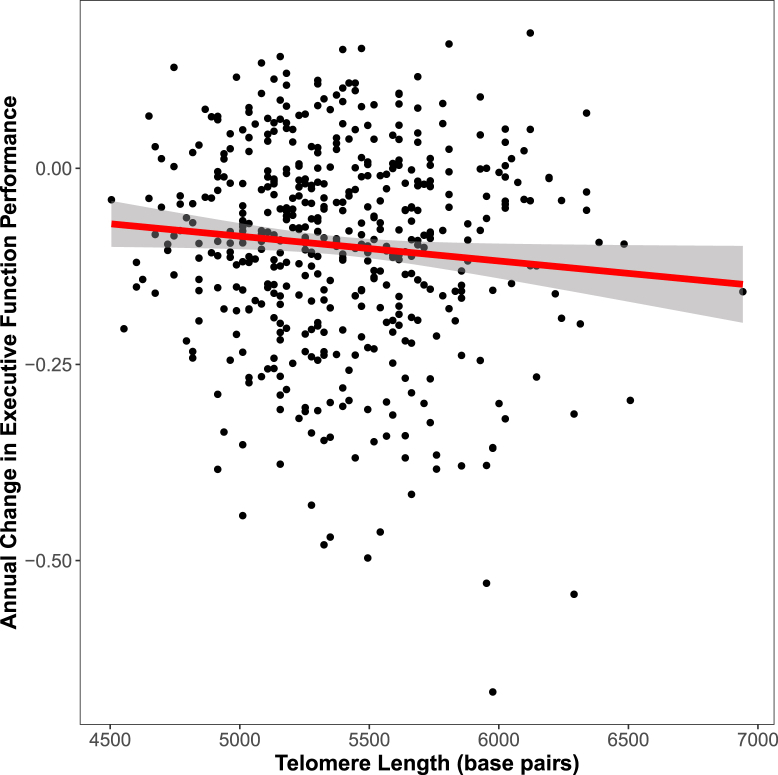
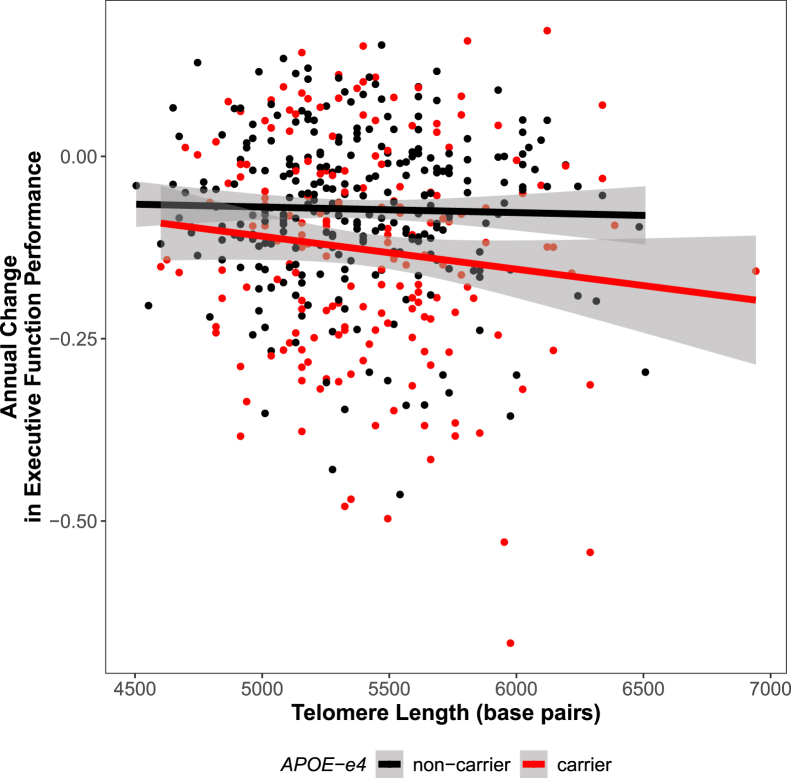
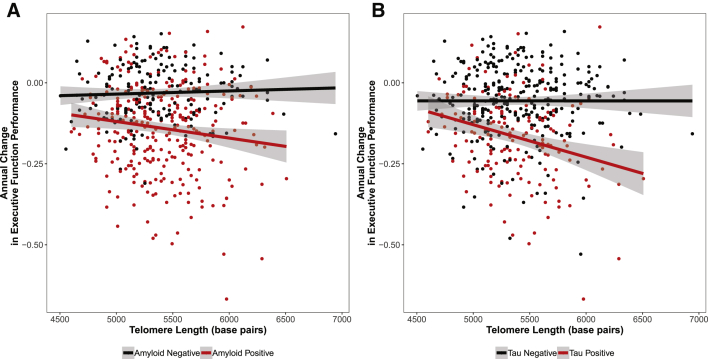
Longer telomeres at baseline were associated with faster executive function decline. Amyloid-β and tau interacted with telomere length on cognition, with longer telomeres related to faster decline among biomarker-positive individuals.
Telomere associations with cognition shift with AD progression, with longer telomeres related to worse outcomes as pathology increases, highlighting the need for further investigation of telomere length along the AD neuropathological cascade.
端粒缩短是细胞衰老的一个标志,可能会影响与年龄相关的神经退行性疾病的进展,但其与认知的关联尚不清楚,尤其是在阿尔茨海默病(AD)病理背景下。
利用来自AD神经影像学倡议的482名参与者(148名认知正常、283名轻度认知障碍、51名AD患者)的端粒、认知和脑脊液数据,评估端粒长度与认知(通过记忆和执行功能测量)的关联以及与脑脊液淀粉样蛋白-β、tau蛋白和[此处原文缺失部分内容]的相互作用。二次分析评估脑容量和脑厚度结果。
基线时较长的端粒与执行功能更快下降相关。淀粉样蛋白-β和tau蛋白在认知方面与端粒长度相互作用,生物标志物阳性个体中端粒越长,下降越快。
端粒与认知的关联随AD进展而变化,随着病理增加,端粒越长与越差的结果相关,这突出了沿着AD神经病理级联进一步研究端粒长度的必要性。