Ford J H, Schultz C J, Correll A T
Genetics Department, Queen Elizabeth Hospital, Woodville, South Australia.
Am J Hum Genet. 1988 Nov;43(5):733-40.
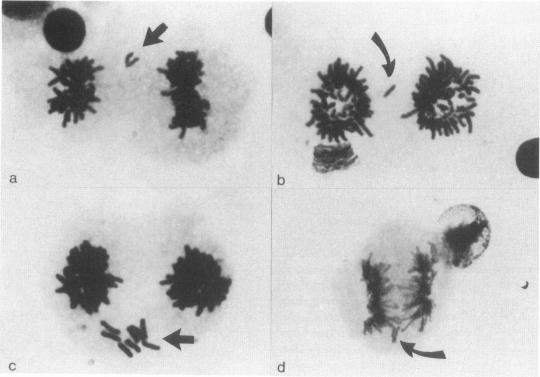
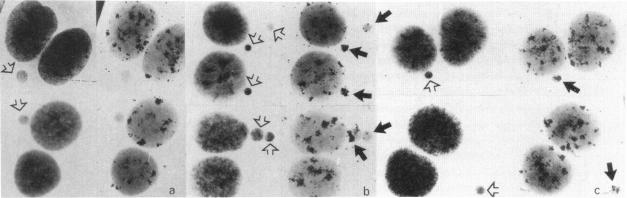
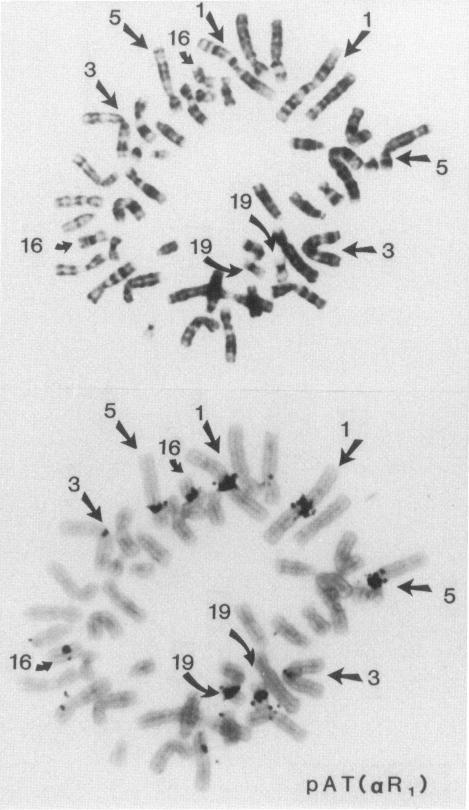
An excess of hypoploid cells has repeatedly been reported in studies of aneuploidy and has often been attributed to technical artifact. We have examined at least 200 anaphase or early-telophase cells from each of 28 normal women and found that chromosome or chromatid lagging occurs in an average of 2.43% of cells. In a separate study, we have examined the frequency of micronuclei in cytochalasin B-arrested, binucleate cells and shown that a similar frequency of cells (1.6%) contain one or more micronuclei. Using in situ hybridization of an alpha centromeric probe (alpha R1), which hybridizes to 9 of the 22 human autosomes, we were able to infer that most, if not all, of the micronuclei contain whole chromosomes or chromatids. Since the loss of a chromosome by lagging will induce hypoploid daughter nuclei (two where a chromosome is lost and one where a chromatid is lost), we conclude that lagging is a major mechanism for chromosome loss in human lymphocyte cultures. This loss occurs in the cells of normal individuals under control conditions.