de la Cruz López Karen Griselda, Toledo Guzmán Mariel Esperanza, Sánchez Elizabeth Ortiz, García Carrancá Alejandro
Posgrado en Ciencias Biomédicas, Instituto de Investigaciones Biomédicas, Universidad Nacional Autónoma de México, Mexico City, Mexico.
División de Investigación Básica, Instituto Nacional de Cancerología, Mexico City, Mexico.
Front Oncol. 2019 Dec 13;9:1373. doi: 10.3389/fonc.2019.01373. eCollection 2019.
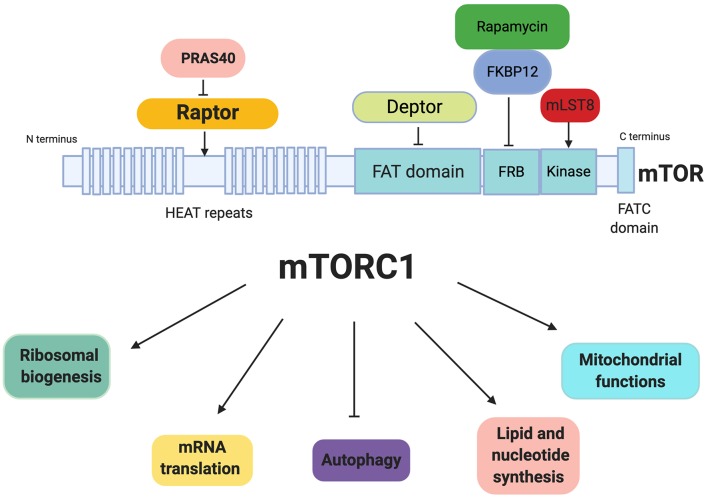
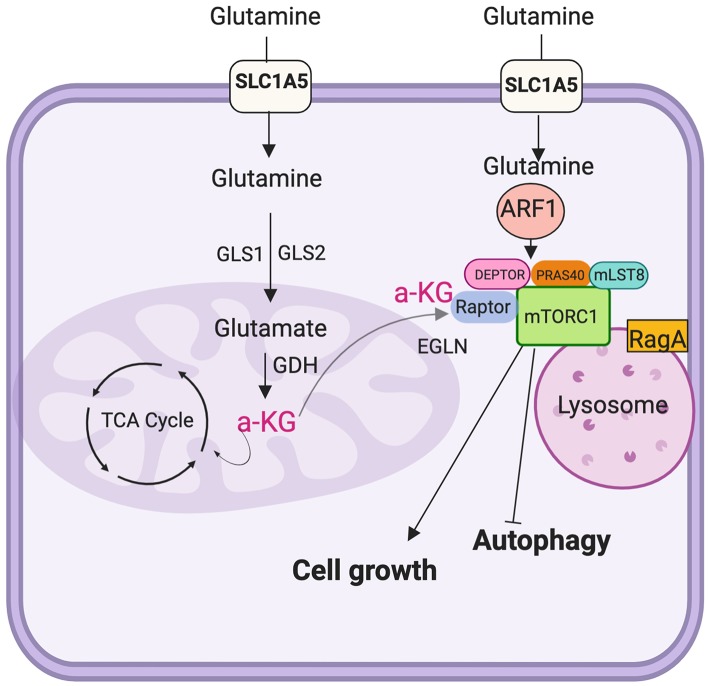
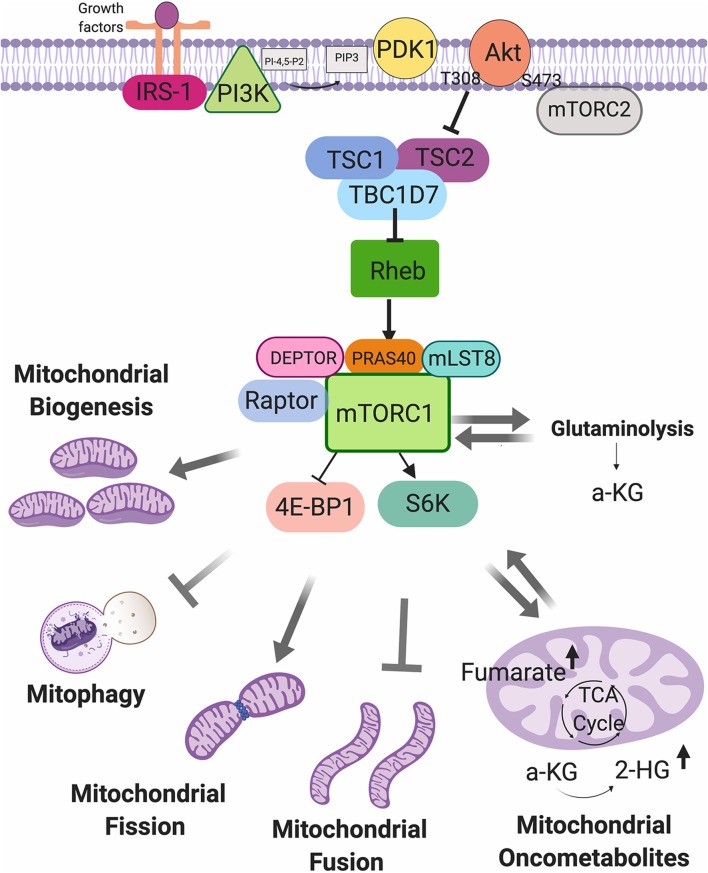
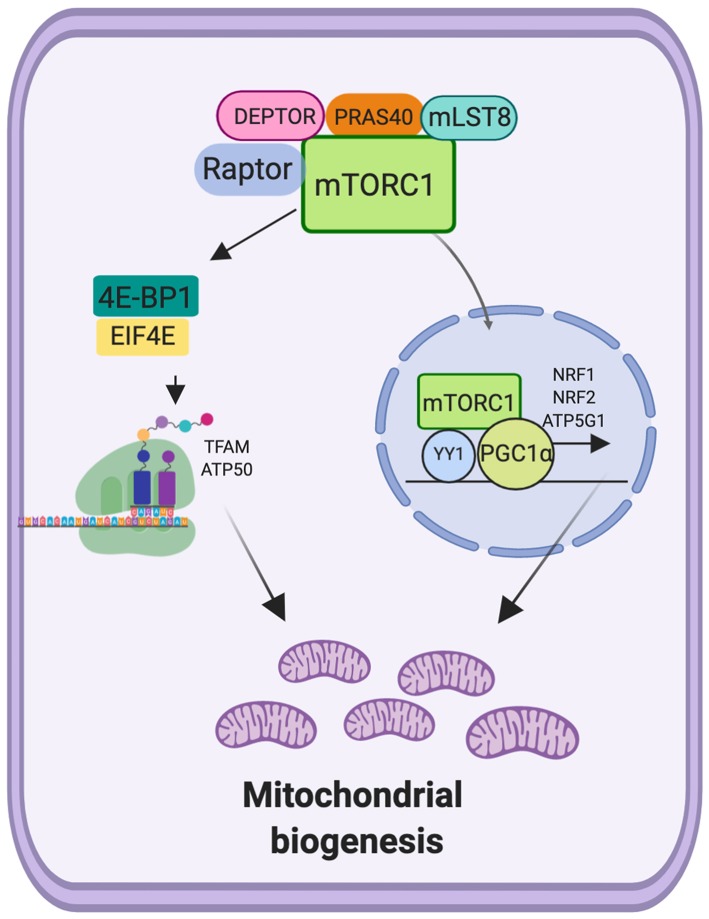
Continuous proliferation of tumor cells requires constant adaptations of energy metabolism to rapidly fuel cell growth and division. This energetic adaptation often comprises deregulated glucose uptake and lactate production in the presence of oxygen, a process known as the "Warburg effect." For many years it was thought that the Warburg effect was a result of mitochondrial damage, however, unlike this proposal tumor cell mitochondria maintain their functionality, and is essential for integrating a variety of signals and adapting the metabolic activity of the tumor cell. The mammalian/mechanistic target of rapamycin complex 1 (mTORC1) is a master regulator of numerous cellular processes implicated in proliferation, metabolism, and cell growth. mTORC1 controls cellular metabolism mainly by regulating the translation and transcription of metabolic genes, such as peroxisome proliferator activated receptor γ coactivator-1 α (PGC-1α), sterol regulatory element-binding protein 1/2 (SREBP1/2), and hypoxia inducible factor-1 α (HIF-1α). Interestingly it has been shown that mTORC1 regulates mitochondrial metabolism, thus representing an important regulator in mitochondrial function. Here we present an overview on the role of mTORC1 in the regulation of mitochondrial functions in cancer, considering new evidences showing that mTORC1 regulates the translation of nucleus-encoded mitochondrial mRNAs that result in an increased ATP mitochondrial production. Moreover, we discuss the relationship between mTORC1 and glutaminolysis, as well as mitochondrial metabolites. In addition, mitochondrial fission processes regulated by mTORC1 and its impact on cancer are discussed. Finally, we also review the therapeutic efficacy of mTORC1 inhibitors in cancer treatments, considering its use in combination with other drugs, with particular focus on cellular metabolism inhibitors, that could help improve their anti neoplastic effect and eliminate cancer cells in patients.
肿瘤细胞的持续增殖需要能量代谢不断适应,以迅速为细胞生长和分裂提供燃料。这种能量适应通常包括在有氧情况下葡萄糖摄取失调和乳酸生成,这一过程被称为“瓦伯格效应”。多年来,人们一直认为瓦伯格效应是线粒体损伤的结果,然而,与这一观点不同的是,肿瘤细胞线粒体保持其功能,并且对于整合各种信号和调节肿瘤细胞的代谢活性至关重要。哺乳动物雷帕霉素靶蛋白复合物1(mTORC1)是众多涉及增殖、代谢和细胞生长的细胞过程的主要调节因子。mTORC1主要通过调节代谢基因的翻译和转录来控制细胞代谢,这些代谢基因如过氧化物酶体增殖物激活受体γ共激活因子-1α(PGC-1α)、固醇调节元件结合蛋白1/2(SREBP1/2)和缺氧诱导因子-1α(HIF-1α)。有趣的是,研究表明mTORC1调节线粒体代谢,因此是线粒体功能的重要调节因子。在此,我们概述了mTORC1在癌症中线粒体功能调节中的作用,考虑到新的证据表明mTORC1调节核编码的线粒体mRNA的翻译,从而导致线粒体ATP生成增加。此外,我们讨论了mTORC1与谷氨酰胺分解以及线粒体代谢物之间的关系。此外,还讨论了由mTORC1调节的线粒体分裂过程及其对癌症的影响。最后,我们还回顾了mTORC1抑制剂在癌症治疗中的疗效,考虑其与其他药物联合使用的情况,特别关注细胞代谢抑制剂,这可能有助于提高其抗肿瘤作用并消除患者体内的癌细胞。