Pedroza-Torres Abraham, Romero-Córdoba Sandra L, Justo-Garrido Montserrat, Salido-Guadarrama Iván, Rodríguez-Bautista Rubén, Montaño Sarita, Muñiz-Mendoza Rodolfo, Arriaga-Canon Cristian, Fragoso-Ontiveros Verónica, Álvarez-Gómez Rosa María, Hernández Greco, Herrera Luis A
Cátedra CONACyT-Clínica de Cáncer Hereditario, Instituto Nacional de Cancerología, Mexico City, Mexico.
Departamento de Bioquímica, Instituto Nacional de Ciencias Médicas y Nutrición "Salvador Zubirán", Mexico City, Mexico.
Front Oncol. 2019 Dec 11;9:1404. doi: 10.3389/fonc.2019.01404. eCollection 2019.
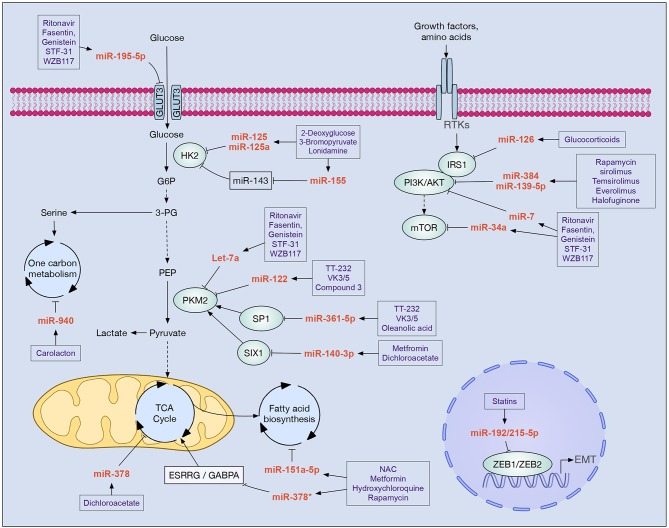
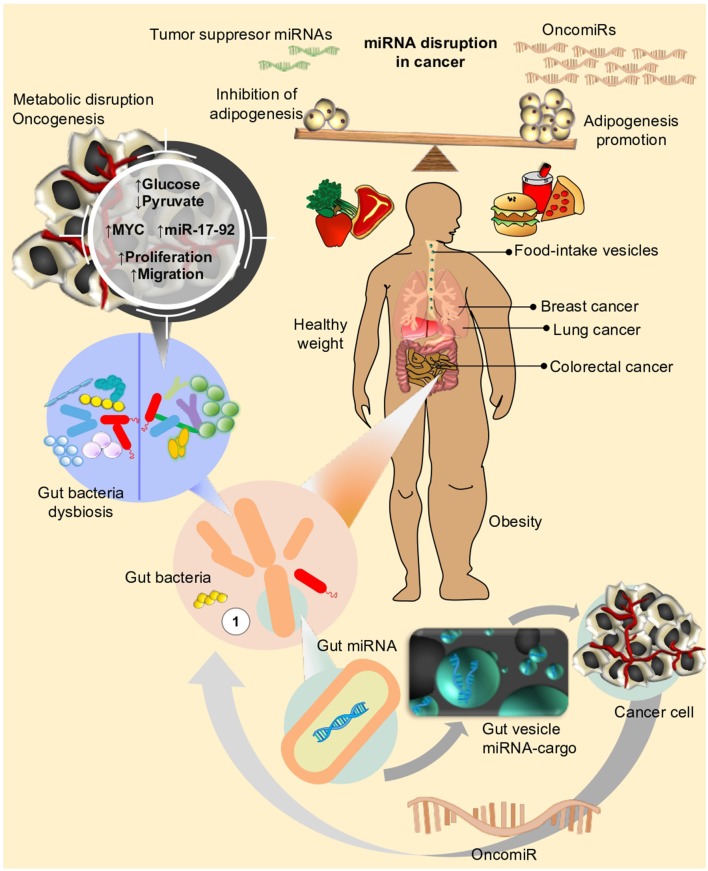
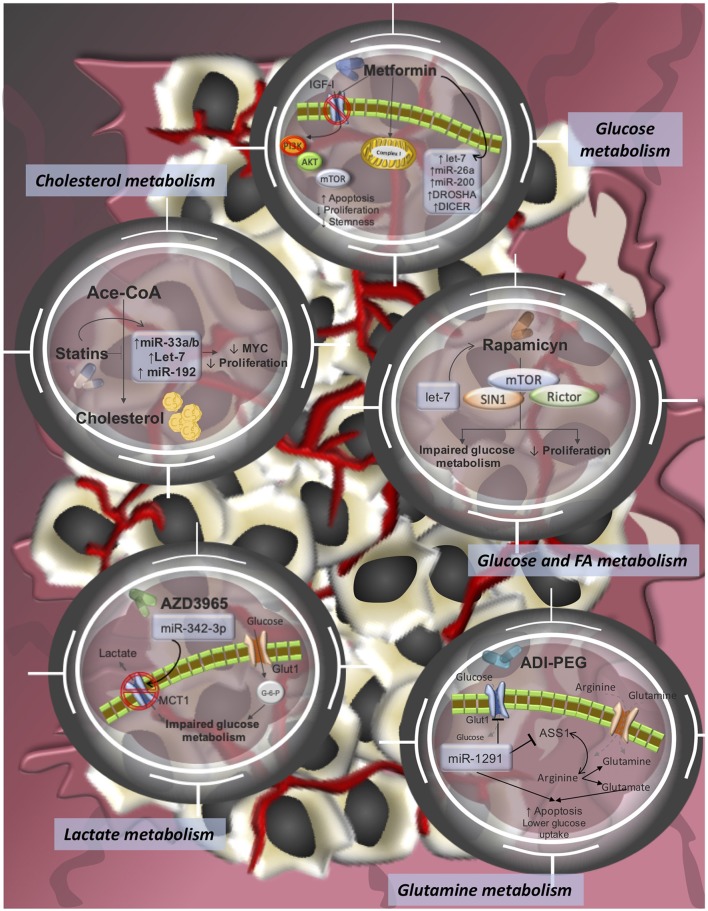
Dysregulated metabolism is a common feature of cancer cells and is considered a hallmark of cancer. Altered tumor-metabolism confers an adaptive advantage to cancer cells to fulfill the high energetic requirements for the maintenance of high proliferation rates, similarly, reprogramming metabolism confers the ability to grow at low oxygen concentrations and to use alternative carbon sources. These phenomena result from the dysregulated expression of diverse genes, including those encoding microRNAs (miRNAs) which are involved in several metabolic and tumorigenic pathways through its post-transcriptional-regulatory activity. Further, the identification of key actionable altered miRNA has allowed to propose novel targeted therapies to modulated tumor-metabolism. In this review, we discussed the different roles of miRNAs in cancer cell metabolism and novel miRNA-based strategies designed to target the metabolic machinery in human cancer.
代谢失调是癌细胞的一个常见特征,被认为是癌症的一个标志。肿瘤代谢改变赋予癌细胞一种适应性优势,以满足维持高增殖率所需的高能量需求。同样,代谢重编程赋予癌细胞在低氧浓度下生长以及利用替代碳源的能力。这些现象是由多种基因的表达失调导致的,包括那些编码微小RNA(miRNA)的基因,miRNA通过其转录后调控活性参与多种代谢和肿瘤发生途径。此外,关键的可操作的miRNA改变的鉴定使得人们能够提出新的靶向疗法来调节肿瘤代谢。在这篇综述中,我们讨论了miRNA在癌细胞代谢中的不同作用以及旨在靶向人类癌症代谢机制的基于miRNA的新策略。