Vitale Samantha, Hague Devon Wallis, Foss Kari, de Godoy Maria Cattai, Selmic Laura E
Department of Veterinary Clinical Medicine, University of Illinois, Urbana, IL, United States.
Department of Animal Sciences, University of Illinois, Urbana, IL, United States.
Front Vet Sci. 2019 Dec 19;6:467. doi: 10.3389/fvets.2019.00467. eCollection 2019.
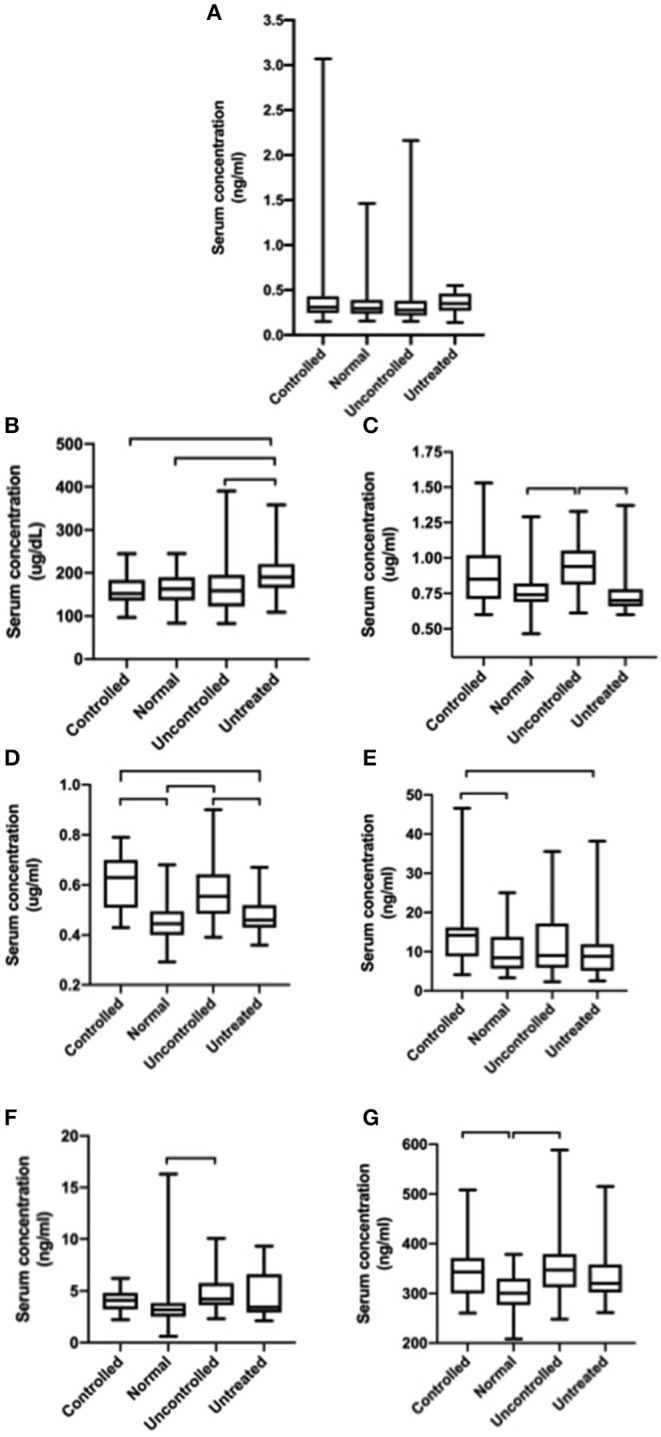
Idiopathic epilepsy (IE) is a common cause of seizures in dogs. There are several investigations regarding serum concentrations of trace nutrients, including copper, selenium, zinc, manganese, and iron in human epileptics and animal models. However, research of this nature in dogs with epilepsy is lacking. The purpose of this prospective study was to compare serum concentrations of several trace nutrients in healthy dogs to dogs with idiopathic epilepsy. Healthy client-owned dogs ( = 50) and dogs with IE ( = 92) were enrolled and blood samples were collected for trace nutrient analysis. Epileptics were subdivided into three groups: controlled: = 27, uncontrolled: = 42, and untreated: = 23. Serum was evaluated for concentrations of copper, selenium, zinc, cobalt, manganese, molybdenum, and iron using inductively coupled plasma mass spectroscopy. Uncontrolled epileptics had significantly higher manganese concentrations compared to normal dogs ( = 0.007). Untreated epileptics had higher iron levels than the other three groups ( = 0.04). Significantly higher levels of copper ( < 0.0001) were found in controlled and uncontrolled epileptics compared to normal or untreated dogs. Significantly higher levels of molybdenum ( = 0.01) were found in controlled epileptics compared to normal or untreated epileptics. Uncontrolled and controlled epileptics had significantly higher levels of selenium ( = 0.0003) vs. normal dogs, and uncontrolled epileptics had higher levels of zinc ( = 0.0002) than normal and untreated dogs. The significant difference in serum concentrations of several trace nutrients (manganese, selenium, and zinc) may suggest a role for these nutrients in the pathophysiology and/or treatment of epilepsy. Additionally, these results suggest that anti-convulsant therapy may affect copper and molybdenum metabolism.
特发性癫痫(IE)是犬类癫痫发作的常见原因。针对人类癫痫患者和动物模型中包括铜、硒、锌、锰和铁在内的微量营养素血清浓度,已有多项研究。然而,缺乏对患有癫痫的犬类进行此类性质的研究。这项前瞻性研究的目的是比较健康犬和患有特发性癫痫的犬的几种微量营养素的血清浓度。纳入了健康的客户拥有的犬(n = 50)和患有IE的犬(n = 92),并采集血样进行微量营养素分析。癫痫犬被分为三组:病情得到控制的:n = 二十七,未得到控制的:n = 四十二,未接受治疗的:n = 二十三。使用电感耦合等离子体质谱法评估血清中铜、硒、锌、钴、锰、钼和铁的浓度。与正常犬相比,未得到控制的癫痫犬的锰浓度显著更高(P = 0.007)。未接受治疗的癫痫犬的铁水平高于其他三组(P = 0.04)。与正常或未接受治疗的犬相比,病情得到控制和未得到控制的癫痫犬的铜水平显著更高(P < 0.0001)。与正常或未接受治疗的癫痫犬相比,病情得到控制的癫痫犬的钼水平显著更高(P = 0.01)。与正常犬相比,未得到控制和病情得到控制的癫痫犬的硒水平显著更高(P = 0.0003),且未得到控制的癫痫犬的锌水平高于正常和未接受治疗的犬(P = 0.0002)。几种微量营养素(锰、硒和锌)血清浓度的显著差异可能表明这些营养素在癫痫的病理生理学和/或治疗中发挥作用。此外,这些结果表明抗惊厥治疗可能会影响铜和钼的代谢。