Cancer Research Center, Qatar Biomedical Research Institute (QBRI), Hamad Bin Khalifa University (HBKU), Qatar Foundation (QF), Doha, Qatar.
Cancer Immunol Immunother. 2020 Mar;69(3):449-463. doi: 10.1007/s00262-020-02480-4. Epub 2020 Jan 13.
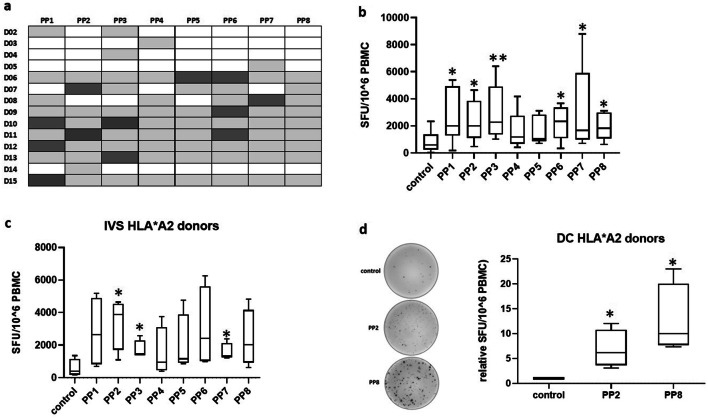
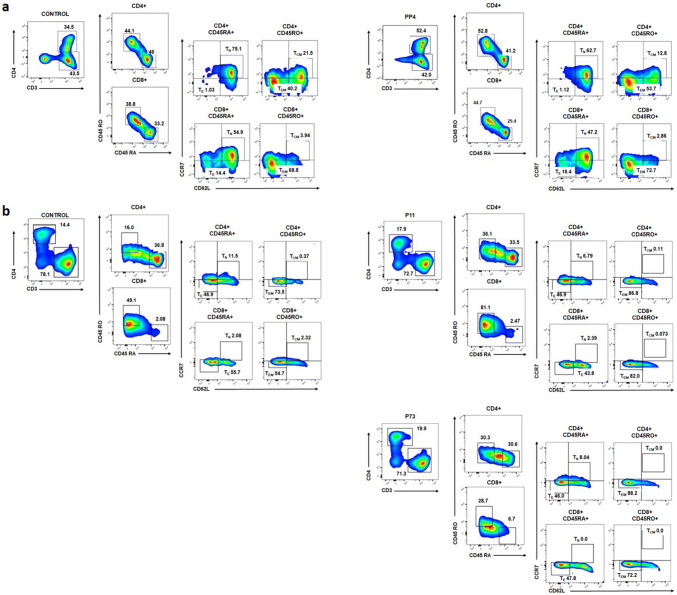
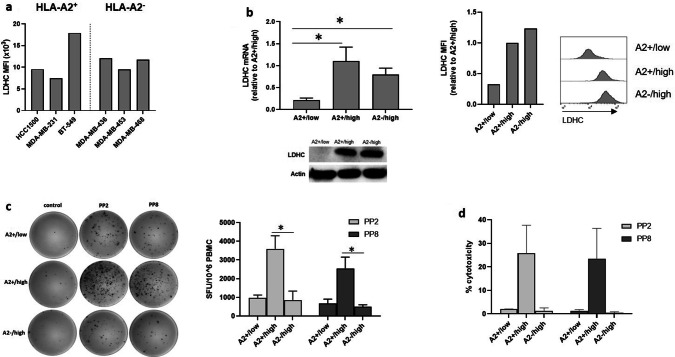
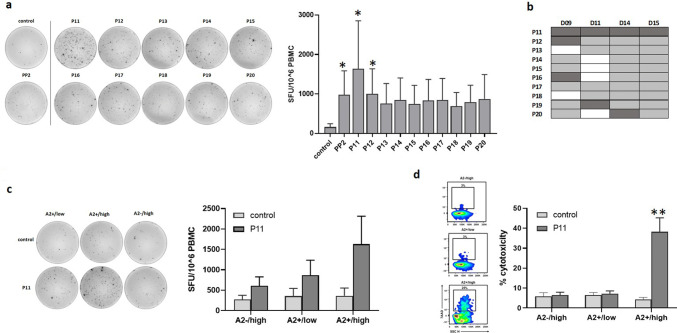
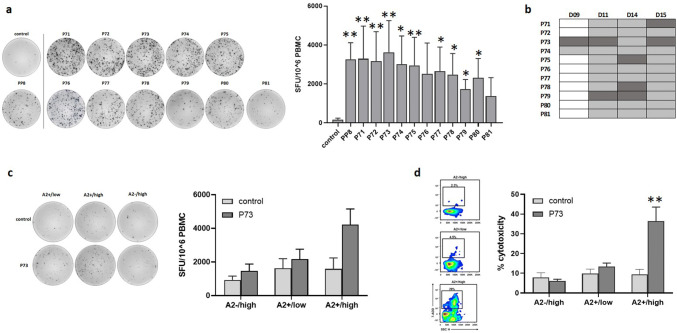
Lactate dehydrogenase C (LDHC) is an archetypical cancer testis antigen with limited expression in adult tissues and re-expression in tumors. This restricted expression pattern together with the important role of LDHC in cancer metabolism renders LDHC a potential target for immunotherapy. This study is the first to investigate the immunogenicity of LDHC using T cells from healthy individuals. LDHC-specific T cell responses were induced by in vitro stimulation with synthetic peptides, or by priming with autologous peptide-pulsed dendritic cells. We evaluated T cell activation by IFN-γ ELISpot and determined cytolytic activity of HLA-A0201-restricted T cells in breast cancer cell co-cultures. In vitro T cell stimulation induced IFN-γ secretion in response to numerous LDHC-derived peptides. Analysis of HLA-A0201 responses revealed a significant T cell activation after stimulation with peptide pools 2 (PP2) and 8 (PP8). The PP2- and PP8-specific T cells displayed cytolytic activity against breast cancer cells with endogenous LDHC expression within a HLA-A0201 context. We identified peptides LDHC and LDHC from PP2 and PP8 to elicit a functional cellular immune response. More specifically, we found an increase in IFN-γ secretion by CD8 + T cells and cancer-cell-killing of HLA-A0201/LDHC positive breast cancer cells by LDHC- and LDHC-induced T cells, albeit with a possible antigen recognition threshold. The majority of induced T cells displayed an effector memory phenotype. To conclude, our findings support the rationale to assess LDHC as a targetable cancer testis antigen for immunotherapy, and in particular the HLA-A*0201 restricted LDHC and LDHC peptides within LDHC.
乳酸脱氢酶 C(LDHC)是一种典型的癌症睾丸抗原,在成人组织中表达有限,在肿瘤中重新表达。这种受限的表达模式加上 LDHC 在癌症代谢中的重要作用,使其成为免疫治疗的潜在靶点。本研究首次使用来自健康个体的 T 细胞研究 LDHC 的免疫原性。通过体外用合成肽刺激或用自体肽脉冲树突细胞进行初始刺激,诱导 LDHC 特异性 T 细胞反应。我们通过 IFN-γ ELISpot 评估 T 细胞激活,并在乳腺癌细胞共培养中测定 HLA-A0201 限制性 T 细胞的细胞溶解活性。体外 T 细胞刺激可诱导针对多种 LDHC 衍生肽的 IFN-γ 分泌。对 HLA-A0201 反应的分析显示,在用肽池 2(PP2)和 8(PP8)刺激后,T 细胞有明显的激活。PP2 和 PP8 特异性 T 细胞在 HLA-A0201 背景下对具有内源性 LDHC 表达的乳腺癌细胞具有细胞溶解活性。我们鉴定了来自 PP2 和 PP8 的 LDHC 和 LDHC 肽,以引发功能性细胞免疫反应。更具体地说,我们发现 CD8+T 细胞的 IFN-γ 分泌增加,并且由 LDHC 和 LDHC 诱导的 T 细胞杀死 HLA-A0201/LDHC 阳性乳腺癌细胞,尽管存在可能的抗原识别阈值。大多数诱导的 T 细胞表现出效应记忆表型。总之,我们的研究结果支持将 LDHC 作为免疫治疗的靶向癌症睾丸抗原的合理性,特别是在 LDHC 内 HLA-A*0201 受限的 LDHC 和 LDHC 肽。