
金沙江干热河谷濒危观赏植物[物种名称未给出]的遗传多样性与种群结构
Genetic diversity and population structure of , an endangered ornamental species in dry-hot valleys of Jinsha River.
作者信息
Zhang Xin, Zhang Le, Schinnerl Johann, Sun Wei-Bang, Chen Gao
机构信息
Yunnan Forestry Technological College, Kunming, 650224, China.
Yunnan Key Laboratory for Integrative Conservation of Plant Species with Extremely Small Populations, Kunming, 650204, China.
出版信息
Plant Divers. 2019 Jul 5;41(5):300-306. doi: 10.1016/j.pld.2019.07.001. eCollection 2019 Oct.
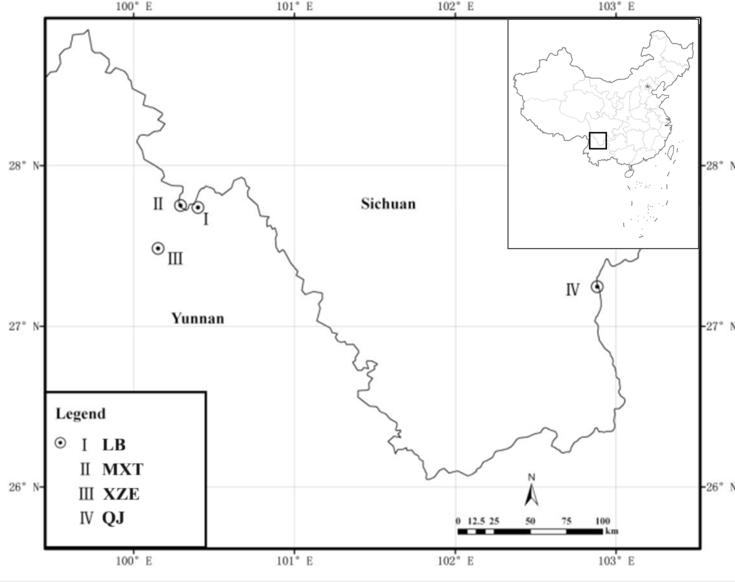
is an endangered ornamental shrub of the family Malvaceae that is endemic to the dry-hot valleys of Jinsha River in southwestern China. This species is a typical plant species with extremely small populations (PSESP). To support and monitor future conservation, develop management measures, and genotype this species, we performed extensive field studies together with genetic analyses. Specifically, we screened eleven microsatellite loci of 69 individuals of from four accessions. The population genetics analyses indicated that possesses high genetic diversity at both the population (0.6962-0.7293) and species level (0.7837) compared to other endemic/endangered species in China. The low differentiation of populations (Fst = 0.0971) and the high gene flow between populations of (Nm = 2.3236) could be due to its distribution along rivers in the hot-valleys of the Jinsha River and the wind-mediated dispersal of its seeds. Furthermore, the genetic diversity of is slightly positively correlated with geographic distance. Two populations are undergoing a genetic bottleneck, and require more specific attention from conservationists. Additionally, our analyses of the population genetics of demonstrate that the declines in populations are not the result of the internal genetics of these populations but due to external human activities over the past decades.
是锦葵科一种濒危观赏灌木,特产于中国西南部金沙江干热河谷。该物种是典型的极小种群野生植物物种。为支持和监测未来的保护工作、制定管理措施并对该物种进行基因分型,我们开展了广泛的实地研究并进行了基因分析。具体而言,我们对来自四个种质的69个个体的11个微卫星位点进行了筛选。种群遗传学分析表明,与中国其他特有/濒危物种相比,该物种在种群水平(0.6962 - 0.7293)和物种水平(0.7837)均具有较高的遗传多样性。种群间低分化(Fst = 0.0971)以及该物种种群间高基因流(Nm = 2.3236)可能是由于其沿金沙江热河谷的河流分布以及种子的风媒传播。此外,该物种的遗传多样性与地理距离呈轻微正相关。两个种群正在经历遗传瓶颈,需要保护主义者给予更多特别关注。此外,我们对该物种种群遗传学的分析表明,种群数量下降并非这些种群内部遗传因素所致,而是过去几十年外部人类活动造成的。



 Zotero 插件