Freed Catherine, Adepoju Olusegun, Gillaspy Glenda
Department of Biochemistry, Virginia Tech, Blacksburg, VA 24061, USA.
Plants (Basel). 2020 Jan 17;9(1):115. doi: 10.3390/plants9010115.
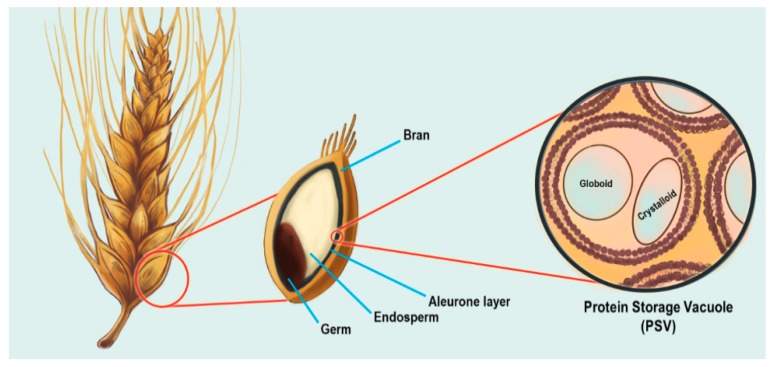
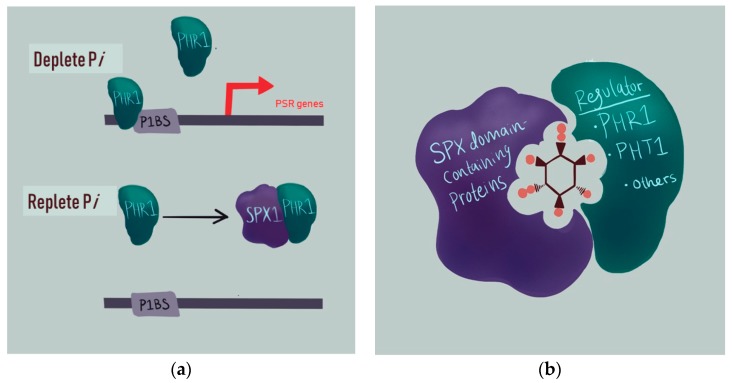
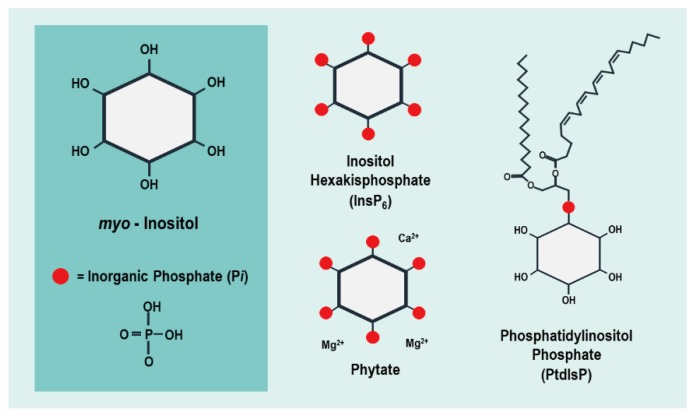
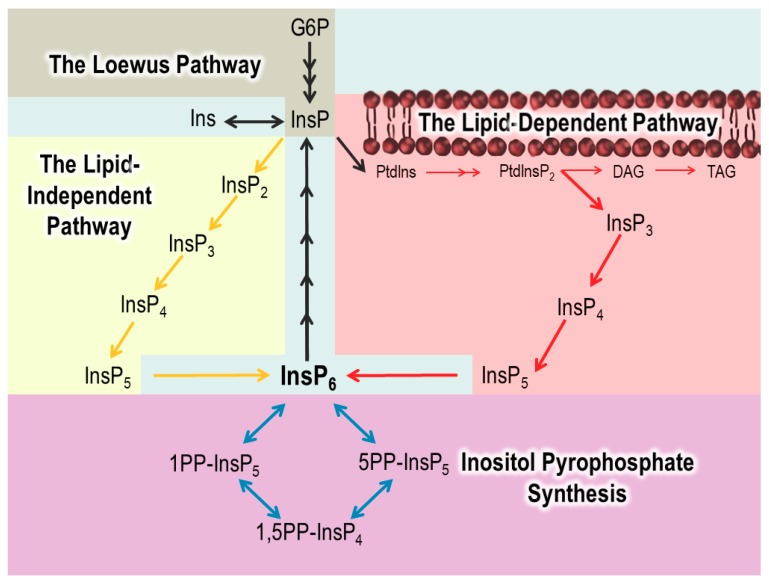
Inositol pyrophosphates (PP-InsPs) are an emerging class of "high-energy" intracellular signaling molecules, containing one or two diphosphate groups attached to an inositol ring, that are connected with phosphate sensing, jasmonate signaling, and inositol hexakisphosphate (InsP) storage in plants. While information regarding this new class of signaling molecules in plants is scarce, the enzymes responsible for their synthesis have recently been elucidated. This review focuses on InsP synthesis and its conversion into PP-InsPs, containing seven and eight phosphate groups (InsP and InsP). These steps involve two types of enzymes: the ITPKs that phosphorylate InsP to InsP, and the PPIP5Ks that phosphorylate InsP to InsP. This review also considers the potential roles of PP-InsPs in plant hormone and inorganic phosphate (P) signaling, along with an emerging role in bioenergetic homeostasis. PP-InsP synthesis and signaling are important for plant breeders to consider when developing strategies that reduce InsP in plants, as this will likely also reduce PP-InsPs. Thus, this review is primarily intended to bridge the gap between the basic science aspects of PP-InsP synthesis/signaling and breeding/engineering strategies to fortify foods by reducing InsP.
肌醇焦磷酸(PP-InsPs)是一类新出现的“高能”细胞内信号分子,含有一个或两个连接在肌醇环上的二磷酸基团,与植物中的磷酸盐感知、茉莉酸信号传导以及肌醇六磷酸(InsP)储存有关。虽然关于植物中这类新信号分子的信息很少,但负责其合成的酶最近已被阐明。本综述重点关注InsP的合成及其向含有七个和八个磷酸基团的PP-InsPs(InsP和InsP)的转化。这些步骤涉及两种类型的酶:将InsP磷酸化为InsP的ITPKs,以及将InsP磷酸化为InsP的PPIP5Ks。本综述还考虑了PP-InsPs在植物激素和无机磷酸盐(P)信号传导中的潜在作用,以及在生物能量稳态中的新作用。在制定降低植物中InsP的策略时,PP-InsP的合成和信号传导对植物育种者来说是重要的考虑因素,因为这可能也会降低PP-InsPs。因此,本综述主要旨在弥合PP-InsP合成/信号传导的基础科学方面与通过降低InsP来强化食品的育种/工程策略之间的差距。