Laboratory of Radiobiology and Experimental Radiooncology, Center of Oncology, University Medical Center Hamburg-Eppendorf, 20246 Hamburg, Germany.
Tumor Biology Department, National Cancer Institute, Cairo University, Cairo 11796, Egypt.
Cells. 2020 Jan 17;9(1):238. doi: 10.3390/cells9010238.
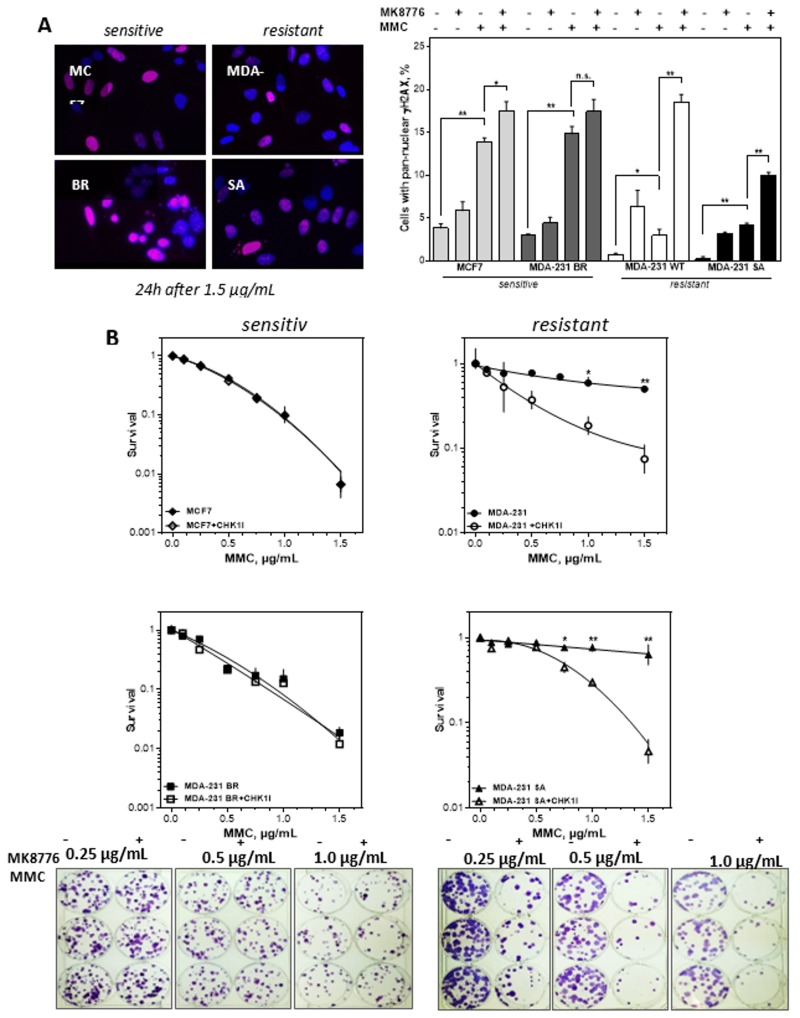
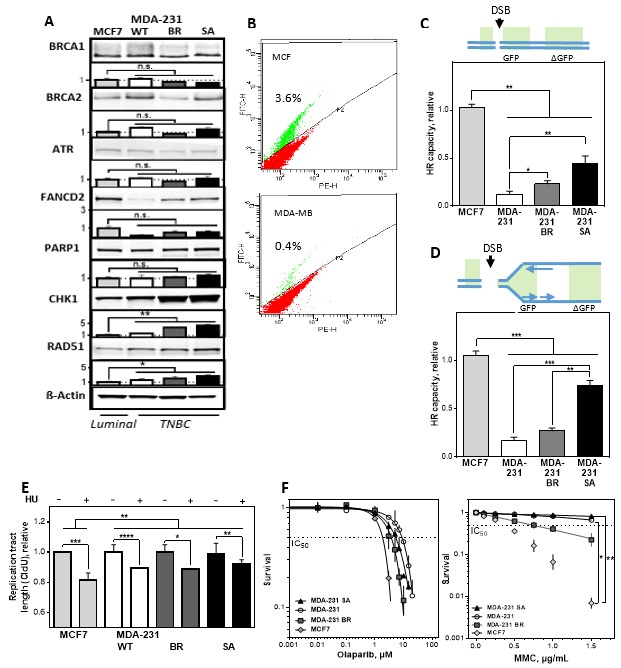
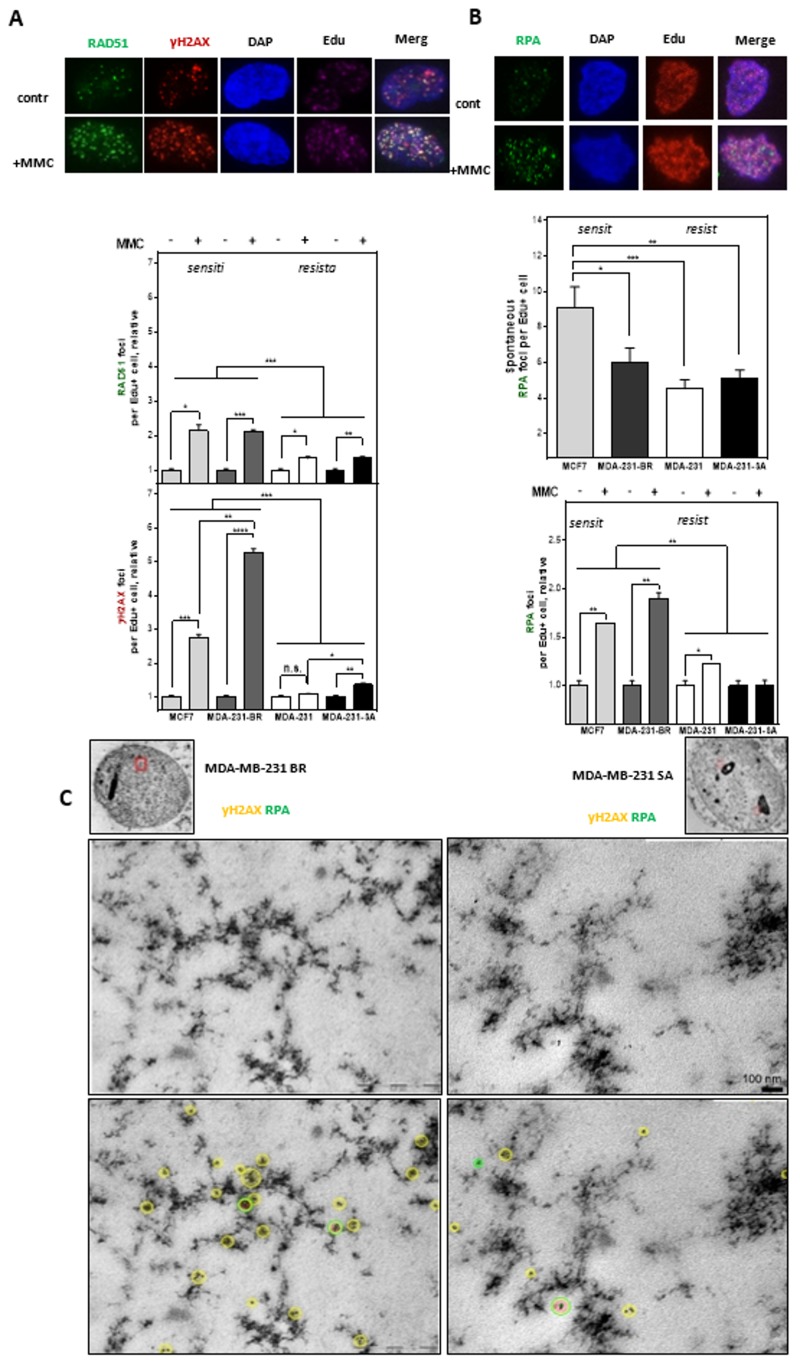
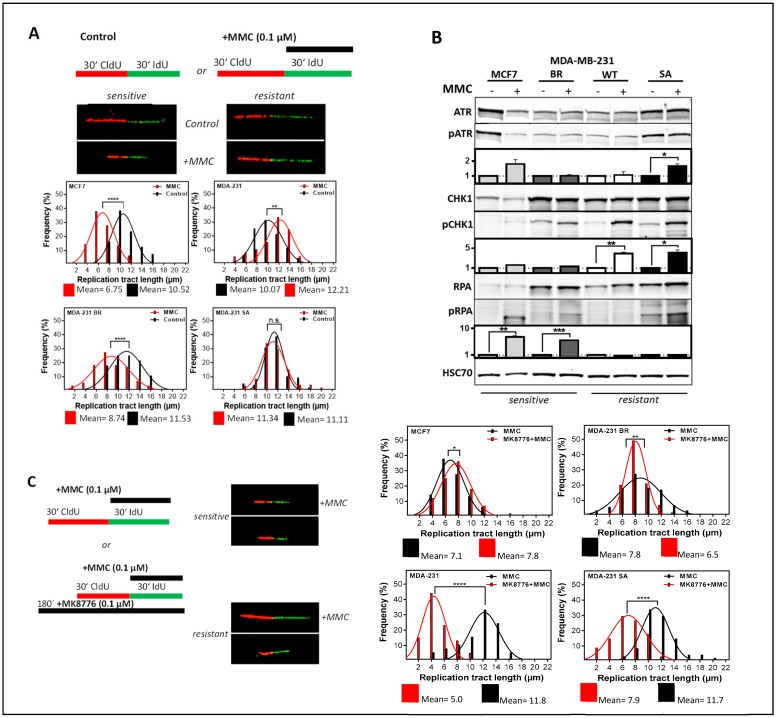
Chromosomal instability not only has a negative effect on survival in triple-negative breast cancer, but also on the well treatable subgroup of luminal A tumors. This suggests a general mechanism independent of subtypes. Increased chromosomal instability (CIN) in triple-negative breast cancer (TNBC) is attributed to a defect in the DNA repair pathway homologous recombination. Homologous recombination (HR) prevents genomic instability by repair and protection of replication. It is unclear whether genetic alterations actually lead to a repair defect or whether superior signaling pathways are of greater importance. Previous studies focused exclusively on the repair function of HR. Here, we show that the regulation of HR by the intra-S-phase damage response at the replication is of overriding importance. A damage response activated by Ataxia telangiectasia and Rad3 related-checkpoint kinase 1 (ATR-CHK1) can prevent replication stress and leads to resistance formation. CHK1 thus has a preferred role over HR in preventing replication stress in TNBC. The signaling cascade ATR-CHK1 can compensate for a double-strand break repair error and lead to resistance of HR-deficient tumors. Established methods for the identification of HR-deficient tumors for Poly(ADP-Ribose)-Polymerase 1 (PARP1) inhibitor therapies should be extended to include analysis of candidates for intra-S phase damage response.
染色体不稳定性不仅对三阴性乳腺癌的生存产生负面影响,对 luminal A 型肿瘤这一可治疗的亚组也有影响。这表明存在一种独立于亚型的一般机制。三阴性乳腺癌(TNBC)中染色体不稳定性(CIN)的增加归因于同源重组 DNA 修复途径的缺陷。同源重组(HR)通过修复和保护复制来防止基因组不稳定性。目前尚不清楚遗传改变是否确实导致修复缺陷,还是更高级的信号通路更为重要。以前的研究仅专注于 HR 的修复功能。在这里,我们表明,复制时 S 期内损伤反应对 HR 的调节具有至关重要的作用。由共济失调毛细血管扩张症和 Rad3 相关检查点激酶 1(ATR-CHK1)激活的损伤反应可以防止复制应激,并导致耐药性形成。因此,在预防 TNBC 中的复制应激方面,CHK1 比 HR 具有更优先的作用。ATR-CHK1 信号级联可以补偿双链断裂修复错误,并导致 HR 缺陷型肿瘤产生耐药性。用于鉴定聚(ADP-核糖)聚合酶 1(PARP1)抑制剂治疗中 HR 缺陷型肿瘤的既定方法应扩展到包括对 S 期内损伤反应候选物的分析。