Mulyati Sri, Muchtar Syawaliah, Yusuf Mukramah, Arahman Nasrul, Sofyana Sofyana, Rosnelly Cut Meurah, Fathanah Umi, Takagi Ryosuke, Matsuyama Hideto, Shamsuddin Norazanita, Bilad Muhammad Roil
Department of Chemical Engineering, Universitas Syiah Kuala, Jl. Syeh A. Rauf, No. 7. Darussalam, Banda Aceh 23111, Indonesia.
Graduate School of Environmental Management, Universitas Syiah Kuala, Jl. Tgk Chik Pante Kulu No. 5, Darussalam, Banda Aceh 23111, Indonesia.
Membranes (Basel). 2020 Jan 19;10(1):17. doi: 10.3390/membranes10010017.
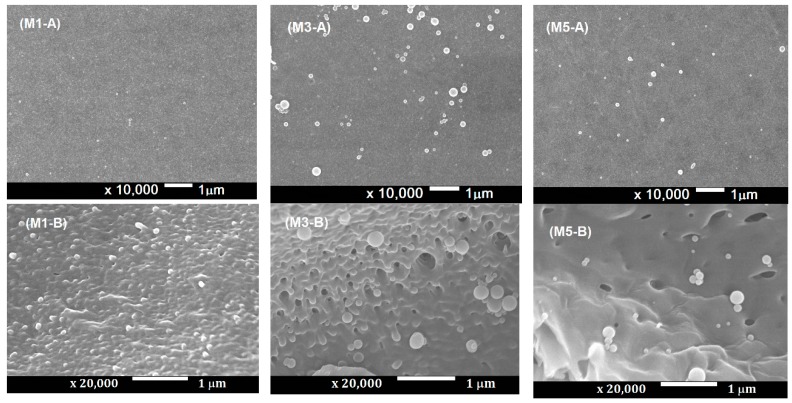
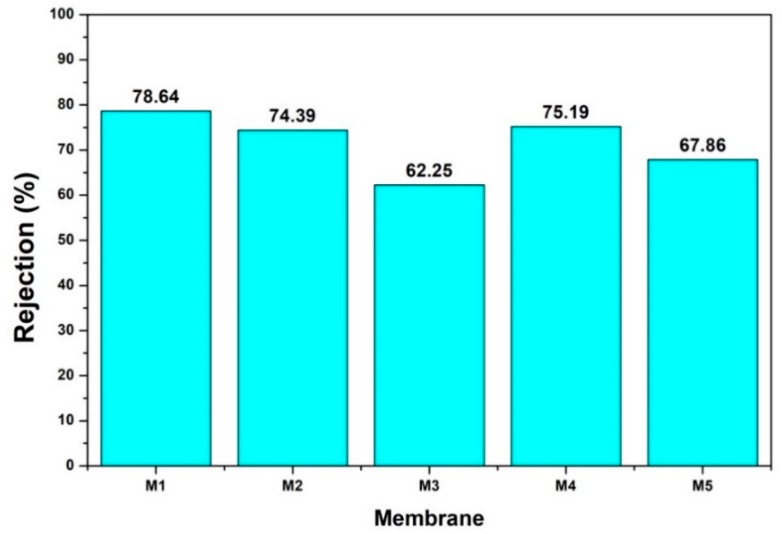
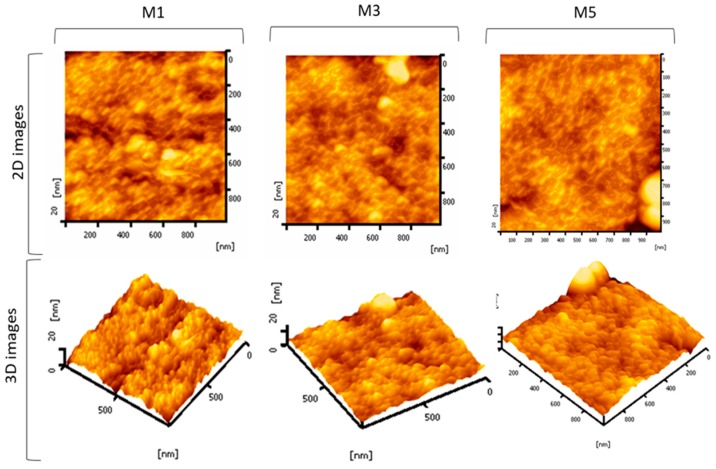
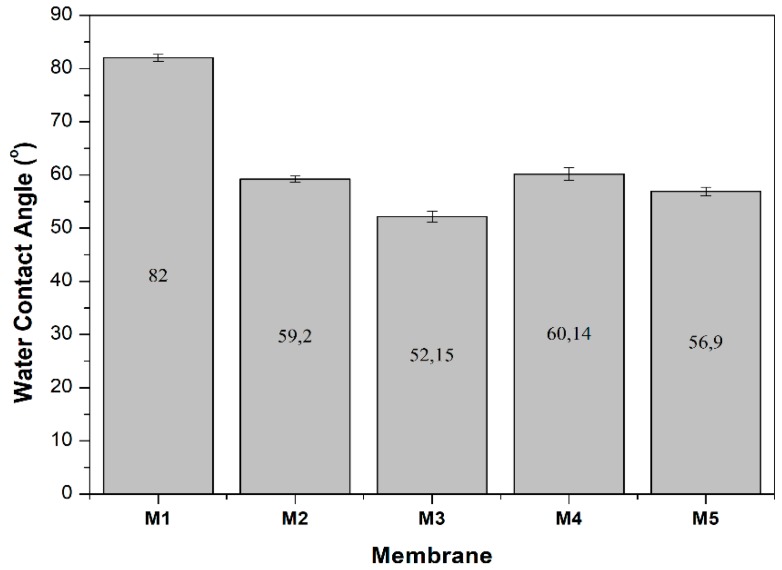
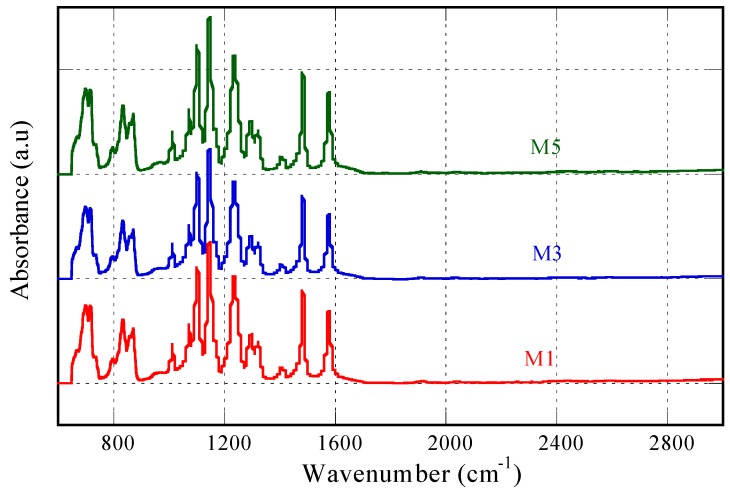
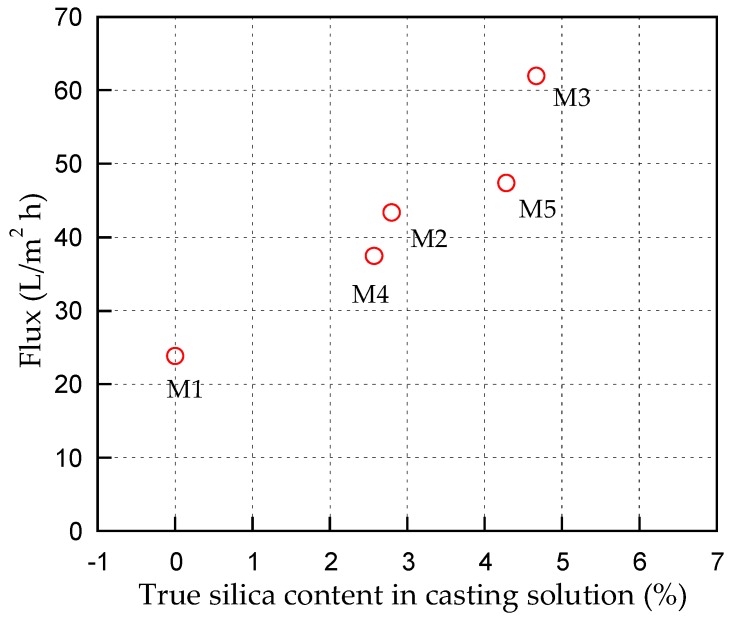
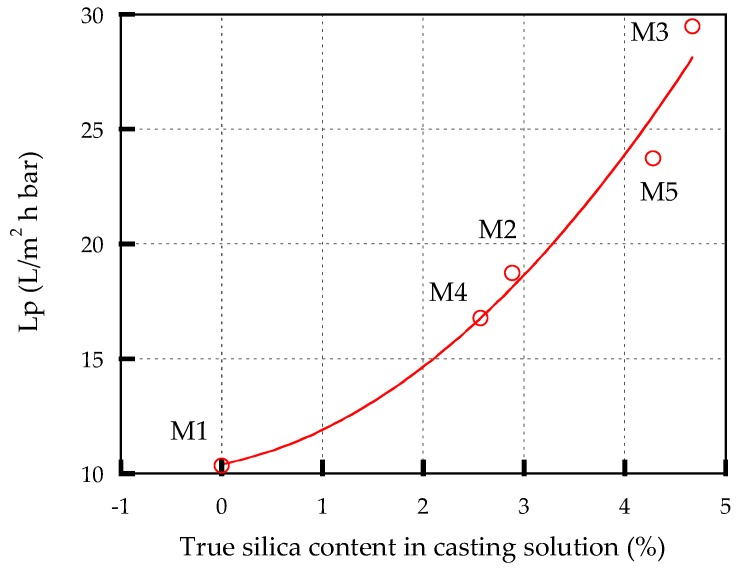
This paper reports the application of silica derived from natural biomasses of rice husk and bagasse ashes as membrane modifying agents. The modification was conducted on poly(ether sulfone) (PES) membrane by blending the silica into the dope solution. The modification was aimed to improve the structure and hydraulic performance of the resulting PES membrane. The effects of silica addition to the membrane system were evaluated through the analysis of change in chemical structure using ATR-FTIR, surface morphological change using AFM, and surface hydrophilicity using water contact angle measurement. SEM and AFM images show the silica loading significantly affects the membranes morphologies. Silica loading also promotes hydrophilic property as shown by the decrease in water contact angles from 82° to 52-60° due to the presence of polar groups in some residual silica in the membrane matrix. Silica blending also leads to the formation of membranes with higher permeability of up to three folds but lower humic acid rejection (78-62%). The findings indicate the role of silica to enhance the membrane pore size. The ability of membrane to reject humic acid (of 0.8 nm minimum diameter) indicating that the resulting membranes were in between tight ultrafiltration and nanofiltration type. Nonetheless, applying too-high silica concentration decreased the humic acid rejection most likely due to over enlargement of the membrane pore size.
本文报道了将源自稻壳和甘蔗渣灰等天然生物质的二氧化硅用作膜改性剂的应用。通过将二氧化硅混入铸膜液中,对聚醚砜(PES)膜进行改性。该改性旨在改善所得PES膜的结构和水力性能。通过使用ATR-FTIR分析化学结构变化、使用AFM分析表面形态变化以及使用水接触角测量分析表面亲水性,评估了向膜体系中添加二氧化硅的效果。SEM和AFM图像显示,二氧化硅负载量显著影响膜的形态。由于膜基质中一些残留二氧化硅中存在极性基团,水接触角从82°降低到52 - 60°,这表明二氧化硅负载量也促进了亲水性。二氧化硅共混还导致形成具有高达三倍更高渗透率但腐殖酸截留率较低(78 - 62%)的膜。研究结果表明二氧化硅在增大膜孔径方面的作用。膜截留腐殖酸(最小直径为0.8 nm)的能力表明所得膜介于紧密超滤和纳滤类型之间。然而,施加过高的二氧化硅浓度很可能由于膜孔径过度增大而降低了腐殖酸截留率。