Cardiology Division and Corrigan Minehan Heart Center, Massachusetts General Hospital, Harvard Medical School, Boston, Massachusetts, USA.
Center for Arrhythmia Prevention, Divisions of Preventive and Cardiovascular Medicine, Brigham and Women's Hospital, Boston, Massachusetts, USA.
JACC Clin Electrophysiol. 2020 Jan;6(1):70-79. doi: 10.1016/j.jacep.2019.08.011. Epub 2019 Oct 30.
This study evaluated whether plasma miRNAs were specifically associated with sudden cardiac and/or arrhythmic death (SCD) in a cohort of patients with coronary heart disease (CHD), most of whom were without primary prevention implantable cardioverter-defibrillators.
Novel biomarkers for sudden death risk stratification are needed in patients with CHD to more precisely target preventive therapies, such as implantable cardioverter-defibrillators. miRNAs have been implicated in regulating inflammation and cardiac fibrosis in cells, and plasma miRNAs have been shown to predict cardiovascular death in patients with CHD.
We performed a nested case control study within a multicenter cohort of 5,956 patients with CHD followed prospectively for SCD. Plasma levels of 18 candidate miRNAs previously associated with cardiac remodeling were measured in 129 SCD cases and 258 control subjects matched on age, sex, race, and left ventricular ejection fraction.
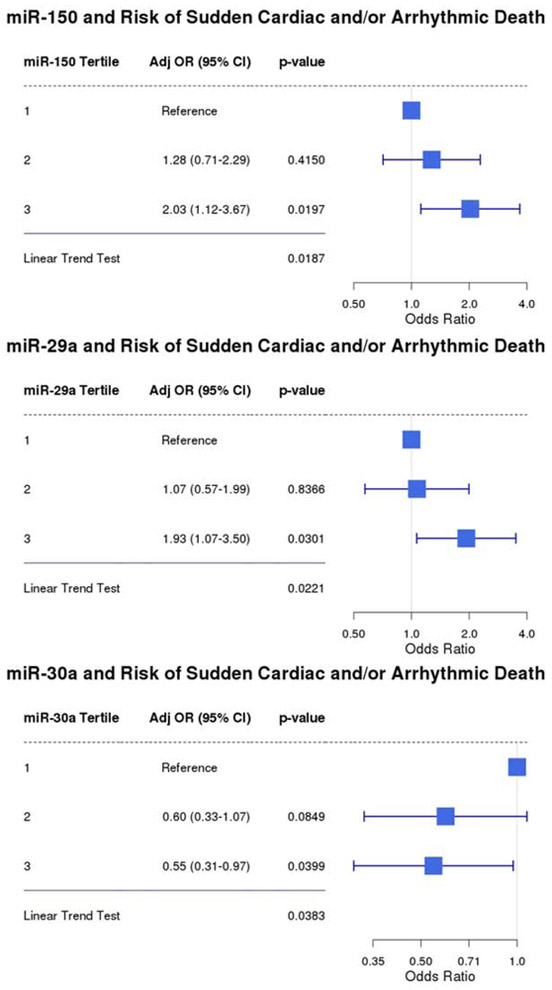
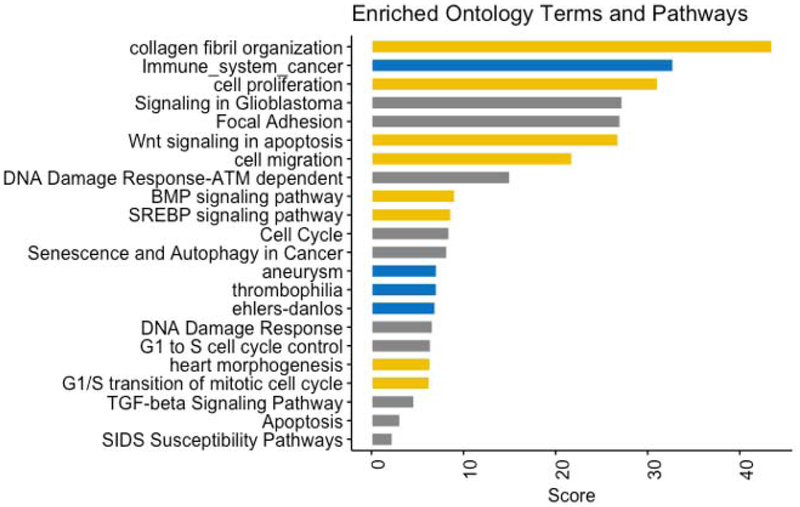
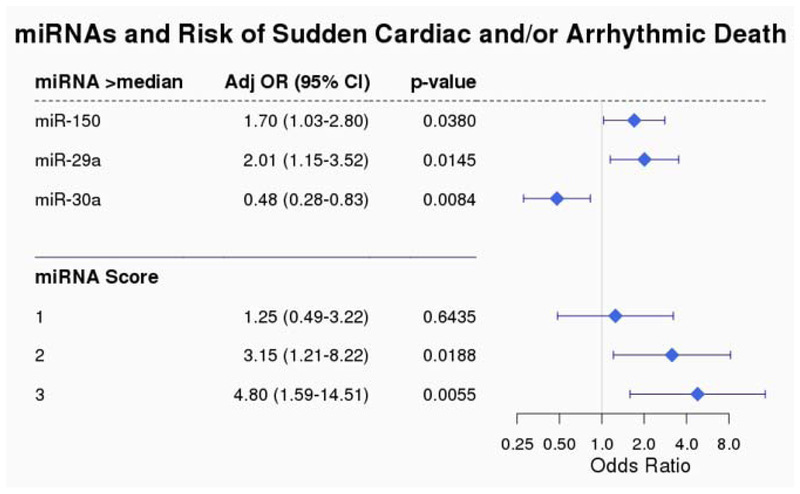
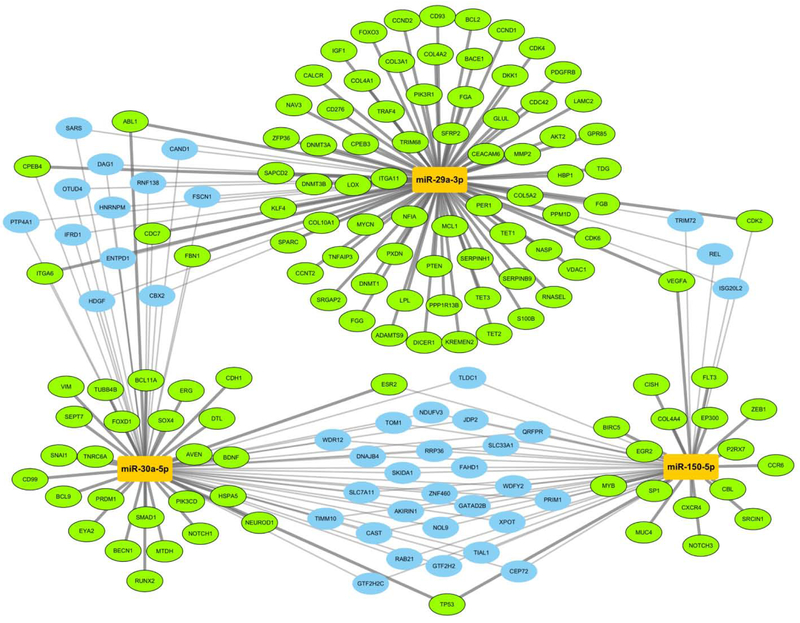
miR-150-5p, miR-29a-3p, and miR-30a-5p were associated with increased SCD risk (odds ratios and 95% confidence intervals: 2.03 [1.12 to 3.67]; p = 0.02; 1.93 [1.07 to 3.50]; p = 0.02; 0.55 [0.31 to 0.97]; p = 0.04, respectively, for third vs. first tertile miRNA level). Unfavorable levels of all 3 miRNAs was associated with a 4.8-fold increased SCD risk (1.59 to 14.51; p = 0.006). A bioinformatics-based approach predicted miR-150-5p, miR-29a-3p, and miR-30a-5p to be involved in apoptosis, fibrosis, and inflammation.
These findings suggest that plasma miRNAs may regulate pathways important for remodeling and may be useful in identifying patients with CHD at increased risk of SCD.
本研究评估了在一个冠心病(CHD)患者队列中,血浆 microRNA(miRNA)是否与心脏性猝死和/或心律失常性死亡(SCD)有特异性关联,该队列中的大多数患者没有植入式心脏复律除颤器的一级预防适应证。
需要新型生物标志物来对 CHD 患者进行 SCD 风险分层,以便更准确地进行预防治疗,如植入式心脏复律除颤器。miRNA 已被认为可调节细胞中的炎症和心肌纤维化,且已有研究显示,血浆 miRNA 可预测 CHD 患者的心血管死亡。
我们对一个前瞻性随访 CHD 患者 SCD 的多中心队列中进行了嵌套病例对照研究。对 129 例 SCD 病例和 258 例年龄、性别、种族和左心室射血分数匹配的对照者的 18 种候选 miRNA 的血浆水平进行了检测,这些 miRNA 之前与心肌重构有关。
miR-150-5p、miR-29a-3p 和 miR-30a-5p 与 SCD 风险增加相关(比值比和 95%置信区间:2.03[1.12 至 3.67];p=0.02;1.93[1.07 至 3.50];p=0.02;0.55[0.31 至 0.97];p=0.04,第三与第一 tert 级 miRNA 水平比较)。所有 3 种 miRNA 的不利水平与 SCD 风险增加 4.8 倍相关(1.59 至 14.51;p=0.006)。基于生物信息学的方法预测 miR-150-5p、miR-29a-3p 和 miR-30a-5p 涉及凋亡、纤维化和炎症。
这些发现表明,血浆 miRNA 可能调节与重构相关的重要途径,并且可能有助于识别 CHD 患者中 SCD 风险增加的患者。