Zhang Xiao, Ehrlich Kenneth C, Yu Fangtang, Hu Xiaojun, Meng Xiang-He, Deng Hong-Wen, Shen Hui, Ehrlich Melanie
Tulane Center for Bioinformatics and Genomics, Department of Biostatistics and Data Science, School of Public Health and Tropical Medicine, Tulane University , New Orleans, LA, USA.
Department of Orthopedics, People's Hospital of Rongchang District , Chongqing, China.
Epigenetics. 2020 Jun-Jul;15(6-7):728-749. doi: 10.1080/15592294.2020.1716491. Epub 2020 Jan 24.
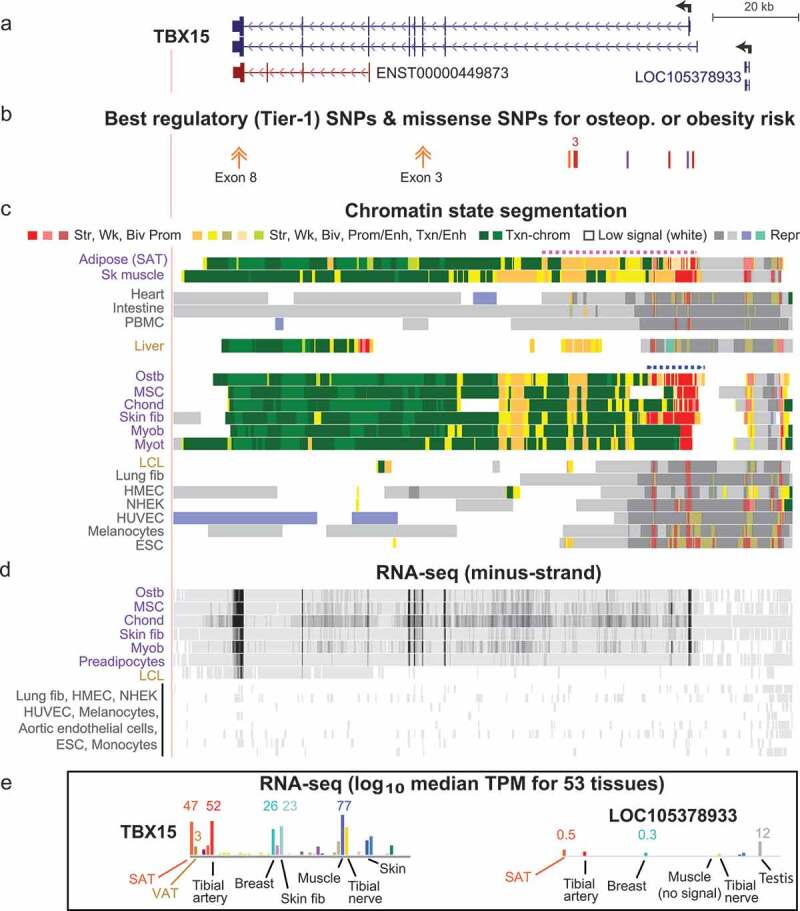
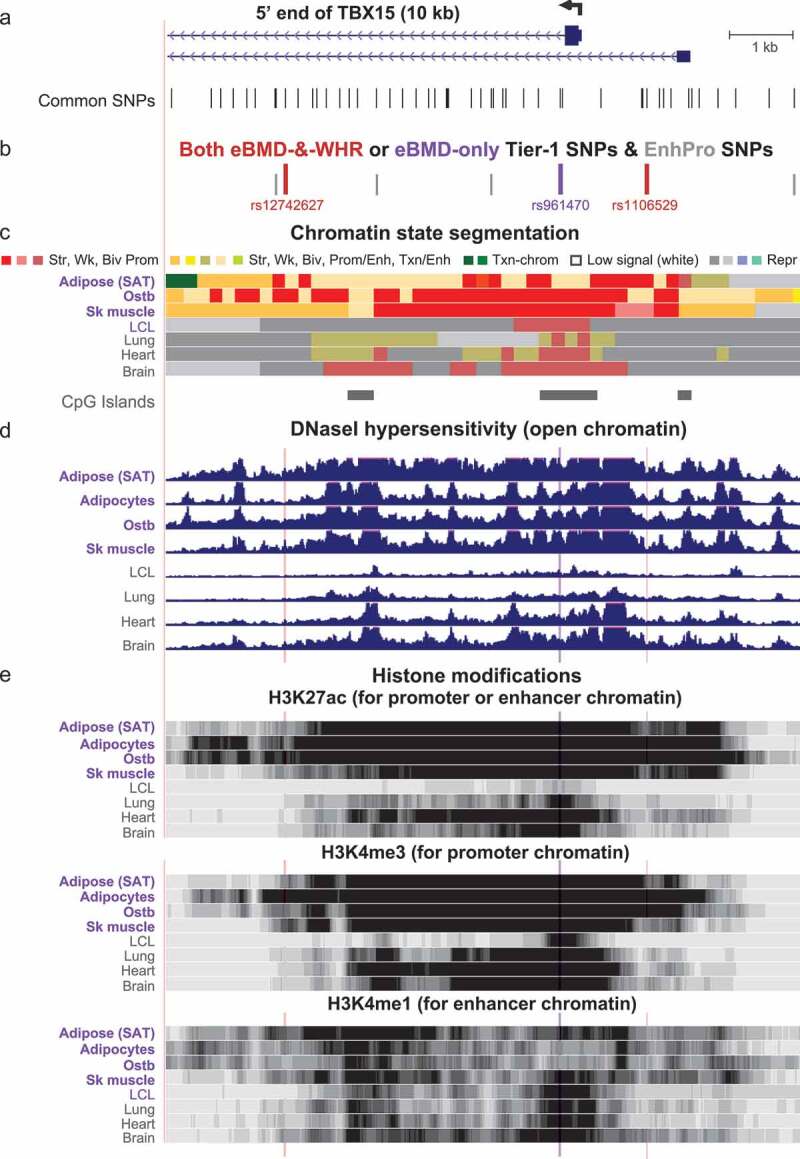
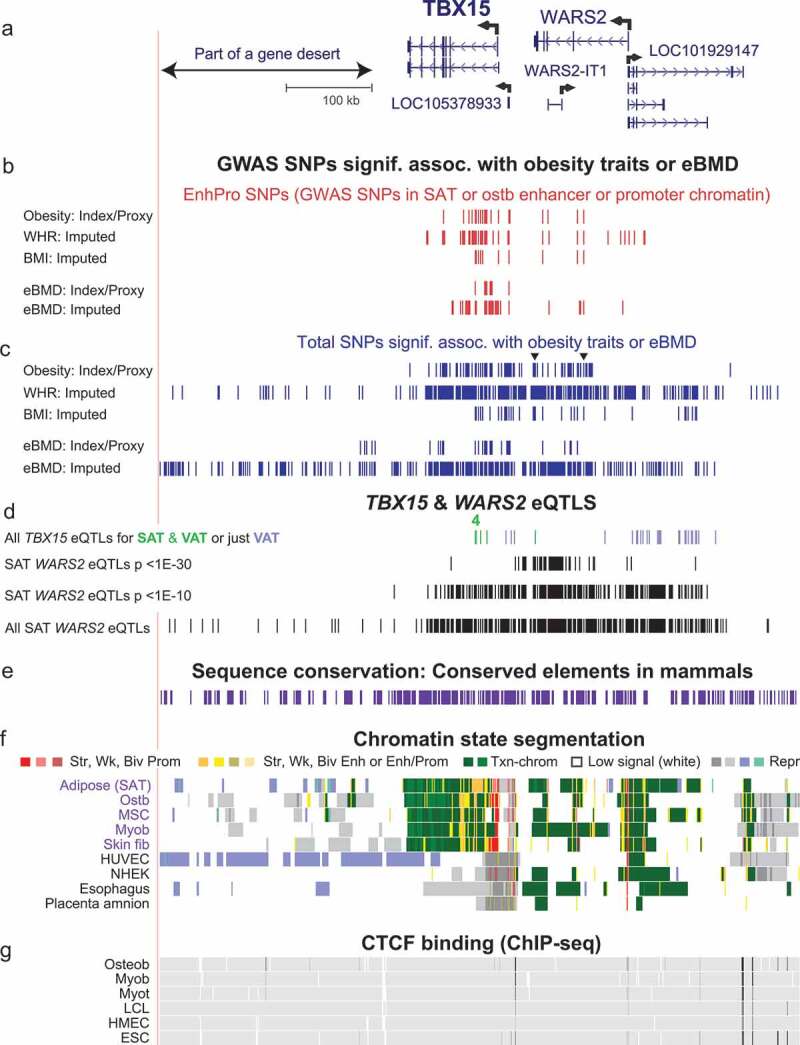
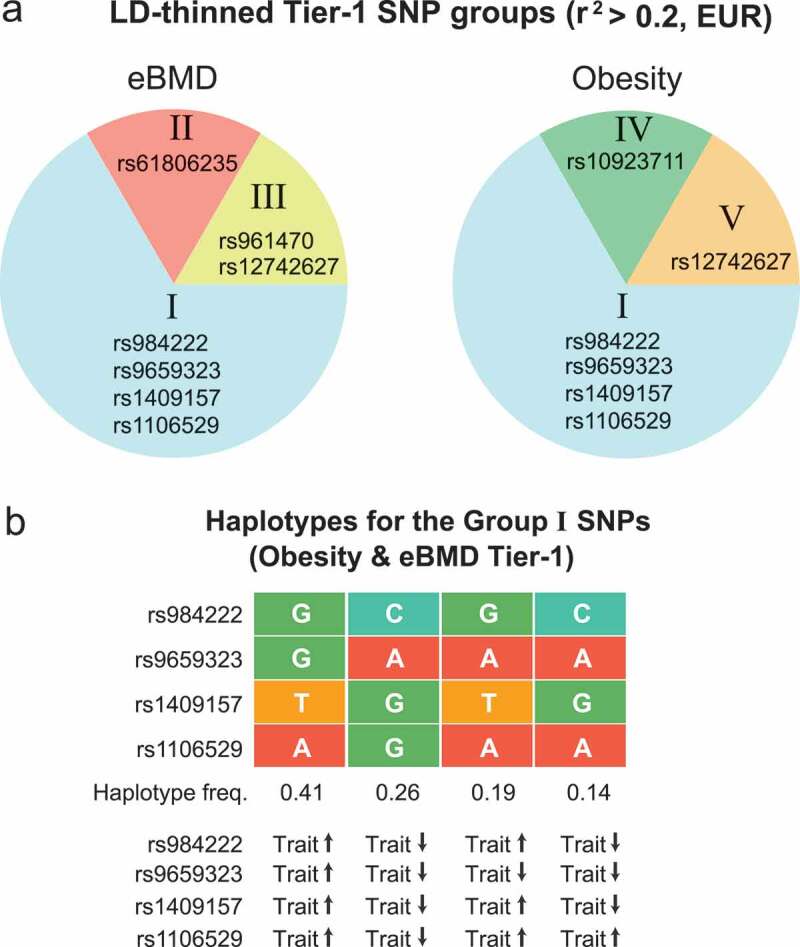
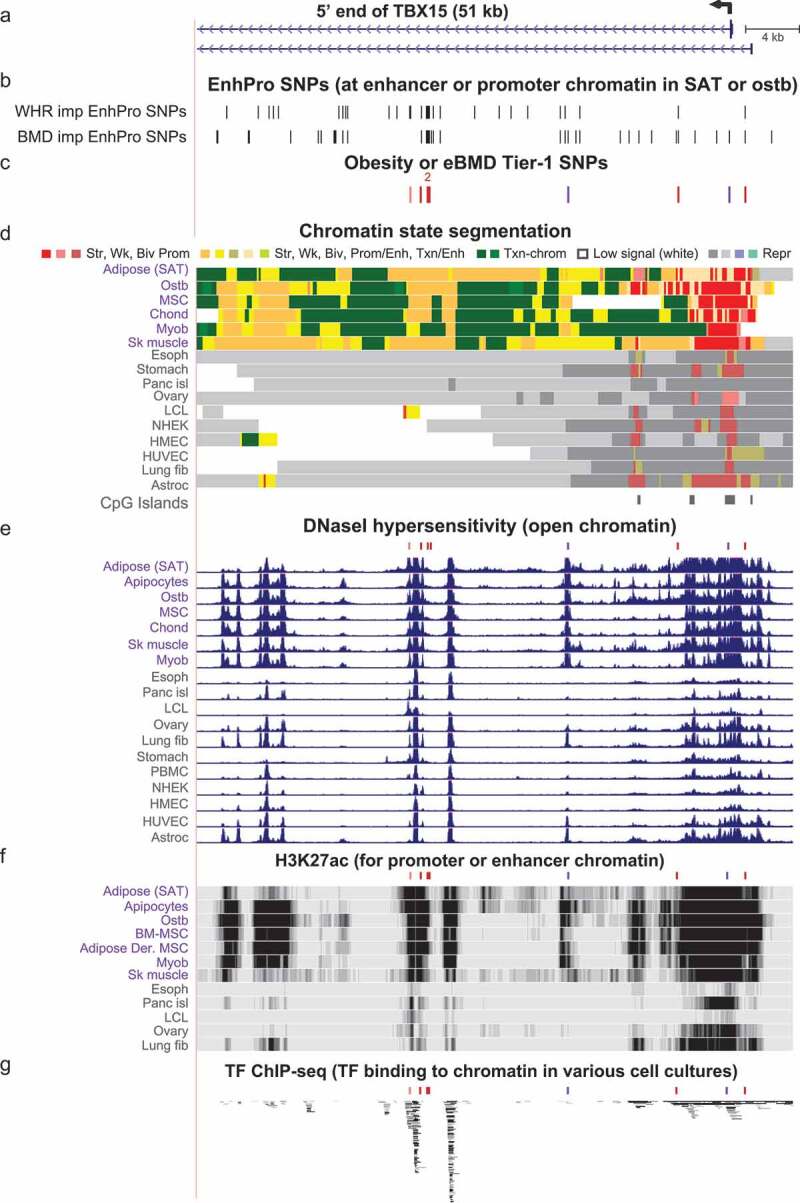
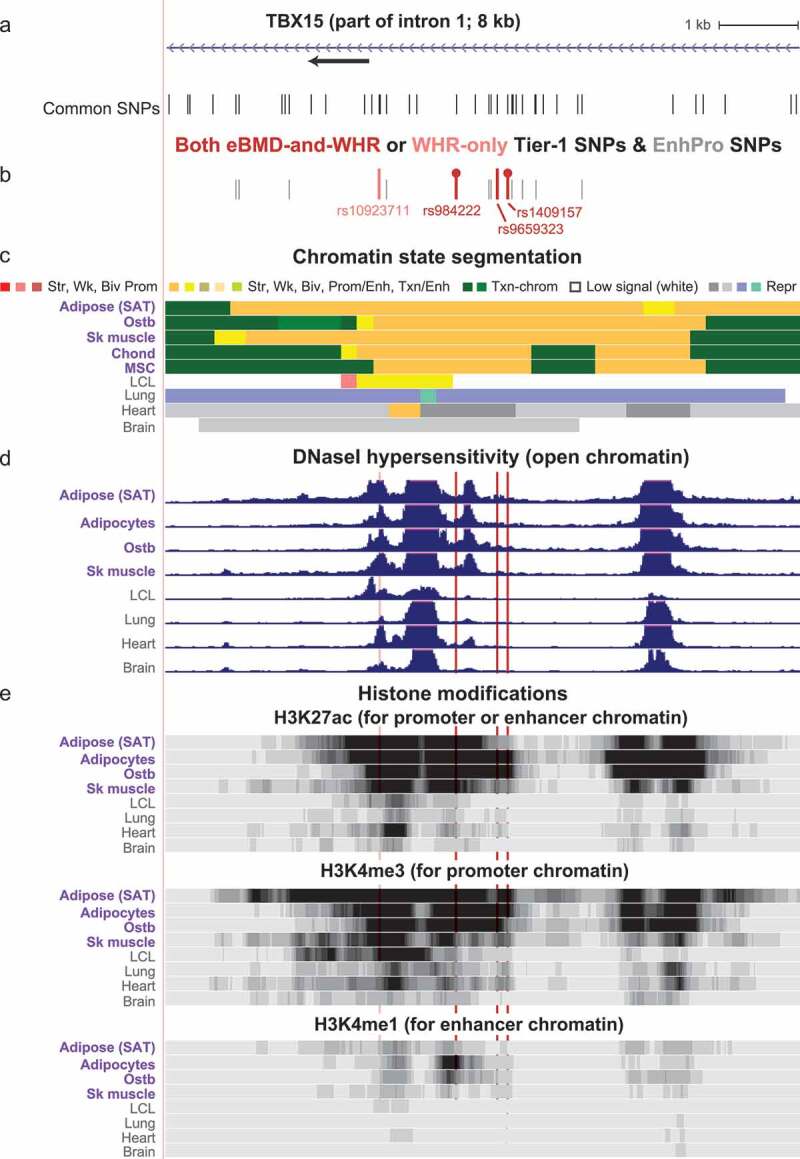
A major challenge in translating findings from genome-wide association studies (GWAS) to biological mechanisms is pinpointing functional variants because only a very small percentage of variants associated with a given trait actually impact the trait. We used an extensive epigenetics, transcriptomics, and genetics analysis of the neighbourhood to prioritize this region's best-candidate causal variants for the genetic risk of osteoporosis (estimated bone density, eBMD) and obesity (waist-hip ratio or waist circumference adjusted for body mass index). encodes a transcription factor that is important in bone development and adipose biology. Manual curation of 692 GWAS-derived variants gave eight strong candidates for causal SNPs that modulate transcription in subcutaneous adipose tissue (SAT) or osteoblasts, which highly and specifically express this gene. None of these SNPs were prioritized by Bayesian fine-mapping. The eight regulatory causal SNPs were in enhancer or promoter chromatin seen preferentially in SAT or osteoblasts at intron-1 or upstream. They overlap strongly predicted, allele-specific transcription factor binding sites. Our analysis suggests that these SNPs act independently of two missense SNPs in . Remarkably, five of the regulatory SNPs were associated with eBMD and obesity and had the same trait-increasing allele for both. We found that obesity-related SNPs can be ascribed to high linkage disequilibrium with intron-1 SNPs. Our findings from GWAS index, proxy, and imputed SNPs suggest that a few SNPs, including three in a 0.7-kb cluster, act as causal regulatory variants to fine-tune expression and, thereby, affect both obesity and osteoporosis risk.
将全基因组关联研究(GWAS)的结果转化为生物学机制的一个主要挑战是确定功能变异,因为与给定性状相关的变异中只有极小一部分实际上会影响该性状。我们对该区域进行了广泛的表观遗传学、转录组学和遗传学分析,以确定该区域中骨质疏松症(估计骨密度,eBMD)和肥胖症(调整体重指数后的腰臀比或腰围)遗传风险的最佳候选因果变异。 编码一种在骨骼发育和脂肪生物学中起重要作用的转录因子。对692个GWAS衍生变异进行人工筛选,得到了8个强有力的因果单核苷酸多态性(SNP)候选者,这些候选者可调节皮下脂肪组织(SAT)或成骨细胞中的转录,而皮下脂肪组织和成骨细胞高度特异性地表达该基因。这些SNP没有一个被贝叶斯精细定位优先考虑。这8个调控因果SNP位于增强子或启动子染色质中,在内含子1或上游优先出现在SAT或成骨细胞中。它们与强烈预测的等位基因特异性转录因子结合位点重叠。我们的分析表明,这些SNP的作用独立于 中的两个错义SNP。值得注意的是,其中5个调控SNP与eBMD和肥胖相关,并且对两者具有相同的增加性状的等位基因。我们发现,与肥胖相关的SNP可归因于与内含子1 SNP的高度连锁不平衡。我们从GWAS索引、代理和推断SNP中得到的结果表明,少数SNP,包括一个0.7 kb簇中的三个SNP,作为因果调控变异来微调 表达,从而影响肥胖症和骨质疏松症风险。