Department of Medicine, Division Hematology/Oncology, Feinberg School of Medicine, Northwestern University, Chicago, IL, 60611, USA.
Department of Pharmacology, College of Medicine, University of Illinois at Chicago, Chicago, IL, 60612, USA.
Sci Rep. 2020 Jan 28;10(1):1310. doi: 10.1038/s41598-020-58211-3.
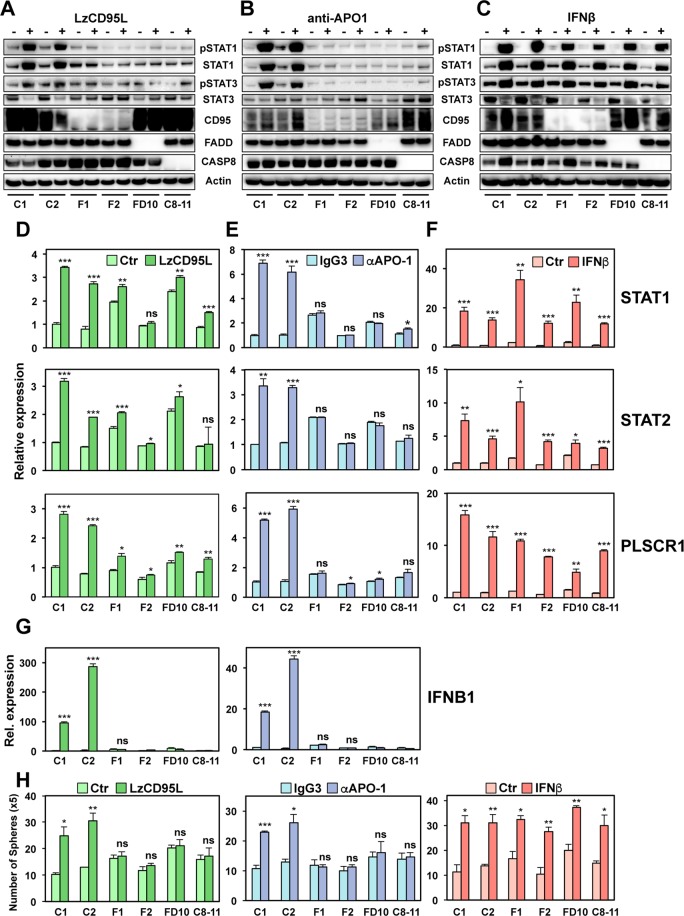
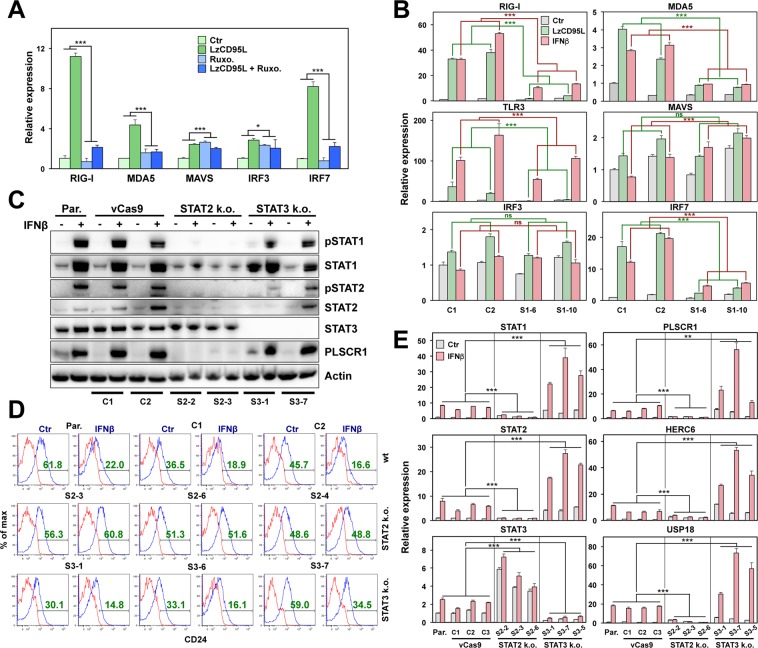
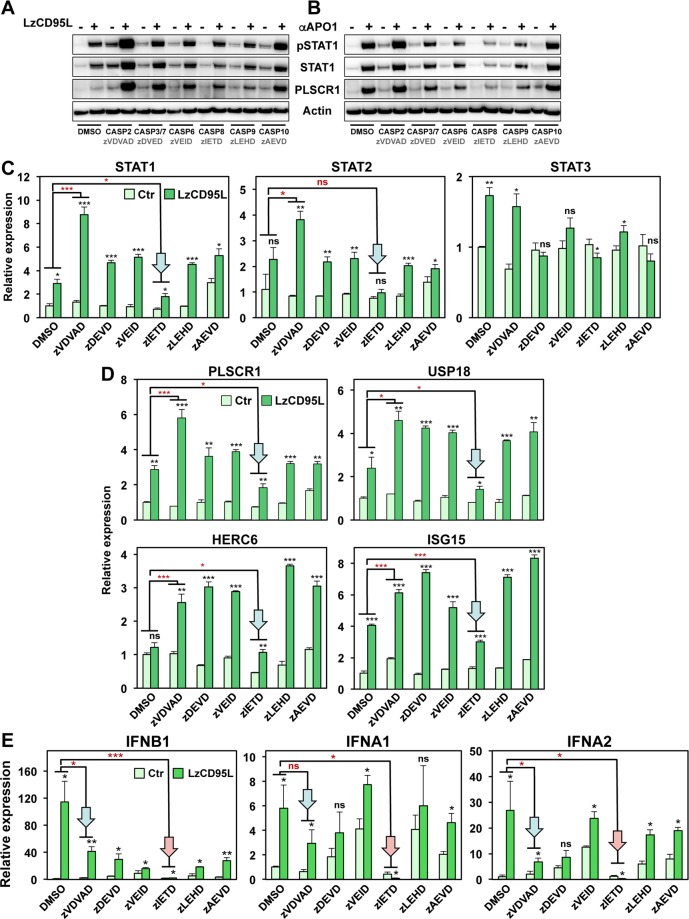
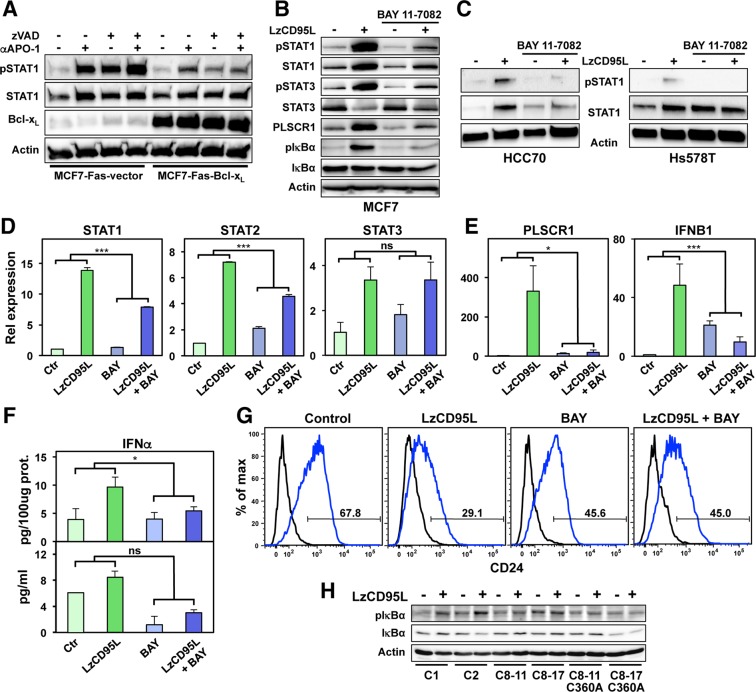
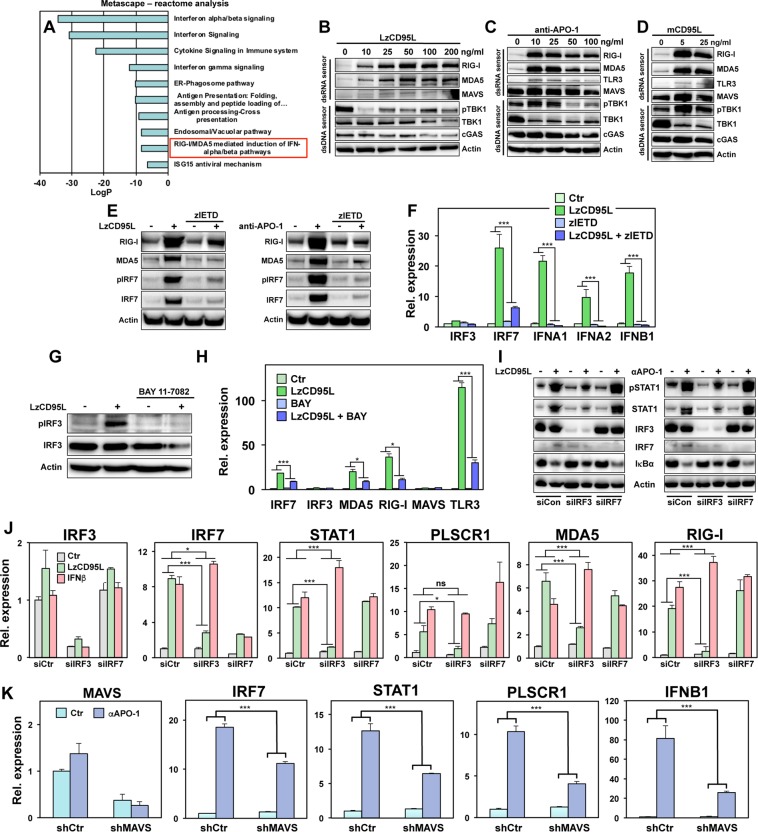
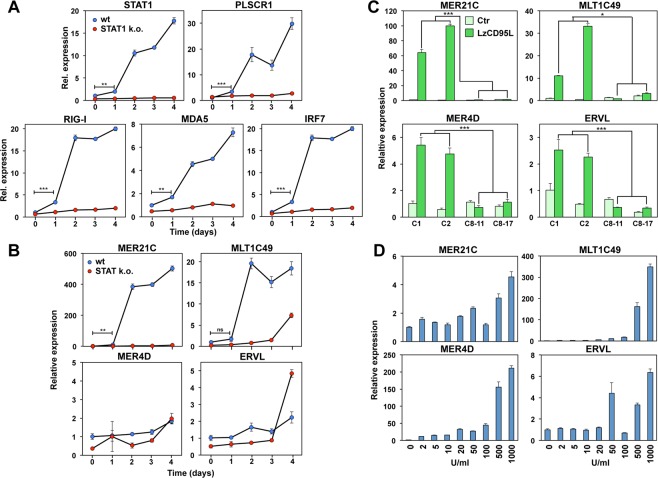
CD95/Fas is an apoptosis inducing death receptor. However, it also has multiple nonapoptotic activities that are tumorigenic. Chronic stimulation of CD95 on breast cancer cells can increase their cancer initiating capacity through activation of a type I interferon (IFN-I)/STAT1 pathway when caspases are inhibited. We now show that this activity relies on the canonical components of the CD95 death-inducing signaling complex, FADD and caspase-8, and on the activation of NF-κB. We identified caspase-2 as the antagonistic caspase that downregulates IFN-I production. Once produced, IFN-Is bind to their receptors activating both STAT1 and STAT2 resulting in upregulation of the double stranded (ds)RNA sensor proteins RIG-I and MDA5, and a release of a subset of endogenous retroviruses. Thus, CD95 is part of a complex cell autonomous regulatory network that involves activation of innate immune components that drive cancer stemness and contribute to therapy resistance.
CD95/Fas 是一种诱导细胞凋亡的死亡受体。然而,它也具有多种非凋亡活性,这些活性具有致瘤性。当半胱天冬酶被抑制时,慢性刺激乳腺癌细胞上的 CD95 可以通过激活 I 型干扰素 (IFN-I)/STAT1 途径来增加它们的癌症起始能力。我们现在表明,这种活性依赖于 CD95 诱导死亡信号复合物的经典组成部分,FADD 和半胱天冬酶-8,以及 NF-κB 的激活。我们确定半胱天冬酶-2 是下调 IFN-I 产生的拮抗半胱天冬酶。一旦产生,IFN-Is 与它们的受体结合,激活 STAT1 和 STAT2,导致双链 (ds)RNA 传感器蛋白 RIG-I 和 MDA5 的上调,以及一组内源性逆转录病毒的释放。因此,CD95 是一个复杂的细胞自主调节网络的一部分,该网络涉及激活先天免疫成分,驱动癌症干性并导致治疗耐药性。