Institute of Environmental Engineering, Polish Academy of Sciences, 34 M. Skłodowskiej-Curie Street, 41-819, Zabrze, Poland.
Environ Sci Pollut Res Int. 2020 Apr;27(11):12358-12375. doi: 10.1007/s11356-020-07758-9. Epub 2020 Jan 28.
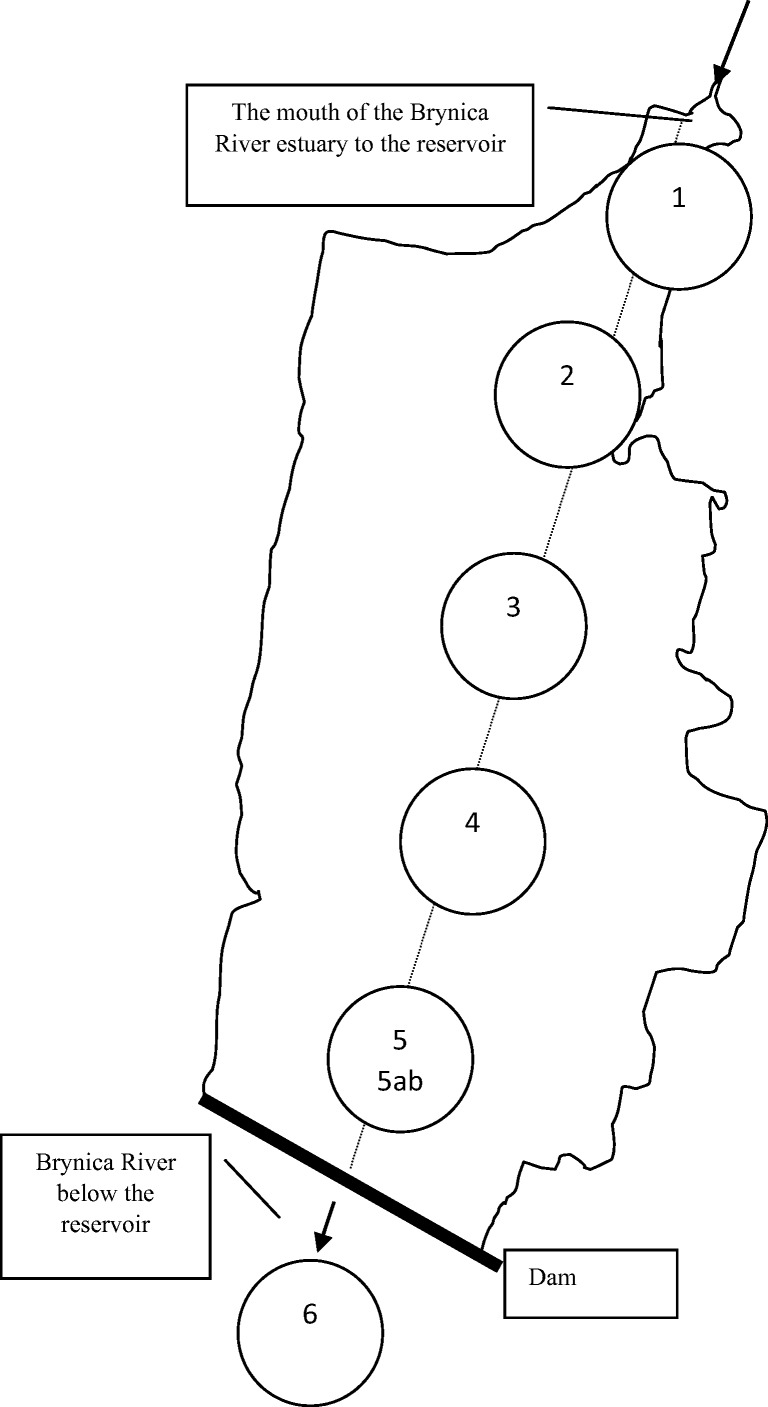
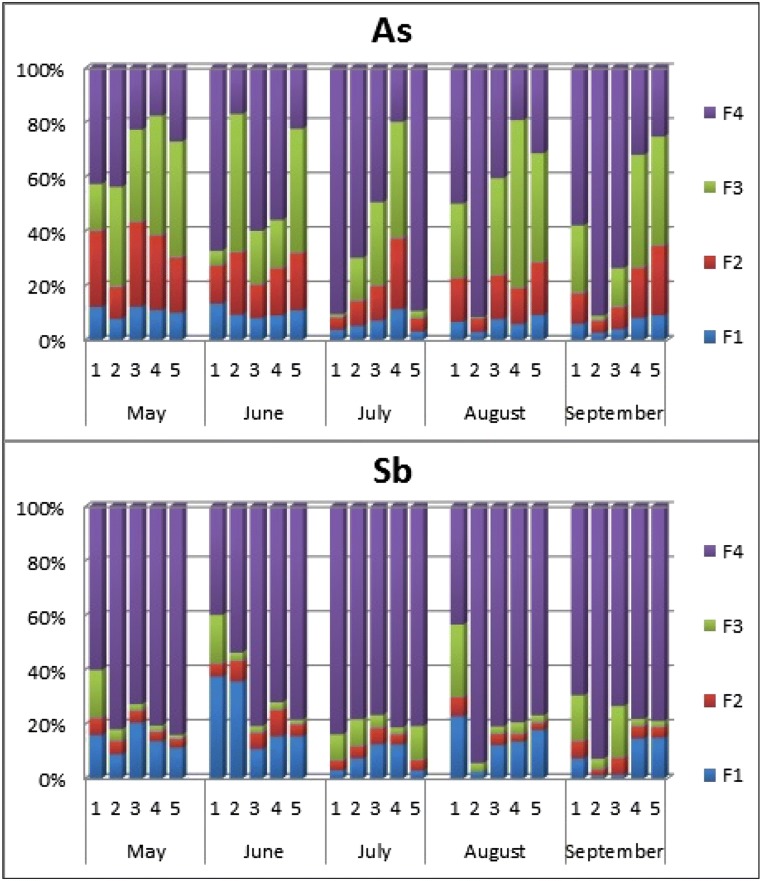
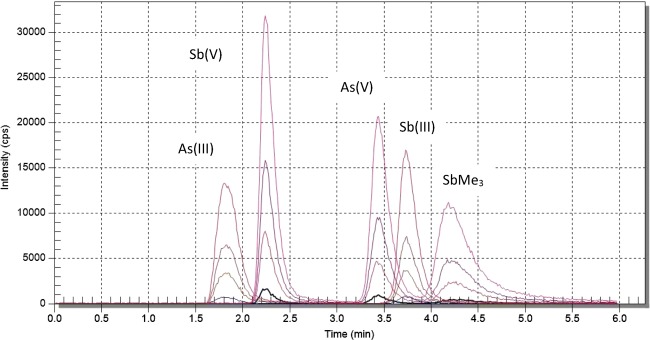
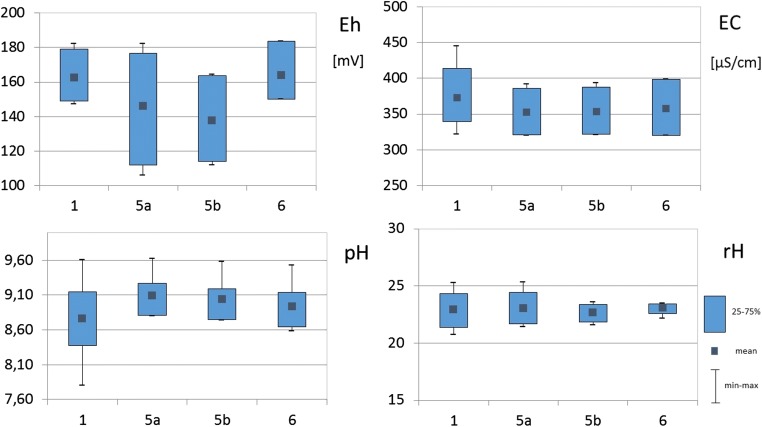
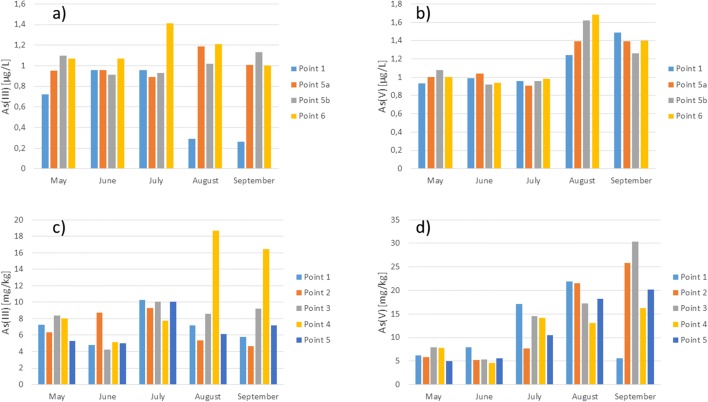
The optimization of new methodology for simultaneous determination of arsenic [As(III), As(V)] and antimony [Sb(III), Sb(V), SbMe] species using high-performance liquid chromatography (HPLC) coupled with inductively coupled plasma mass spectrometry (ICP-MS) in water and bottom sediment samples collected from the dam Kozłowa Góra Reservoir (Poland) was studied. Samples were collected monthly from May to September 2018 in four-point (water) and fifth-point (sediment) transects. The contents of Mn, Co, Ni, Cu, Zn, As, Cr, Rb, Sr, Cd, Sb, Ba, Tl, Pb, and Sb were studied in water and bottom sediments using ICP-MS techniques. Additionally, arsenic and antimony fractions were determined in sediments with the BCR method. Pollution Load Index (PLI), Geoaccumulation Index (I), LAWA classification, and Sb/As ratio indicated the presence of extreme sediment pollution for Zn, Cd, Pb, and Cr from anthropogenic sources. Research has shown that the easy-leached bottom sediment fraction contained in most cases more As(V) and Sb(V). But often Sb(V) concentration was equal as Sb(III), which can be released into the pelagic zone under favorable conditions. Even though As(V) and Sb(V) prevail in the reservoir bottom sediments, they can be transformed into As(III) and Sb(III) as a result of drastic changes in pH or redox potential. The Kozłowa Góra sediments are heavily polluted with Pb, Zn, Cd, and As, Cu, and Ni. The highest concentrations of the heavy metals were recorded in the middle of the tank and there was a small spatial variability. The migration of metals along the reservoir transect was closely related to its morphometry.
采用高效液相色谱(HPLC)-电感耦合等离子体质谱(ICP-MS)联用技术对从波兰 Kozłowa Góra 大坝水库(波兰)采集的水样和底泥样品中砷[As(III)、As(V)]和锑[Sb(III)、Sb(V)、SbMe]形态进行同时测定的新方法进行了优化。2018 年 5 月至 9 月,在四点(水样)和五点(底泥样)横截线上每月采集一次样品。采用 ICP-MS 技术研究了水中的 Mn、Co、Ni、Cu、Zn、As、Cr、Rb、Sr、Cd、Sb、Ba、Tl、Pb 和 Sb 的含量,以及底泥中的 Sb 和 As 形态。此外,还采用 BCR 法测定了沉积物中的砷和锑形态。污染负荷指数(PLI)、地积累指数(I)、LAWA 分类和 Sb/As 比值表明,Zn、Cd、Pb 和 Cr 受到人为来源的强烈污染。研究表明,易于浸出的底泥部分在大多数情况下含有更多的 As(V)和 Sb(V)。但 Sb(V)的浓度通常与 Sb(III)相等,在有利条件下可释放到水层区。尽管水库底泥中主要存在 As(V)和 Sb(V),但由于 pH 值或氧化还原电位的剧烈变化,它们可转化为 As(III)和 Sb(III)。Kozłowa Góra 沉积物受到 Pb、Zn、Cd 和 As、Cu 和 Ni 的严重污染。重金属的最高浓度记录在水池的中部,空间变异性较小。金属沿水库横截面上的迁移与水库形态密切相关。