Ball Richard D, Bertone Valerio, Carrazza Stefano, Debbio Luigi Del, Forte Stefano, Groth-Merrild Patrick, Guffanti Alberto, Hartland Nathan P, Kassabov Zahari, Latorre José I, Nocera Emanuele R, Rojo Juan, Rottoli Luca, Slade Emma, Ubiali Maria
1The Higgs Centre for Theoretical Physics, University of Edinburgh, JCMB, KB, Mayfield Rd, Edinburgh, EH9 3JZ Scotland.
2Department of Physics and Astronomy, VU University, 1081 HV Amsterdam, The Netherlands.
Eur Phys J C Part Fields. 2017;77(10):663. doi: 10.1140/epjc/s10052-017-5199-5. Epub 2017 Oct 4.
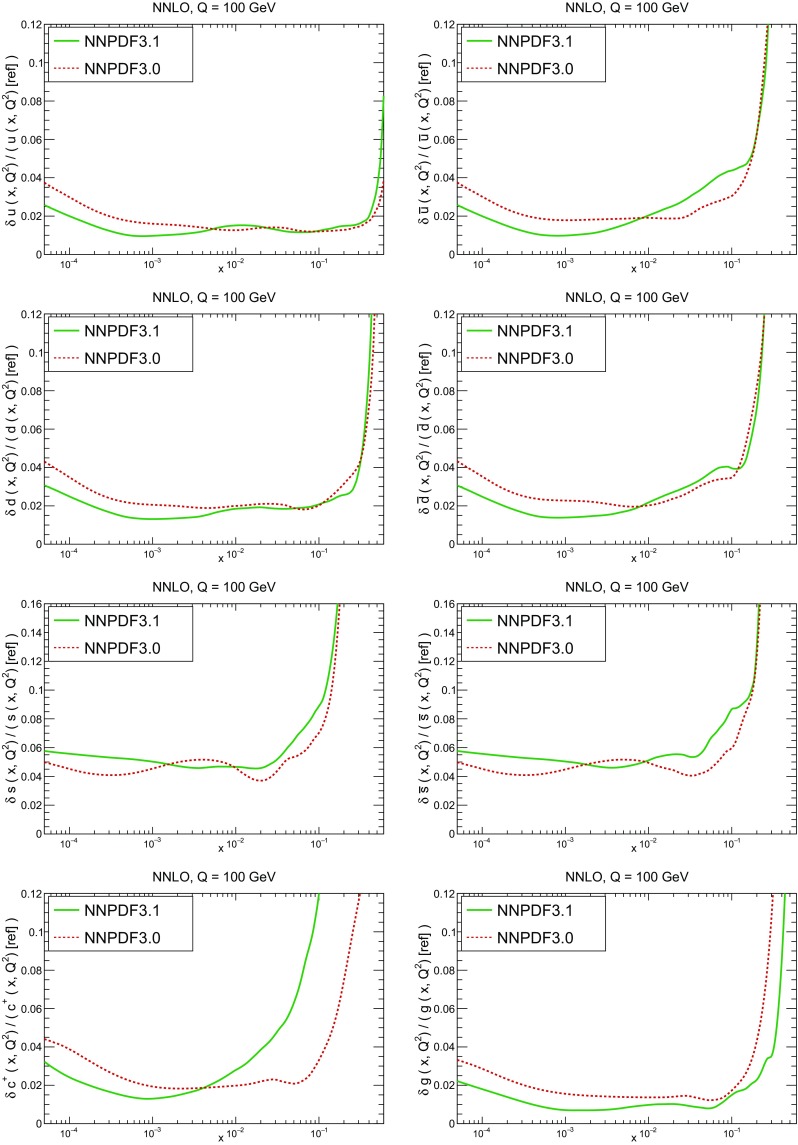
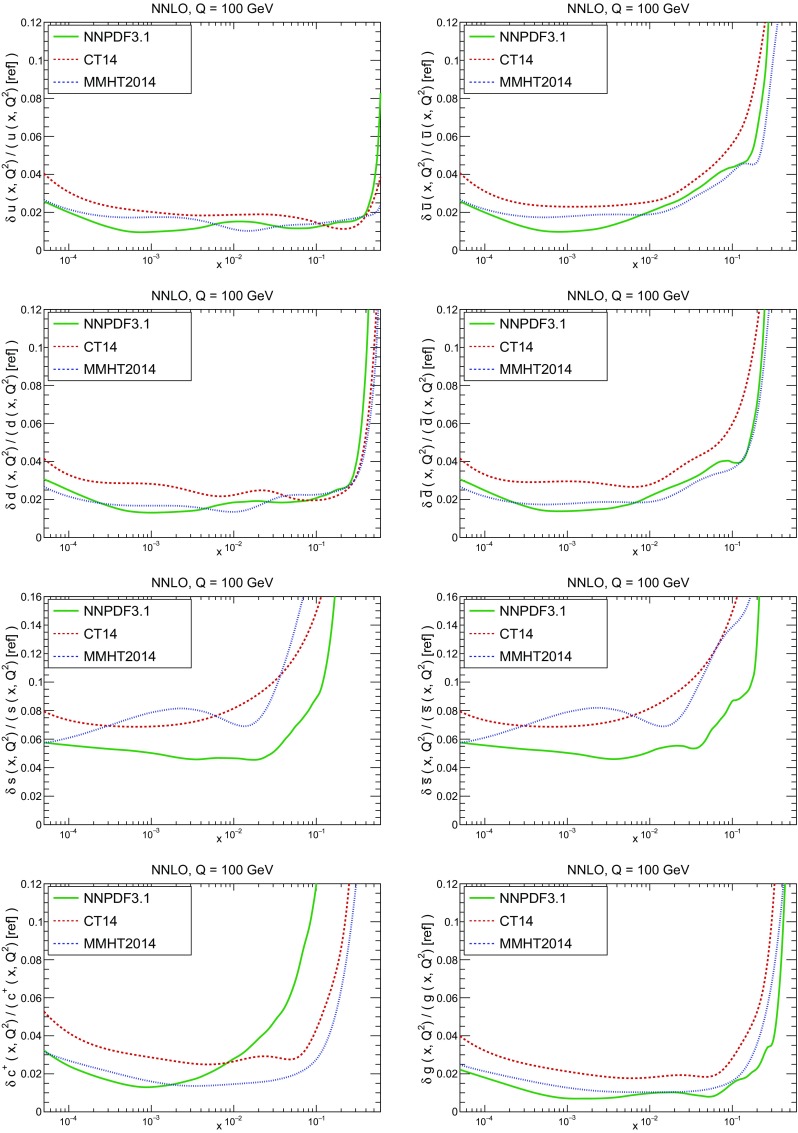
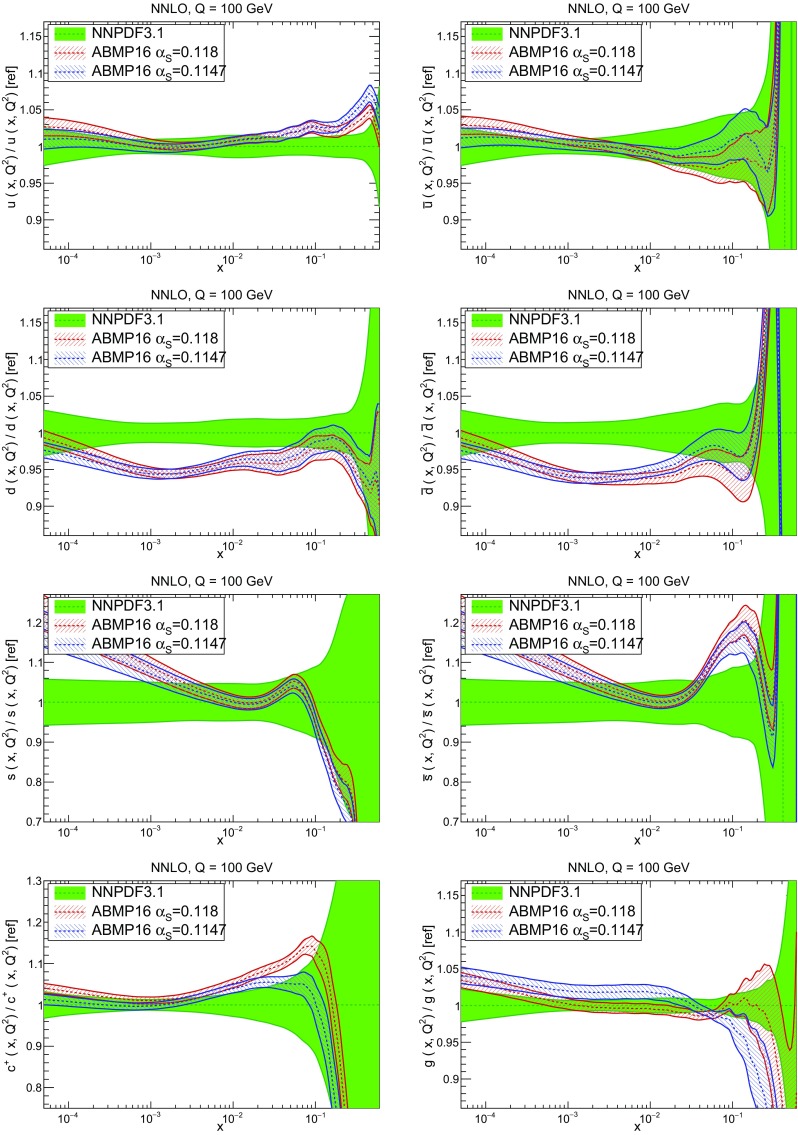
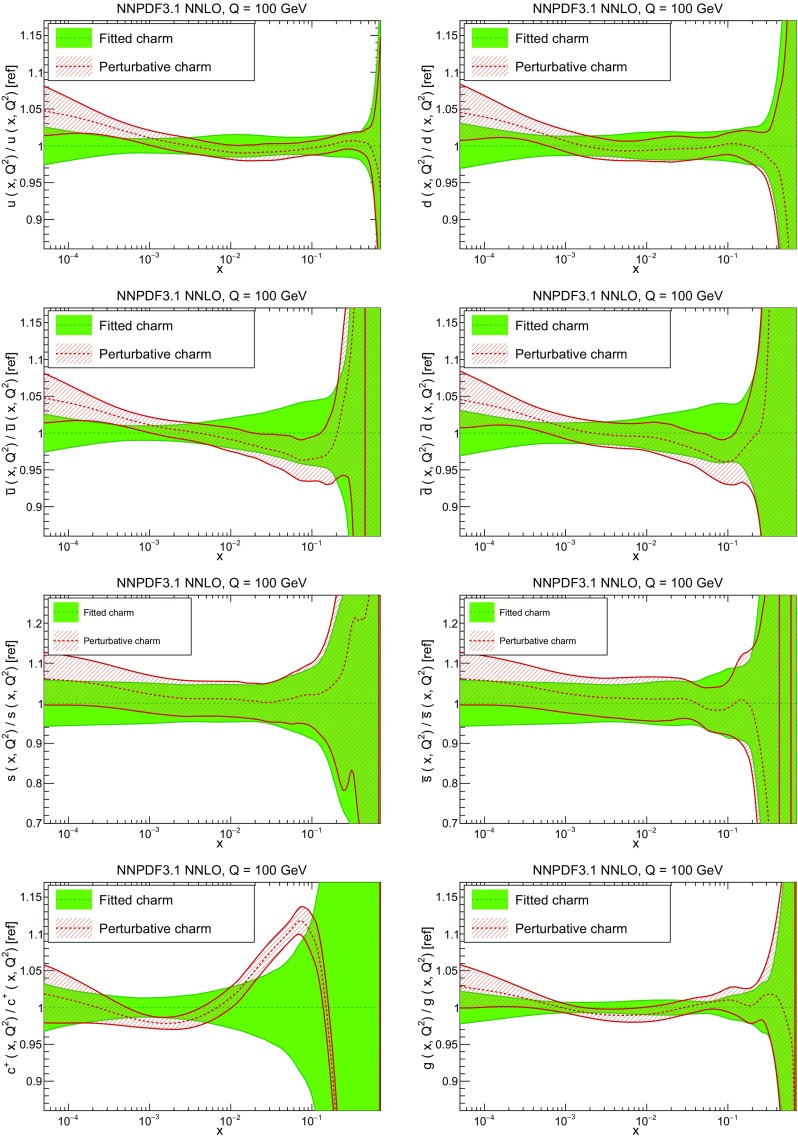
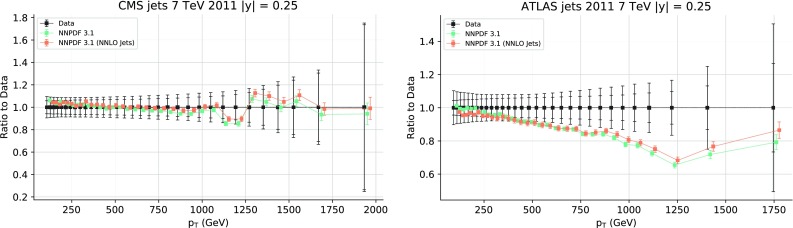
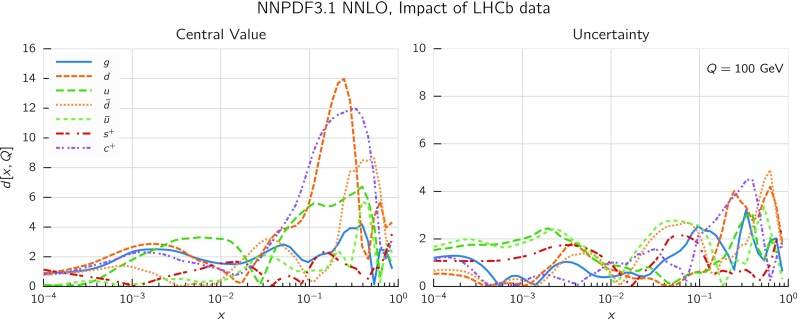
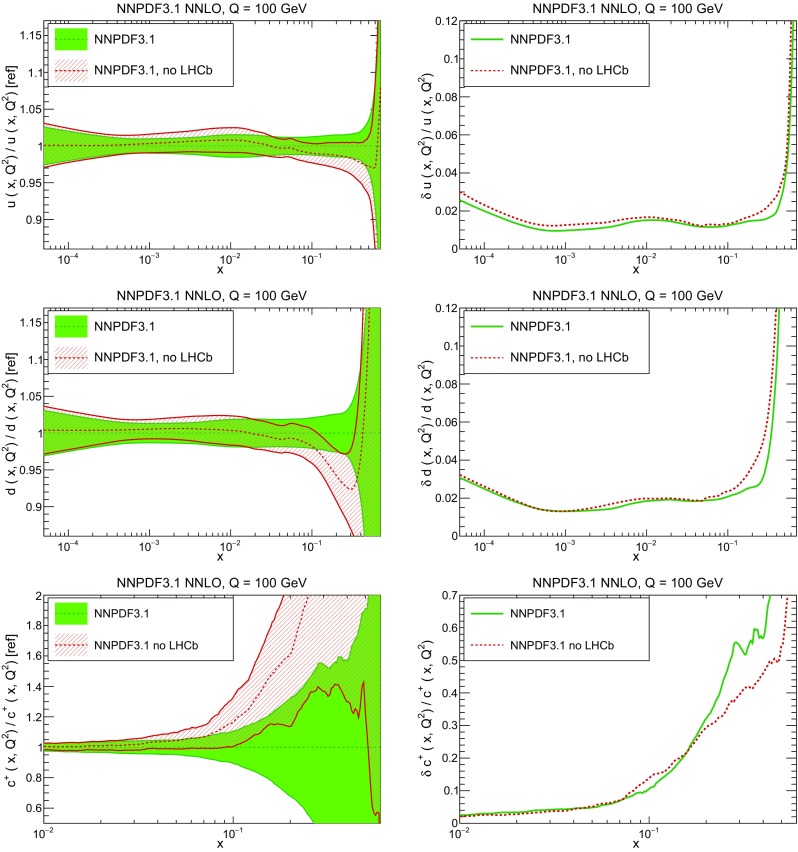
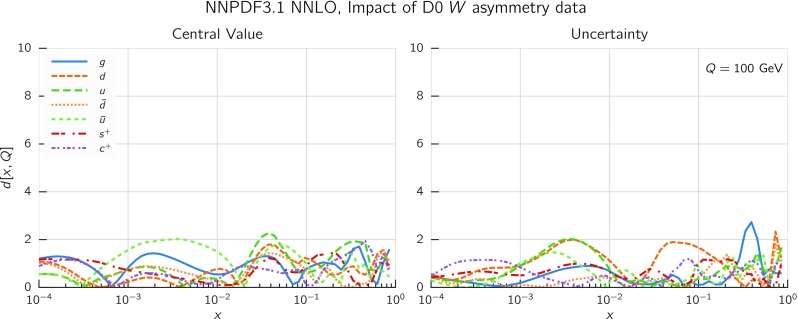
We present a new set of parton distributions, NNPDF3.1, which updates NNPDF3.0, the first global set of PDFs determined using a methodology validated by a closure test. The update is motivated by recent progress in methodology and available data, and involves both. On the methodological side, we now parametrize and determine the charm PDF alongside the light-quark and gluon ones, thereby increasing from seven to eight the number of independent PDFs. On the data side, we now include the D0 electron and muon asymmetries from the final Tevatron dataset, the complete LHCb measurements of and production in the forward region at 7 and 8 TeV, and new ATLAS and CMS measurements of inclusive jet and electroweak boson production. We also include for the first time top-quark pair differential distributions and the transverse momentum of the bosons from ATLAS and CMS. We investigate the impact of parametrizing charm and provide evidence that the accuracy and stability of the PDFs are thereby improved. We study the impact of the new data by producing a variety of determinations based on reduced datasets. We find that both improvements have a significant impact on the PDFs, with some substantial reductions in uncertainties, but with the new PDFs generally in agreement with the previous set at the one-sigma level. The most significant changes are seen in the light-quark flavor separation, and in increased precision in the determination of the gluon. We explore the implications of NNPDF3.1 for LHC phenomenology at Run II, compare with recent LHC measurements at 13 TeV, provide updated predictions for Higgs production cross-sections and discuss the strangeness and charm content of the proton in light of our improved dataset and methodology. The NNPDF3.1 PDFs are delivered for the first time both as Hessian sets, and as optimized Monte Carlo sets with a compressed number of replicas.
我们展示了一套新的部分子分布函数,即NNPDF3.1,它是对NNPDF3.0的更新。NNPDF3.0是首个使用通过闭包检验验证的方法确定的全球部分子分布函数集。此次更新是由方法学和可用数据方面的最新进展推动的,两者都有所涉及。在方法学方面,我们现在对粲夸克部分子分布函数以及轻夸克和胶子部分子分布函数进行参数化并确定,从而使独立部分子分布函数的数量从七个增加到八个。在数据方面,我们现在纳入了来自Tevatron最终数据集的D0电子和μ子不对称性数据、LHCb在7和8 TeV时在前向区域对粲夸克和底夸克产生的完整测量数据,以及ATLAS和CMS对包容性喷注和电弱玻色子产生的新测量数据。我们还首次纳入了顶夸克对的微分分布以及来自ATLAS和CMS的W玻色子的横向动量数据。我们研究了对粲夸克进行参数化的影响,并提供证据表明部分子分布函数的准确性和稳定性由此得到了提高。我们通过基于简化数据集进行各种确定来研究新数据的影响。我们发现这两方面的改进都对部分子分布函数有显著影响,不确定性有一些大幅降低,但新的部分子分布函数通常在一西格玛水平上与先前的数据集一致。最显著的变化出现在轻夸克味分离方面,以及胶子确定精度的提高方面。我们探讨了NNPDF3.1对大型强子对撞机(LHC)第二阶段现象学的影响,与13 TeV时LHC的近期测量结果进行比较,提供希格斯玻色子产生截面的更新预测,并根据我们改进的数据集和方法讨论质子的奇异夸克和粲夸克含量。NNPDF3.1部分子分布函数首次以海森矩阵集以及具有压缩副本数量的优化蒙特卡罗集的形式提供。