Department of Hepatobiliary Surgery, First Affiliated Hospital of Bengbu Medical College, Bengbu, 233000 Anhui Province, China.
Department of Hepatobiliary Surgery, First Affiliated Hospital of Xi'an Jiaotong University, Xi'an, 710061 Shaanxi Province, China.
Oxid Med Cell Longev. 2020 Jan 6;2020:7504521. doi: 10.1155/2020/7504521. eCollection 2020.
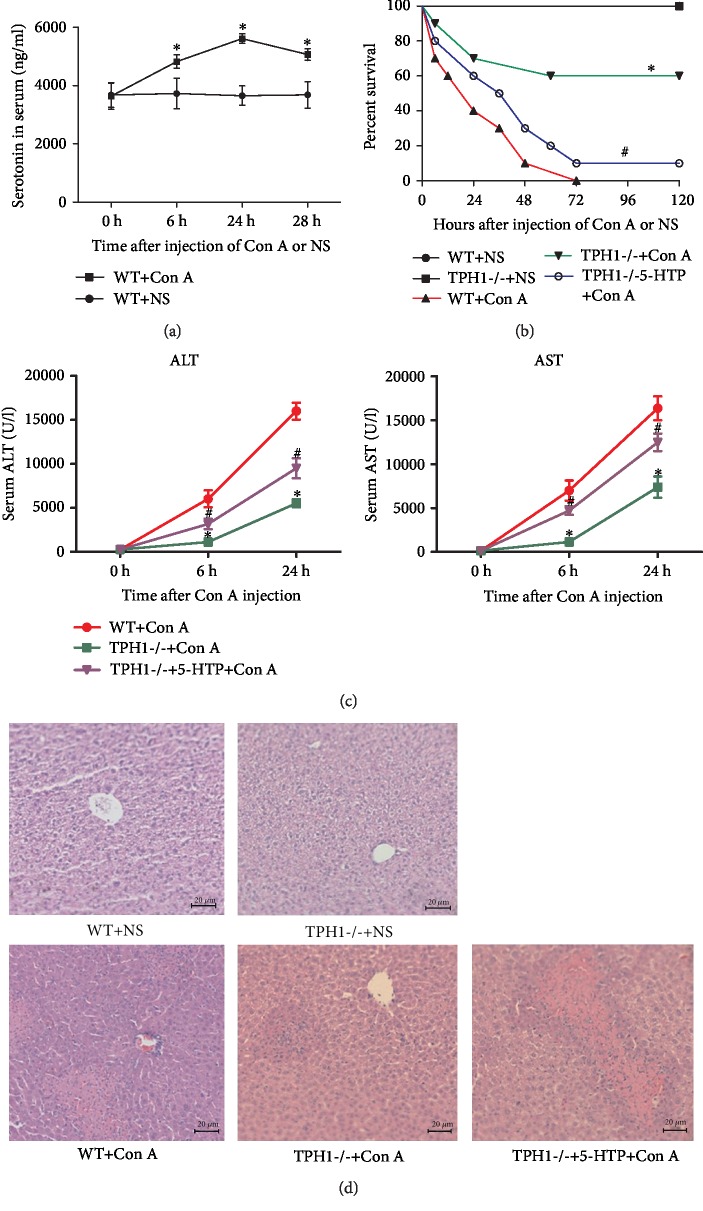
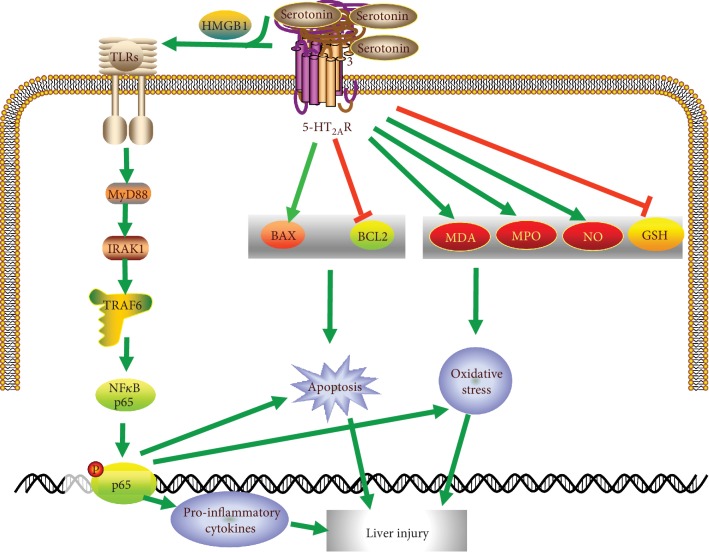
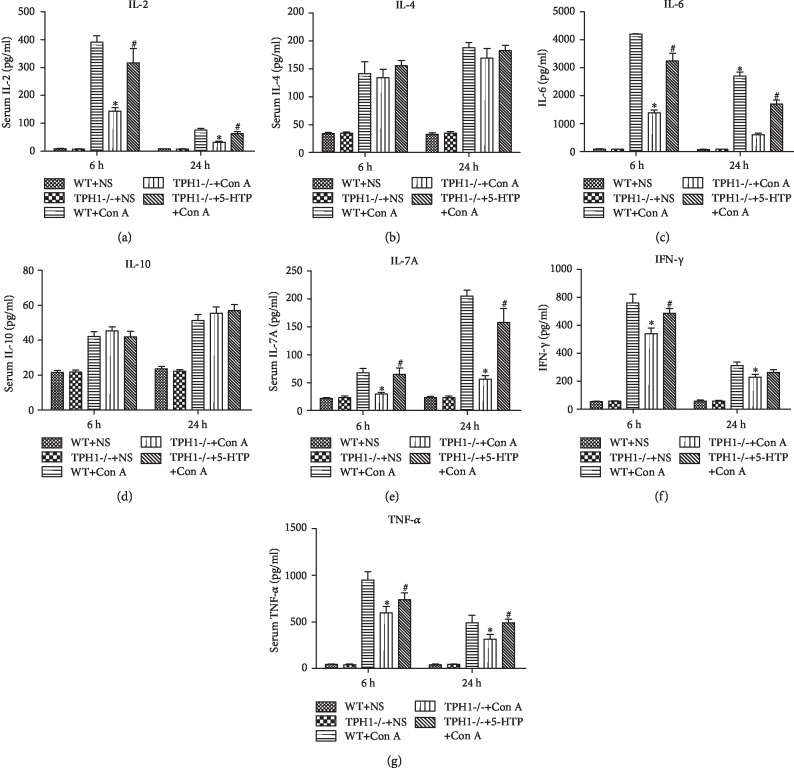
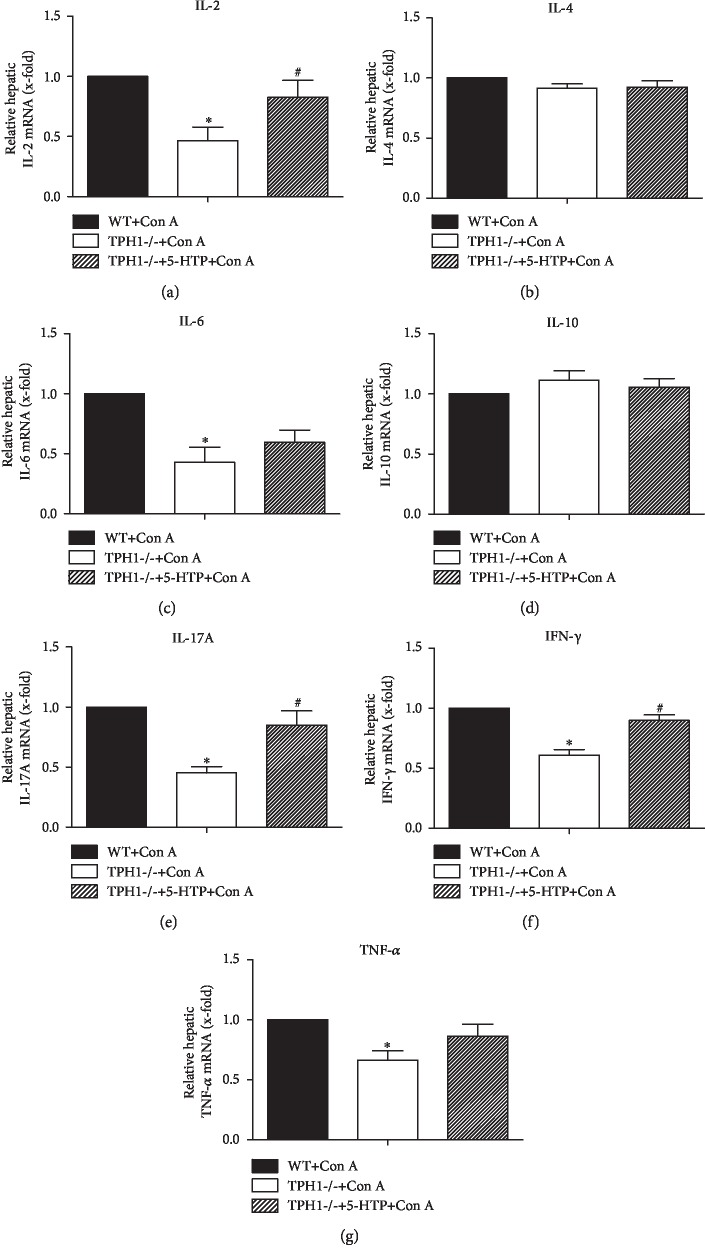
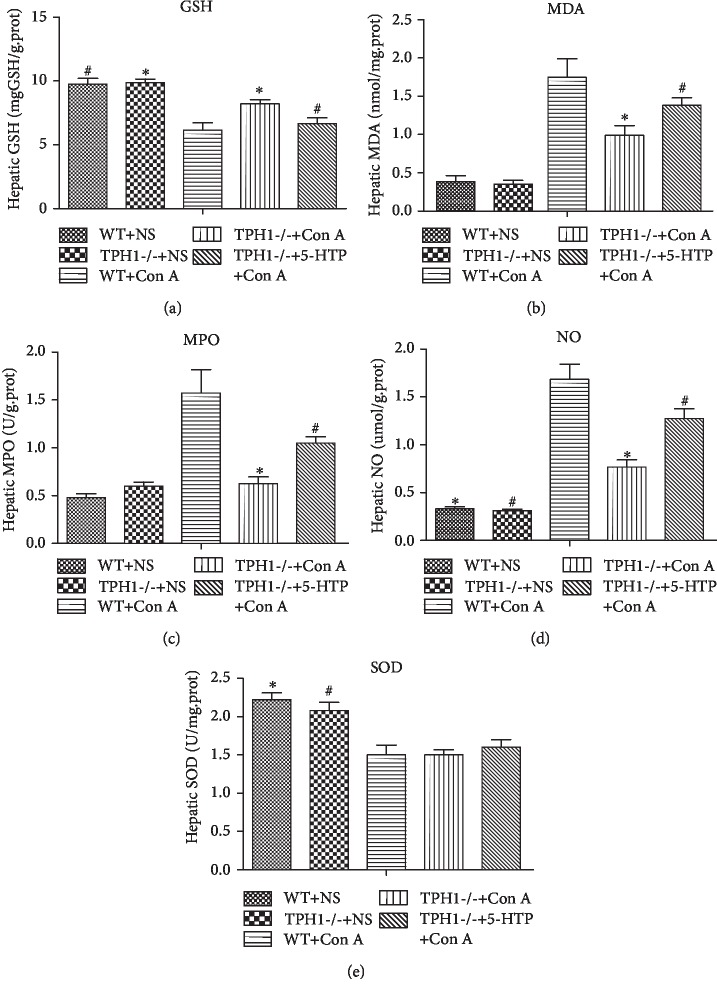
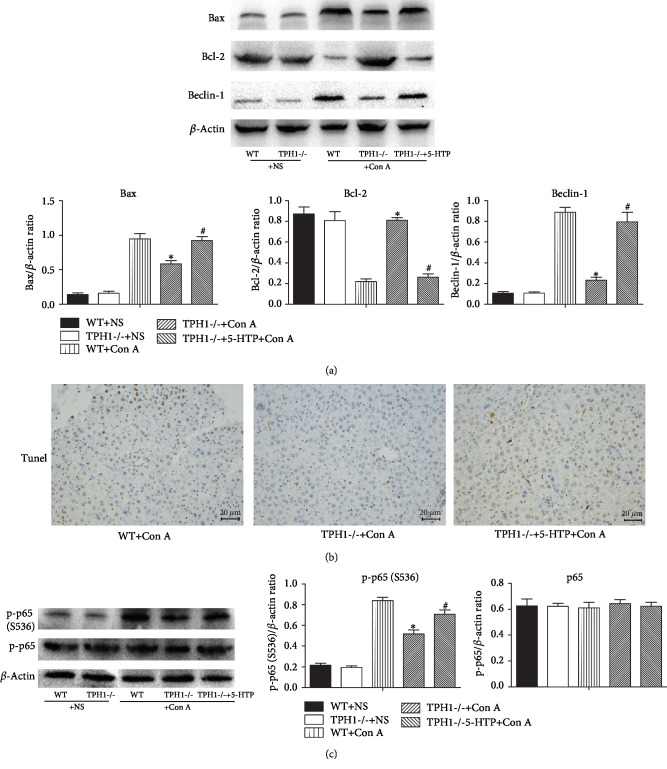
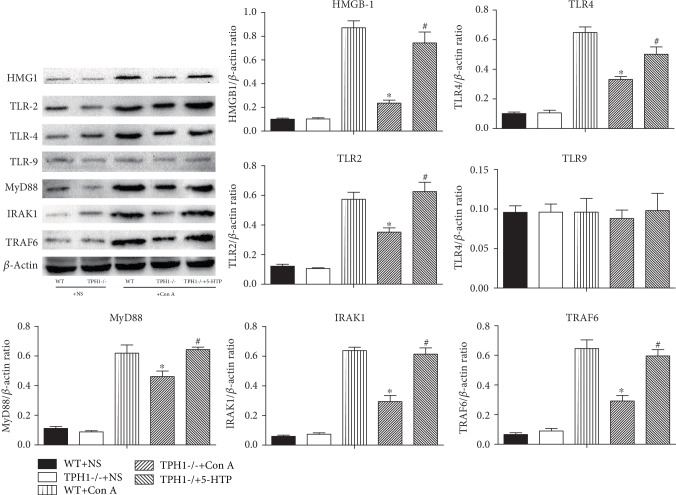
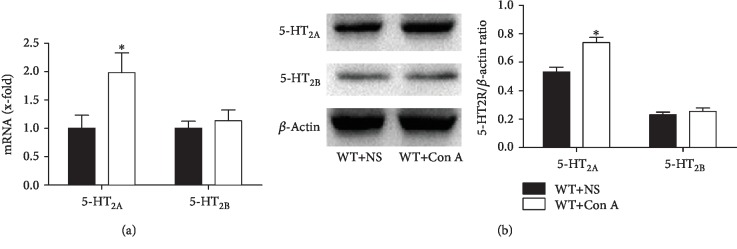
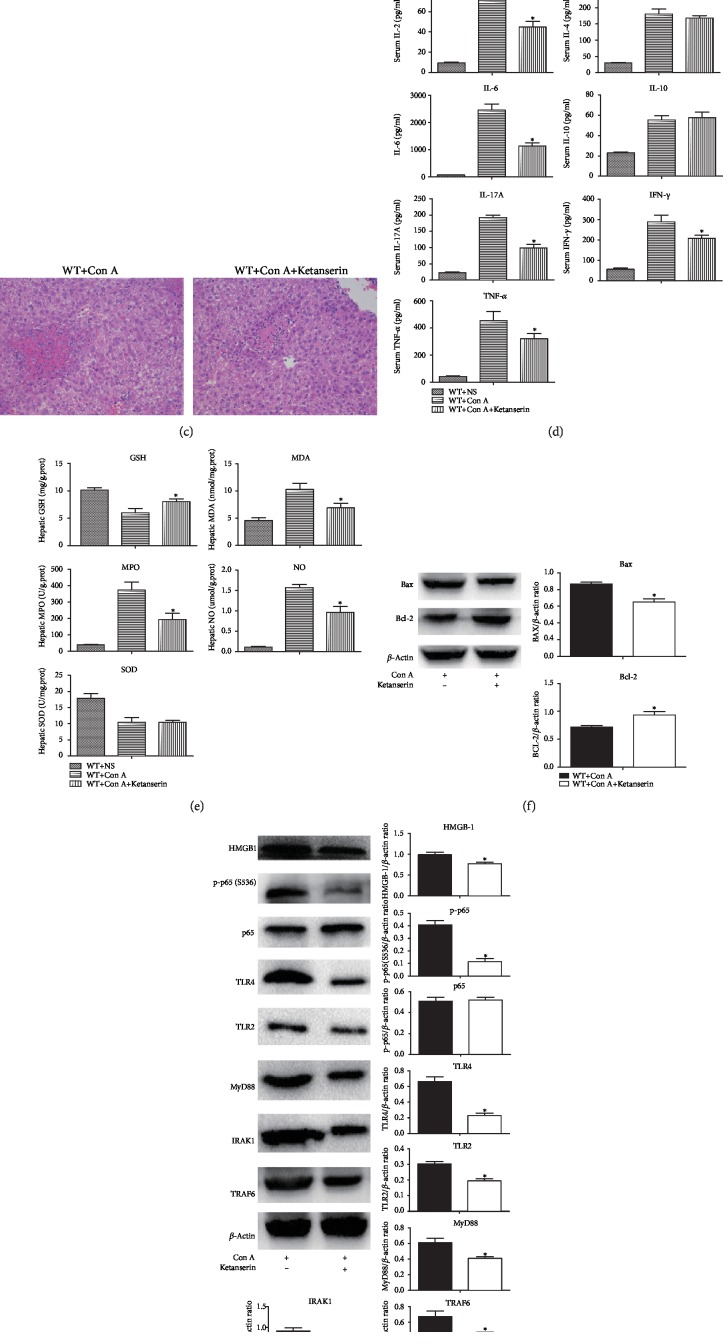
Serotonin is involved in the pathological processes of several liver diseases via the regulation of inflammatory response and oxidative stress. We aimed to investigate the role of serotonin in Concanavalin A- (Con A-) induced acute liver injury (ALI). ALI was induced in C57B/6 wild-type (WT) mice and tryptophan hydroxylase 1 (TPH1) knockout mice through tail vein injection of Con A (15 mg/kg body weight). Another group of TPH1 knockout ALI mice was supplied with 5-hydroxytryptophan (5-HTP) in advance to recover serotonin. The blood and liver tissues of mice were collected in all groups. Markedly increased serum levels of serotonin were identified after the injection of Con A. Increased serum levels of alanine aminotransferase (ALT) and aspartate aminotransferase (AST) and stronger hepatic tissue pathology were detected, suggesting that serotonin could mediate Con A-induced liver damage. Serotonin significantly facilitated the release of serum and intrahepatic inflammatory cytokines, including interleukin-2 (IL-2), interleukin-6 (IL-6), interleukin-17A (IL-17A), interferon-gamma (IFN-), and tumor necrosis-alpha (TNF-), after the administration of Con A. In addition, serotonin significantly increased the intrahepatic levels of oxidative stress markers malonaldehyde (MDA), myeloperoxidase (MPO), and nitric oxide (NO) and decreased antioxidant stress indicator glutathione (GSH) in Con A-treated mice. Additionally, serotonin promoted hepatocyte apoptosis and autophagy based on B-cell lymphoma-2 (Bcl-2), Bcl-2-asociated X protein (Bax), and Beclin-1 levels and TUNEL staining. More importantly, serotonin activated nuclear factor kappa B (NF-B) and upregulated the hepatic expressions of high mobility group protein B1 (HMGB1), toll-like receptor-4 (TLR4), and downstream molecules in Con A-mediated liver injury. Serotonin 2A receptor was upregulated in liver tissue after Con A injection, and serotonin 2A receptor antagonist Ketanserin protected against Con A-induced hepatitis. These results indicated that serotonin has the potential to aggravate Con A-induced ALI via the promotion of inflammatory response, oxidative stress injury, and hepatocyte apoptosis and the activation of hepatic HMGB1-TLR signaling pathway and serotonin 2A receptor.
5-羟色胺通过调节炎症反应和氧化应激参与多种肝脏疾病的病理过程。本研究旨在探讨 5-羟色胺在刀豆蛋白 A(Con A)诱导的急性肝损伤(ALI)中的作用。通过尾静脉注射 Con A(15mg/kg 体重)诱导 C57B/6 野生型(WT)小鼠和色氨酸羟化酶 1(TPH1)敲除小鼠发生 ALI。另一组 TPH1 敲除 ALI 小鼠预先给予 5-羟色氨酸(5-HTP)以恢复 5-羟色胺。所有组别的小鼠均采集血液和肝脏组织。注射 Con A 后,血清中 5-羟色胺水平显著升高。检测到血清丙氨酸转氨酶(ALT)和天冬氨酸转氨酶(AST)水平升高,肝组织病理学改变增强,提示 5-羟色胺可介导 Con A 诱导的肝损伤。5-羟色胺可显著促进 Con A 处理后血清和肝内炎症细胞因子(白细胞介素-2(IL-2)、白细胞介素-6(IL-6)、白细胞介素-17A(IL-17A)、干扰素-γ(IFN-γ)和肿瘤坏死因子-α(TNF-α))的释放。此外,5-羟色胺还可显著增加 Con A 处理小鼠肝内氧化应激标志物丙二醛(MDA)、髓过氧化物酶(MPO)和一氧化氮(NO)的水平,并降低抗氧化应激指标谷胱甘肽(GSH)的水平。此外,5-羟色胺基于 B 细胞淋巴瘤-2(Bcl-2)、Bcl-2 相关 X 蛋白(Bax)和 Beclin-1 水平和 TUNEL 染色,促进肝细胞凋亡和自噬。更重要的是,5-羟色胺激活核因子-κB(NF-κB)并上调 Con A 介导的肝损伤中高迁移率族蛋白 B1(HMGB1)、Toll 样受体 4(TLR4)和下游分子的肝表达。Con A 注射后肝组织中 5-羟色胺 2A 受体上调,5-羟色胺 2A 受体拮抗剂 Ketanserin 可防止 Con A 诱导的肝炎。这些结果表明,5-羟色胺通过促进炎症反应、氧化应激损伤和肝细胞凋亡以及激活肝 HMGB1-TLR 信号通路和 5-羟色胺 2A 受体,有可能加重 Con A 诱导的 ALI。