Hajiasgharzadeh Khalil, Somi Mohammad Hossein, Mansoori Behzad, Doustvandi Mohammad Amin, Vahidian Fatemeh, Alizadeh Mohsen, Mokhtarzadeh Ahad, Shanehbandi Dariush, Baradaran Behzad
Immunology Research Center, Tabriz University of Medical Sciences, Tabriz, Iran.
Liver and Gastrointestinal Diseases Research Center, Tabriz University of Medical Sciences, Tabriz, Iran.
Adv Pharm Bull. 2020 Jan;10(1):65-71. doi: 10.15171/apb.2020.008. Epub 2019 Dec 11.
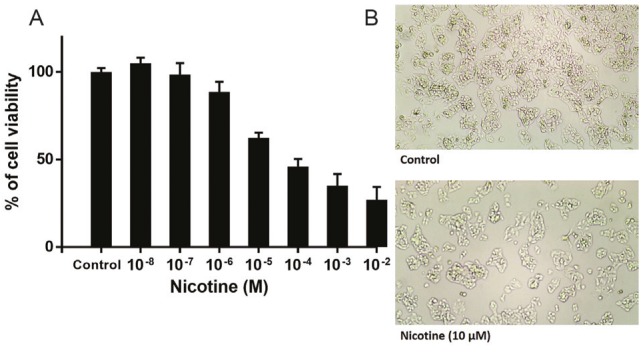
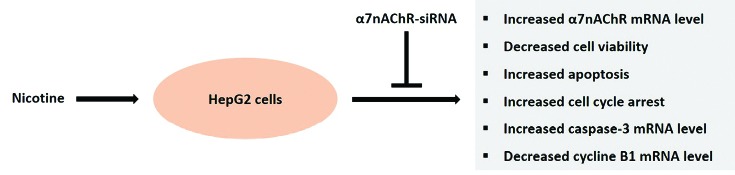
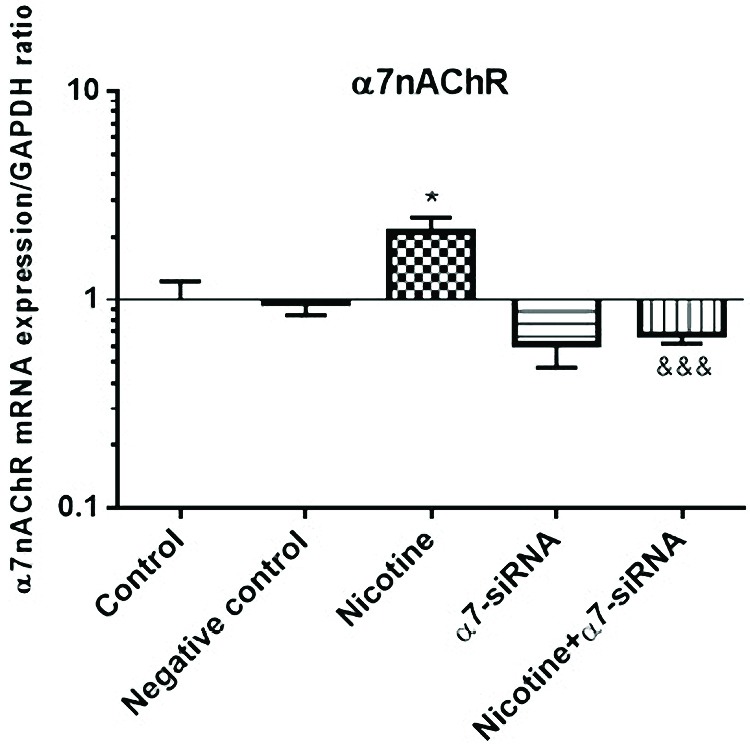
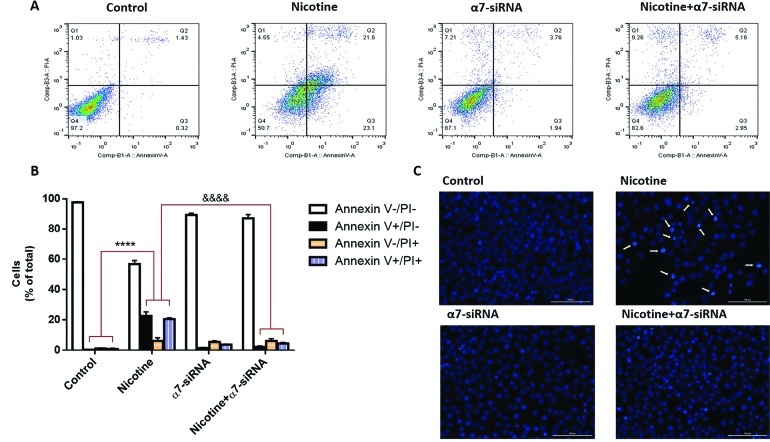
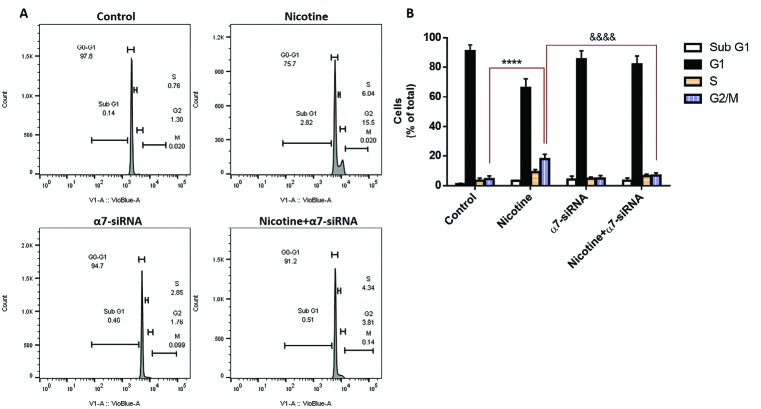
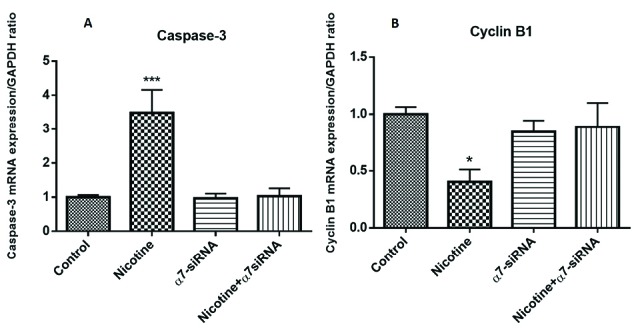
The cytotoxic properties upon treatment with nicotine have been reported in several studies, but the underlying mechanisms remain not fully defined. The alpha7 nicotinic acetylcholine receptor (α7nAChR) is one of the important nicotinic receptors, which nicotine partly by binding to this receptor exerts its effects. The current study aimed to investigates the influences of nicotine on cellular proliferative and apoptotic activities and tried to determine the involvement of α7nAChR in these functions. Human hepatocellular carcinoma (HepG2) cell line was used to determine the individual or combined effects of treatments with nicotine (10 μM) and specific siRNA (100 nM) targeting α7nAChR expression. The MTT assay, DAPI staining assay, and flow cytometry assay were applied to measure the cell viability, apoptosis and cell cycle progression of the cells, respectively. In addition, the changes in the mRNA level of the genes were assessed by qRT-PCR. Compared to control groups, the cells treated with nicotine exhibited significant dosedependent decreases in cell viability (log IC50 = -5.12±0.15). Furthermore, nicotine induced apoptosis and cell cycle arrest especially at G2/M Phase. The qRT-PCR revealed that nicotine increased the mRNA levels of α7nAChR as well as caspase-3 and suppressed the expression of cyclin B1. Treatment with α7-siRNA abolished these effects of nicotine. These experiments determined that upregulation of α7nAChR by nicotine inhibits HepG2 cells proliferation and induces their apoptosis. These effects blocked by treatment with α7-siRNA, which indicates the involvement of α7nAChR pathways in these processes.
多项研究报道了尼古丁处理后的细胞毒性特性,但其潜在机制仍未完全明确。α7烟碱型乙酰胆碱受体(α7nAChR)是重要的烟碱型受体之一,尼古丁部分通过与该受体结合发挥其作用。本研究旨在探讨尼古丁对细胞增殖和凋亡活性的影响,并试图确定α7nAChR在这些功能中的作用。使用人肝癌(HepG2)细胞系来确定尼古丁(10μM)和靶向α7nAChR表达的特异性小干扰RNA(100 nM)单独或联合处理的效果。分别应用MTT法、DAPI染色法和流式细胞术来检测细胞的活力、凋亡和细胞周期进程。此外,通过qRT-PCR评估基因mRNA水平的变化。与对照组相比,用尼古丁处理的细胞在细胞活力上呈现出显著的剂量依赖性下降(log IC50 = -⁵.¹²±⁰.¹⁵)。此外,尼古丁诱导凋亡和细胞周期阻滞,尤其是在G2/M期。qRT-PCR显示尼古丁增加了α7nAChR以及caspase-3的mRNA水平,并抑制了细胞周期蛋白B1的表达。用α7-小干扰RNA处理消除了尼古丁的这些作用。这些实验确定尼古丁上调α7nAChR抑制HepG2细胞增殖并诱导其凋亡。用α7-小干扰RNA处理可阻断这些作用,这表明α7nAChR途径参与了这些过程。