Li Yuehan, Lu Xue, Nie Jiaxun, Hu Panpan, Ge Feifei, Yuan Ti-Fei, Guan Xiaowei
Department of Human Anatomy and Histoembryology, Nanjing University of Chinese Medicine, Nanjing, China; Jiangsu Key Laboratory for Pharmacology and Safety Evaluation of Chinese Materia Medica, Nanjing University of Chinese Medicine, Nanjing, China.
Department of Human Anatomy and Histoembryology, Nanjing University of Chinese Medicine, Nanjing, China.
Mol Ther Nucleic Acids. 2020 Mar 6;19:937-950. doi: 10.1016/j.omtn.2019.12.030. Epub 2020 Jan 10.
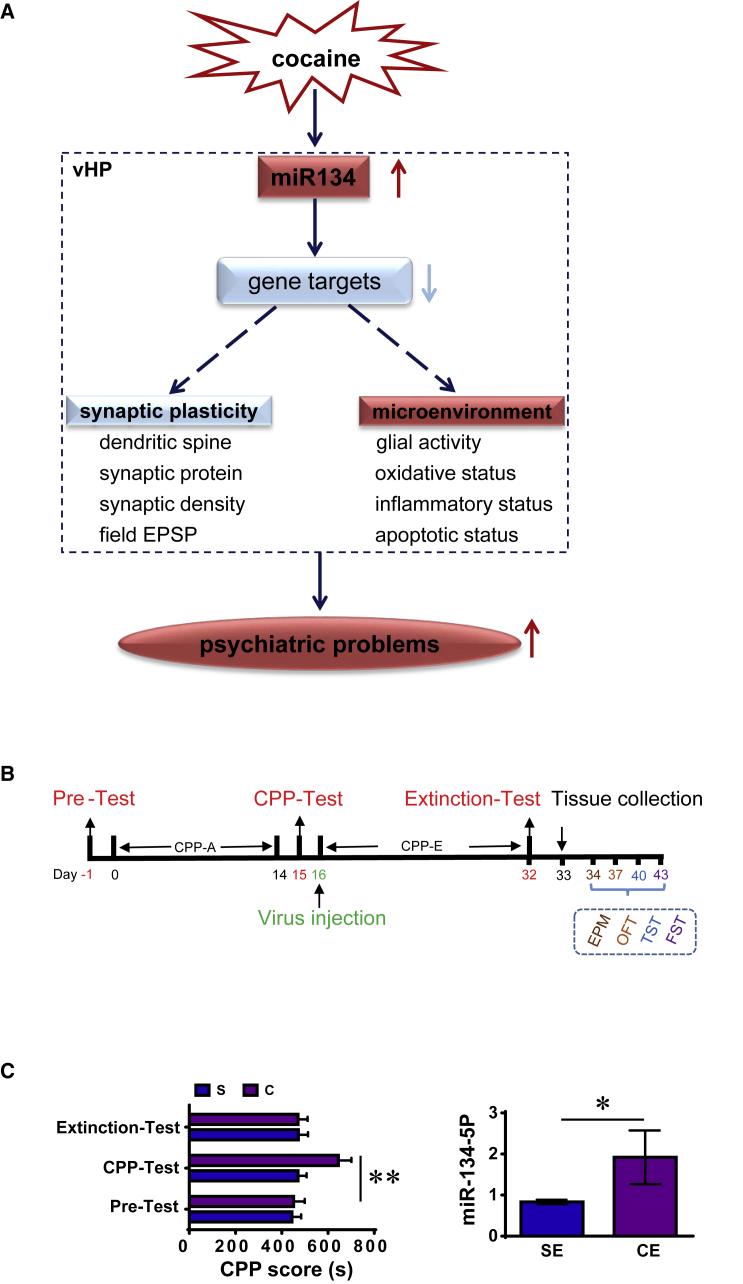
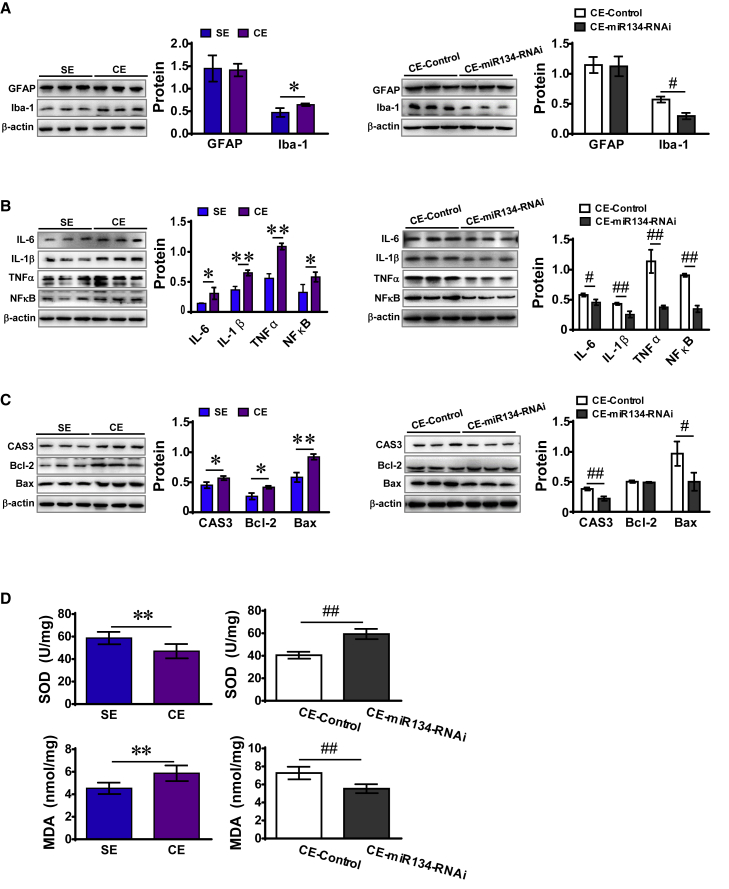
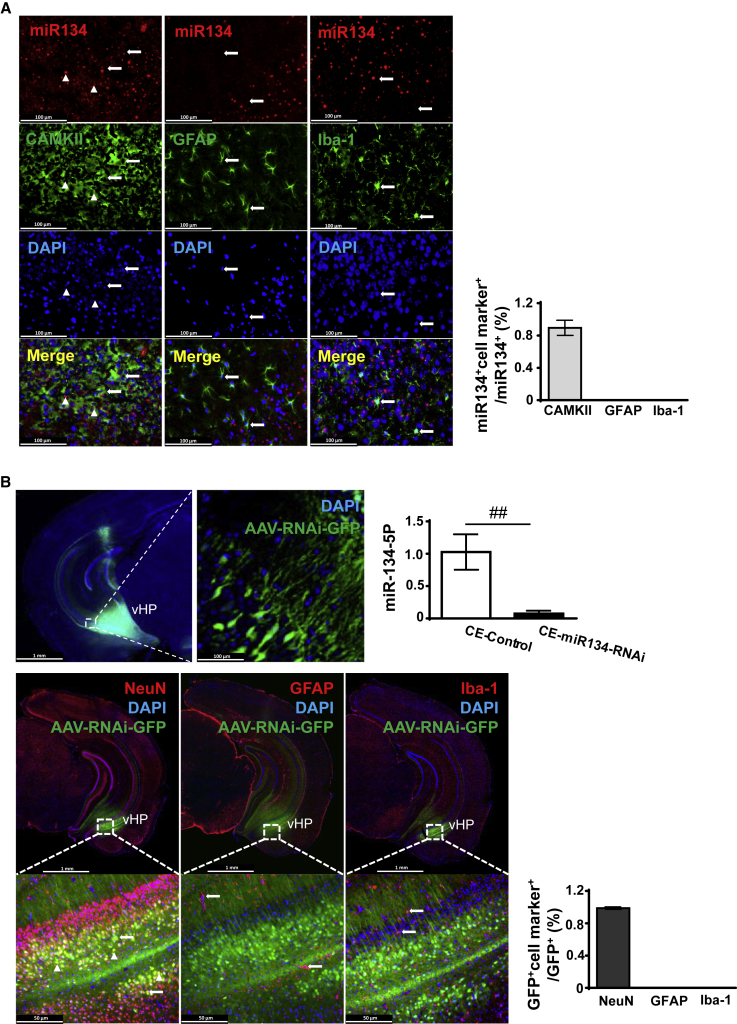
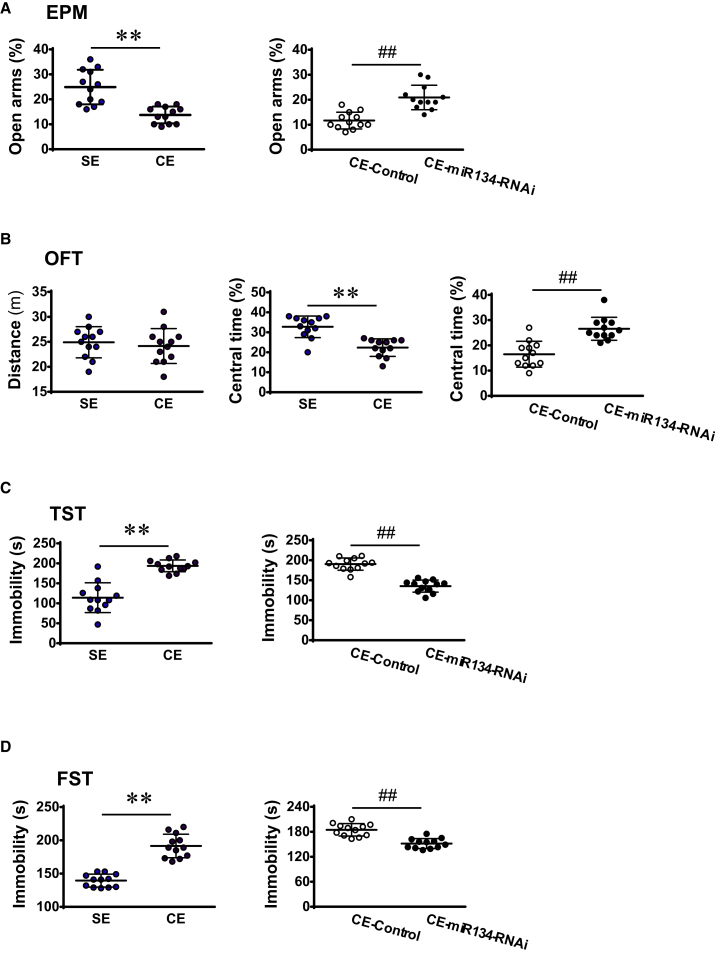
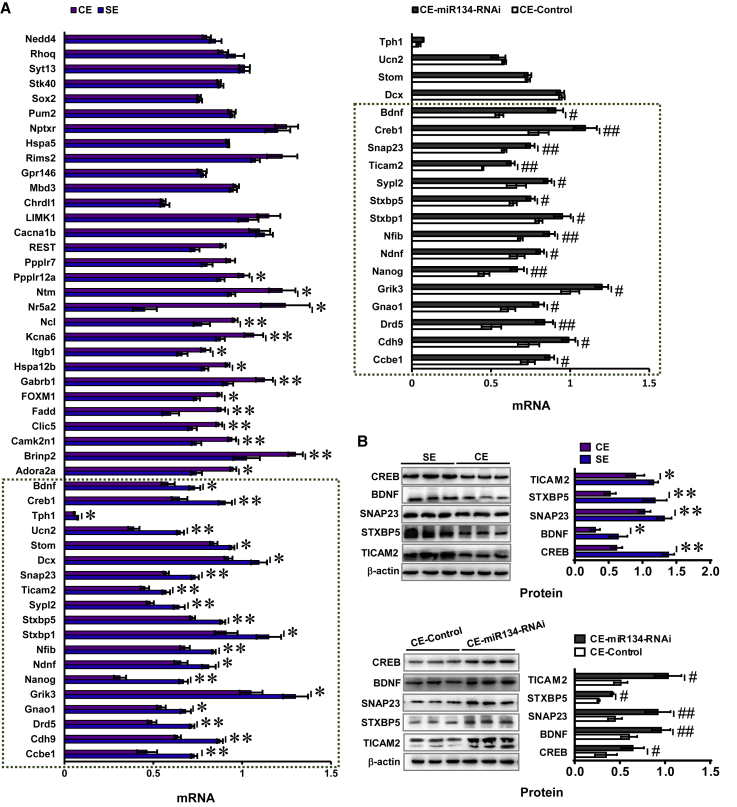
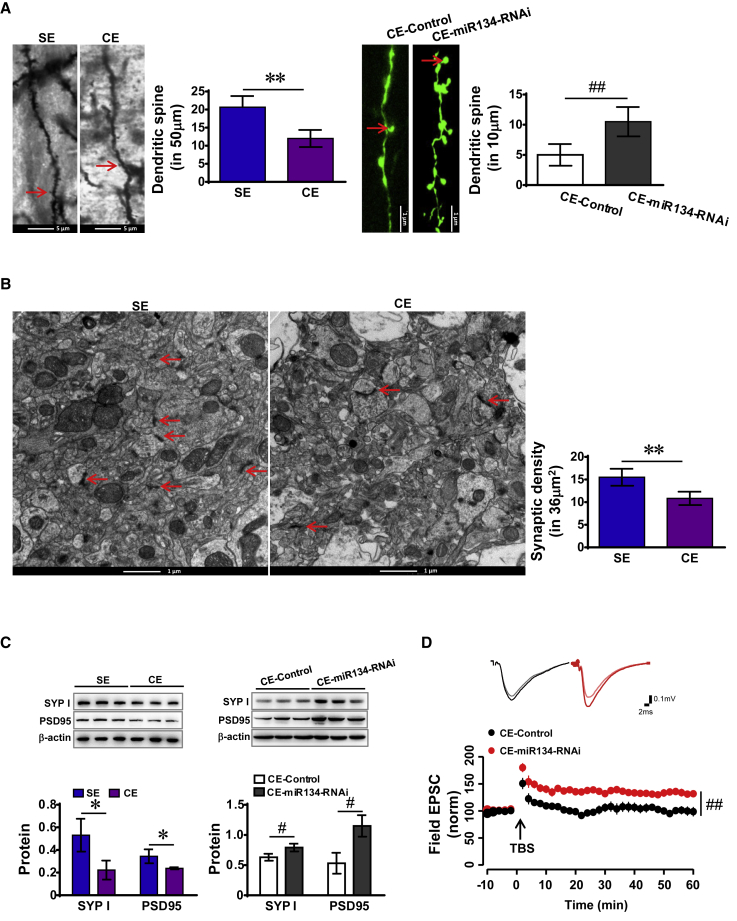
We previously found that cocaine abuse could increase microRNA134 (miR134) levels in the hippocampus; yet the roles of miR134 in cocaine-related abnormal psychiatric outcomes remain unknown. In this study, using the cocaine-induced conditioned place preference (CPP) mice model, we found that mice exhibit enhanced anxiety-like and depression-like behaviors during the cocaine extinction (CE) period of CPP, accompanied by obviously increased miR134 levels and decreased levels of 19 genes that are associated with synaptic plasticity, glia activity, and neurochemical microenvironments, in the ventral hippocampus (vHP). Knockdown of miR134 in vHP in vivo reversed the changes in 15 of 19 potential gene targets of miR134 and rescued the abnormal anxiety-like and depression-like behavioral outcomes in CE mice. In parallel, knockdown of miR134 reversed CE-induced changes in dendritic spines and synaptic proteins and increased the field excitatory postsynaptic potential (fEPSP) of CA1 pyramidal neurons in the vHP of CE mice. In addition, knockdown of miR134 suppressed the CE-enhanced microglia activity, inflammatory, apoptotic, and oxidative stress statuses in the vHP. With the data taken together, miR134 may be involved in cocaine-associated psychiatric problems, potentially via regulating the expressions of its gene targets that are related to synaptic plasticity and neurochemical microenvironments.
我们先前发现,可卡因滥用会增加海马体中微小RNA134(miR134)的水平;然而,miR134在与可卡因相关的异常精神结果中的作用仍不清楚。在本研究中,我们使用可卡因诱导的条件性位置偏爱(CPP)小鼠模型,发现小鼠在CPP的可卡因消退(CE)期表现出增强的焦虑样和抑郁样行为,同时腹侧海马体(vHP)中miR134水平明显升高,与突触可塑性、神经胶质细胞活性和神经化学微环境相关的19个基因的水平降低。体内敲低vHP中的miR134可逆转miR134的19个潜在基因靶标中15个的变化,并挽救CE小鼠异常的焦虑样和抑郁样行为结果。同时,敲低miR134可逆转CE诱导的树突棘和突触蛋白的变化,并增加CE小鼠vHP中CA1锥体神经元的场兴奋性突触后电位(fEPSP)。此外,敲低miR134可抑制CE增强的vHP中的小胶质细胞活性、炎症、凋亡和氧化应激状态。综合这些数据,miR134可能通过调节其与突触可塑性和神经化学微环境相关的基因靶标的表达,参与可卡因相关的精神问题。