Zorko Albert, Frühwirth Matthias, Goswami Nandu, Moser Maximilian, Levnajić Zoran
Complex Systems and Data Science Lab, Faculty of Information Studies in Novo Mesto, Novo Mesto, Slovenia.
Human Research Institute, Weiz, Austria.
Front Physiol. 2020 Jan 17;10:1554. doi: 10.3389/fphys.2019.01554. eCollection 2019.
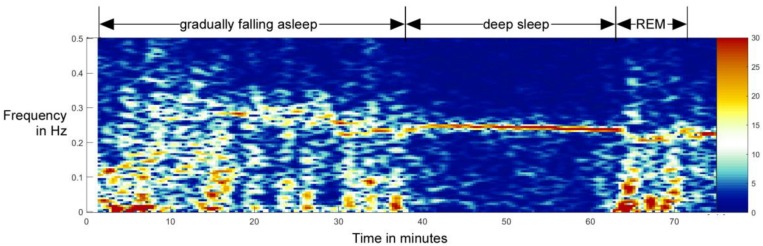
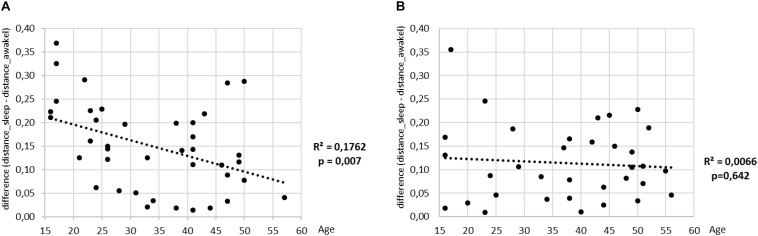
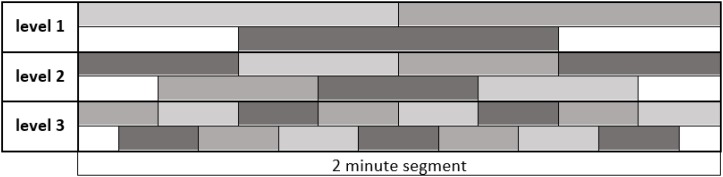
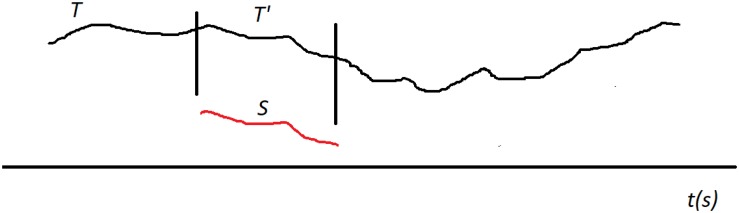
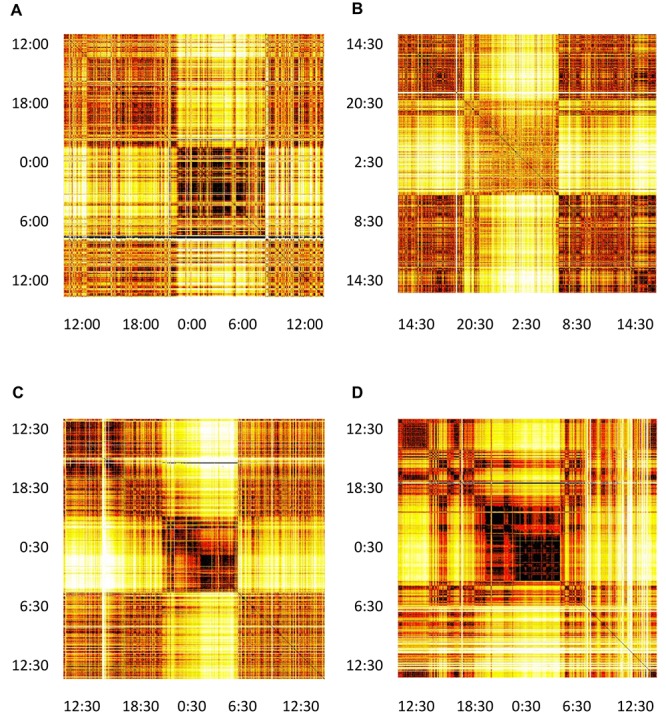
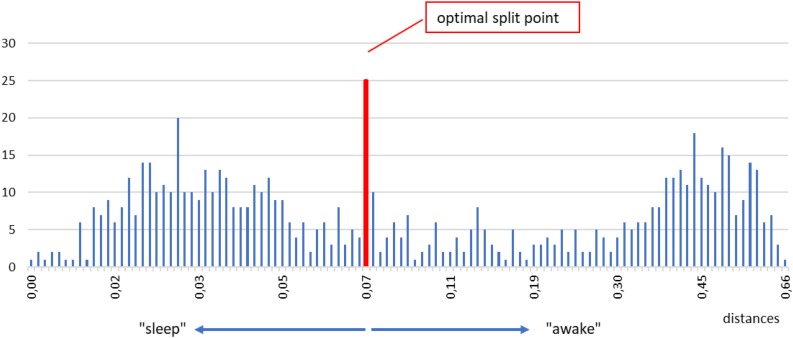
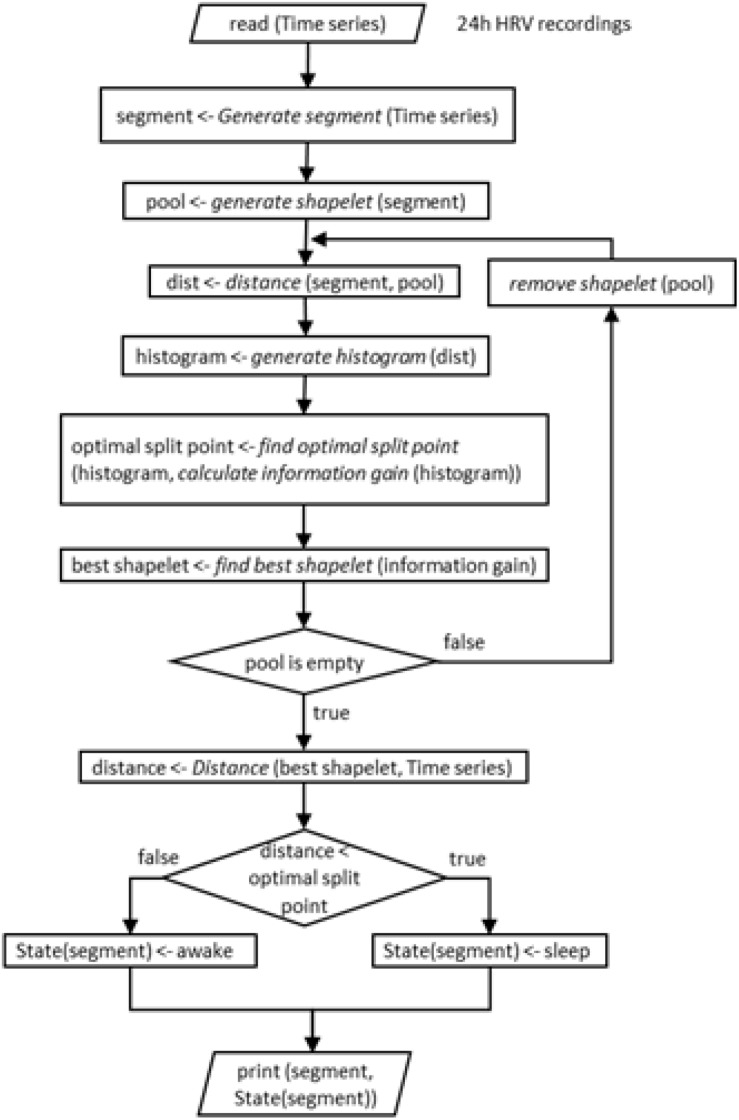
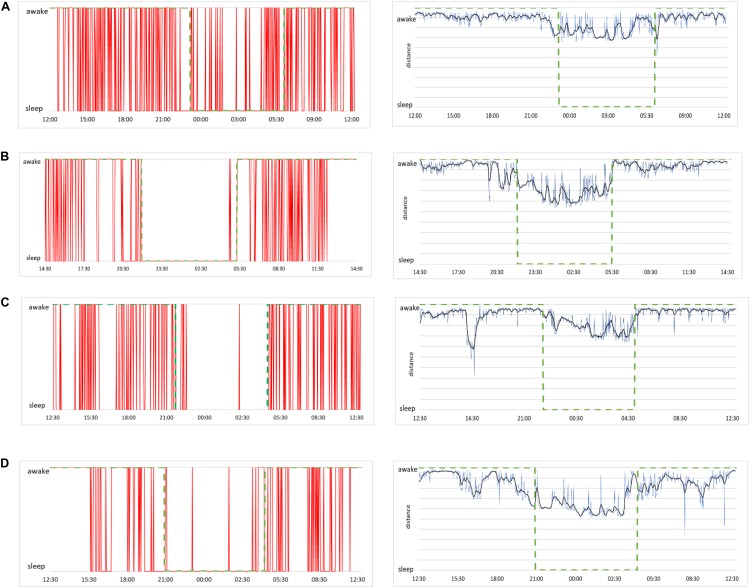
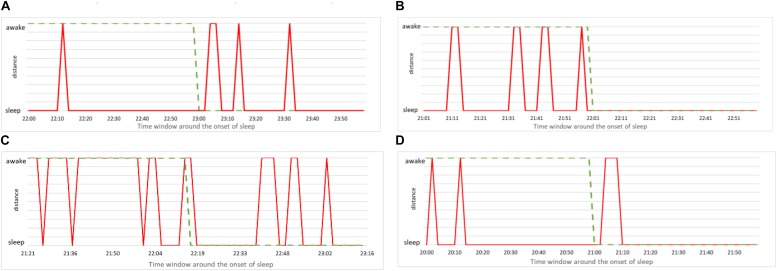
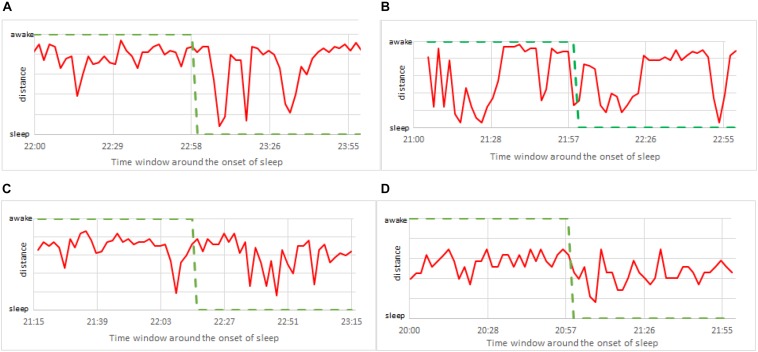
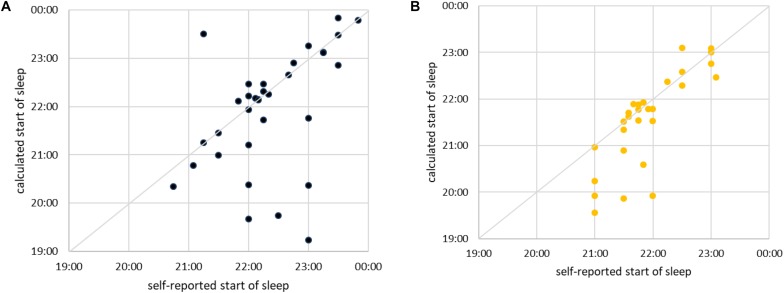
Automatically determining when a person falls asleep from easily available vital signals is important, not just for medical applications but also for practical ones, such as traffic safety or smart homes. Heart dynamics and respiration cycle couple differently during sleep and awake. Specifically, respiratory modulation of heart rhythm or (RSA) is more prominent during sleep, as both sleep and RSA are connected to strong vagal activity. The onset of sleep can be recognized or even predicted as the increase of cardio-respiratory coupling. Here, we employ this empirical fact to design a method for detecting the change of consciousness status (sleep/awake) based only on heart rate variability (HRV) data. Our method relies on quantifying the (self)similarity among - short chunks of HRV time series - whose "shapes" are related to the respiration cycle. To test our method, we examine the HRV data of 75 healthy individuals recorded with microsecond precision. We find distinctive patterns stable across age and sex, that are not only indicative of sleep and awake, but allow to pinpoint the change from awake to sleep almost immediately. More systematic analysis along these lines could lead to a reliable prediction of sleep.
从易于获取的生命体征自动确定一个人何时入睡不仅对医学应用很重要,对交通安全或智能家居等实际应用也很重要。睡眠和清醒时心脏动力学和呼吸周期的耦合方式不同。具体而言,睡眠期间心律的呼吸调制或呼吸性窦性心律不齐(RSA)更为显著,因为睡眠和RSA都与强烈的迷走神经活动有关。睡眠的开始可以被识别甚至预测为心肺耦合的增加。在此,我们利用这一经验事实设计了一种仅基于心率变异性(HRV)数据检测意识状态(睡眠/清醒)变化的方法。我们的方法依赖于量化HRV时间序列的短片段之间的(自)相似性,这些片段的“形状”与呼吸周期有关。为了测试我们的方法,我们检查了以微秒精度记录的75名健康个体的HRV数据。我们发现了在年龄和性别上都稳定的独特模式,这些模式不仅表明睡眠和清醒状态,还能几乎立即确定从清醒到睡眠的转变。沿着这些思路进行更系统的分析可能会实现对睡眠的可靠预测。