Department of Computer Science and Information Engineering, National Chin-Yi University of Technology, Taichung, Taiwan.
Division of Thoracic Medicine, Department of Internal Medicine, Taipei Medical University Hospital, Taipei, Taiwan.
J Med Internet Res. 2021 Jul 5;23(7):e25791. doi: 10.2196/25791.
Cancer-related fatigue is a serious side effect of cancer, and its treatment can disrupt the quality of life of patients. Clinically, the standard method for assessing cancer-related fatigue relies on subjective experience retrieved from patient self-reports, such as the Brief Fatigue Inventory (BFI). However, most patients do not self-report their fatigue levels.
In this study, we aim to develop an objective cancer-related fatigue assessment method to track and monitor fatigue in patients with cancer.
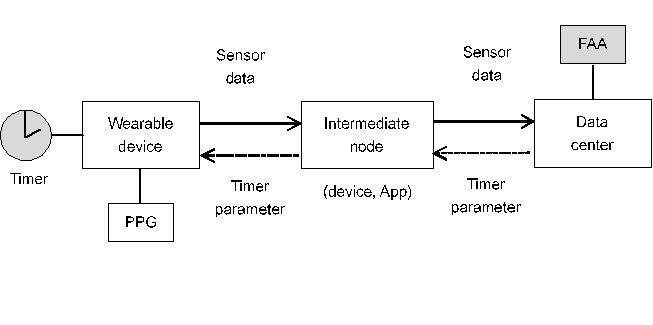
In total, 12 patients with lung cancer who were undergoing chemotherapy or targeted therapy were enrolled. We developed frequency-domain parameters of heart rate variability (HRV) and BFI based on a wearable-based HRV measurement system. All patients completed the BFI-Taiwan version questionnaire and wore the device for 7 consecutive days to record HRV parameters such as low frequency (LF), high frequency (HF), and LF-HF ratio (LF-HF). Statistical analysis was used to map the correlation between subjective fatigue and objective data.
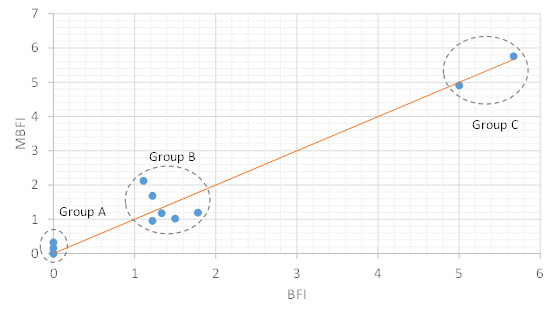
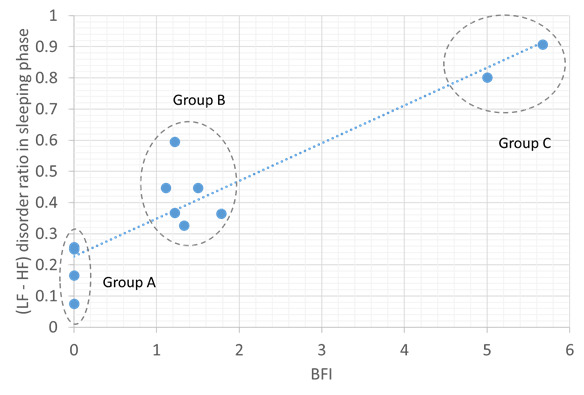
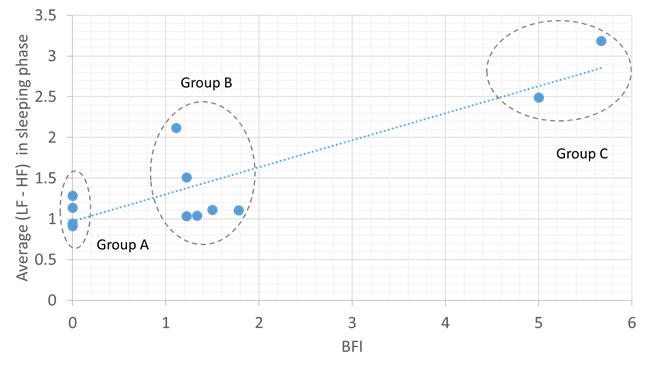
A moderate positive correlation was observed between the average LF-HF ratio and BFI in the sleep phase (ρ=0.86). The mapped BFI score derived by the BFI mapping method could approximate the BFI from the patient self-report. The mean absolute error rate between the subjective and objective BFI scores was 3%.
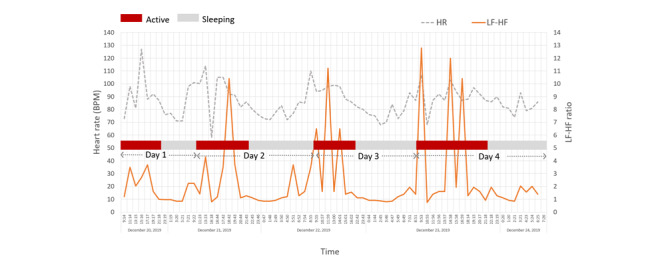
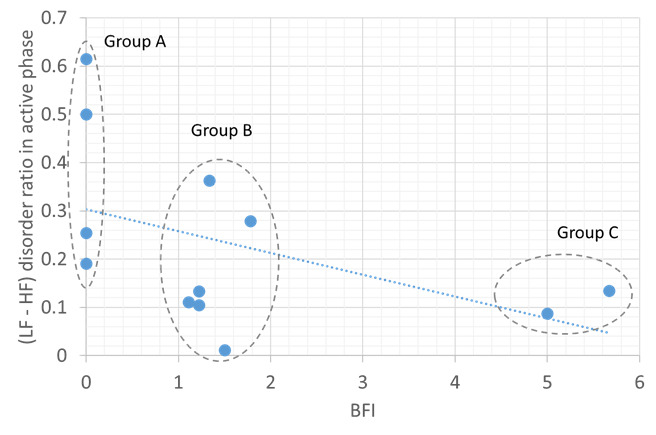
LF-HF is highly correlated with the cancer-related fatigue experienced by patients with lung cancer undergoing chemotherapy or targeted therapy. Beyond revealing fatigue levels objectively, continuous HRV recordings through the photoplethysmography watch device and the defined parameters (LF-HF) can define the active phase and sleep phase in patients with lung cancer who undergo chemotherapy or targeted chemotherapy, allowing a deduction of their sleep patterns.
癌症相关疲劳是癌症的一种严重副作用,其治疗可能会扰乱患者的生活质量。临床上,评估癌症相关疲劳的标准方法依赖于患者自我报告的主观体验,例如简短疲劳量表(BFI)。然而,大多数患者不会自我报告他们的疲劳水平。
本研究旨在开发一种客观的癌症相关疲劳评估方法,以跟踪和监测癌症患者的疲劳。
共纳入 12 名正在接受化疗或靶向治疗的肺癌患者。我们基于可穿戴式心率变异性(HRV)测量系统开发了 HRV 的频域参数和 BFI。所有患者均完成了 BFI-台湾版问卷,并佩戴设备连续 7 天记录 HRV 参数,如低频(LF)、高频(HF)和 LF-HF 比(LF-HF)。统计分析用于绘制主观疲劳与客观数据之间的相关性。
睡眠阶段的平均 LF-HF 比与 BFI 呈中度正相关(ρ=0.86)。通过 BFI 映射方法得出的映射 BFI 评分可以近似患者自我报告的 BFI。主观和客观 BFI 评分之间的平均绝对误差率为 3%。
LF-HF 与接受化疗或靶向治疗的肺癌患者的癌症相关疲劳高度相关。通过光电容积脉搏波手表设备和定义的参数(LF-HF)进行连续 HRV 记录,除了客观地揭示疲劳水平外,还可以定义接受化疗或靶向化疗的肺癌患者的活动期和睡眠期,从而推断他们的睡眠模式。