Cordts Isabell, Lingor Paul, Friedrich Benjamin, Pernpeintner Verena, Zimmer Claus, Deschauer Marcus, Maegerlein Christian
Department of Neurology, Klinikum rechts der Isar, Technical University Munich, Ismaninger Straße 22, Munich, 81675, Germany.
Department of Neurology, Klinikum rechts der Isar, Technical University Munich, Munich, Germany.
Ther Adv Neurol Disord. 2020 Jan 20;13:1756286419887616. doi: 10.1177/1756286419887616. eCollection 2020.
Intrathecal administration of nusinersen in adult spinal muscular atrophy (SMA) patients presents challenges owing to severe scoliosis and previous spinal surgery with metal implantation. In patients with a complex spinal situation, the potential risks of the intrathecal administration may lead to delayed treatment initiation.
In this study, we analyzed 53 CT-guided lumbar punctures of 11 adult nonambulatory SMA type 2 and 3 patients. All patients had scoliosis and six patients had previously undergone metal implantation.
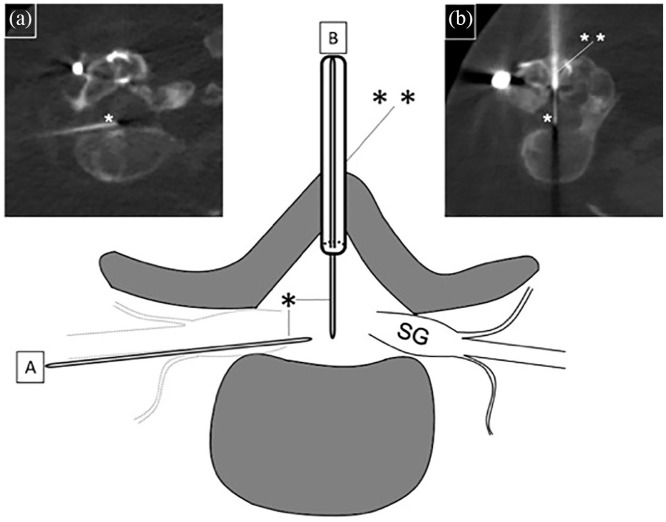
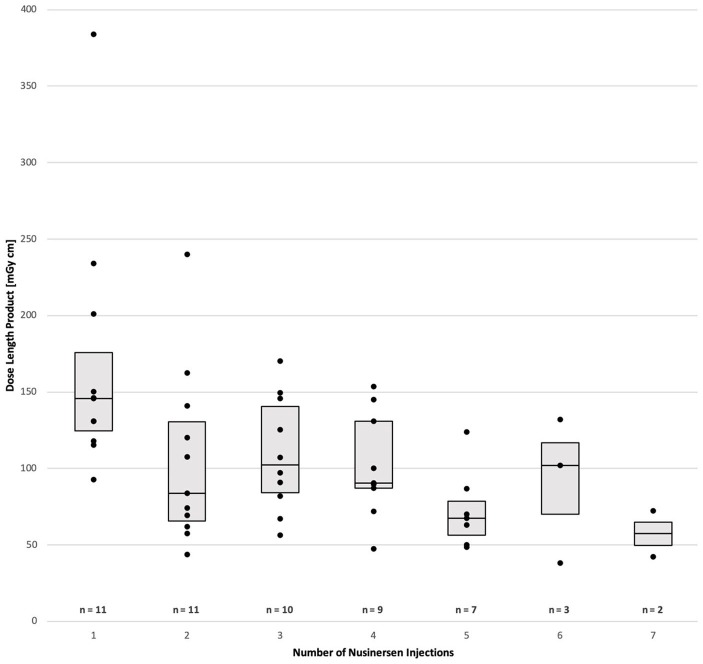
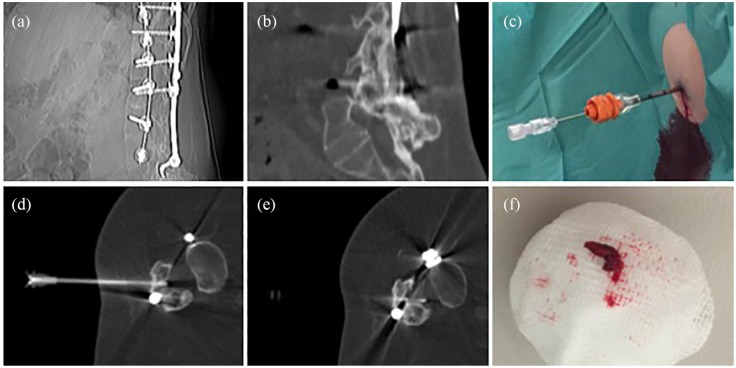
Drug administration was successful in 100% of the patients and none of the patients opted for treatment discontinuation. Complete osseous fusion precluded conventional posterior interlaminar access in eight lumbar punctures in four patients, which required alternative routes including transforaminal punctures and translaminar drilling. Median duration of all lumbar punctures was 9 min and median radiation exposure was 100 mGy* cm. The most common adverse event was post-lumbar puncture syndrome that occurred in five lumbar punctures (9.4%).
Our data demonstrate that nusinersen can be successfully, safely, and rapidly administered in adult SMA patients with complex spinal conditions and suggest the translaminar drilling technique as an alternative delivery route. Therefore, intrathecal nusinersen treatment should not be withheld from patients because of severe spine deformities, however, drug efficacy in adult SMA patients needs to be investigated in further studies.
由于严重脊柱侧弯和既往有金属植入的脊柱手术,在成年脊髓性肌萎缩症(SMA)患者中鞘内注射诺西那生存在挑战。在脊柱情况复杂的患者中,鞘内注射的潜在风险可能导致治疗开始延迟。
在本研究中,我们分析了11例成年非行走型2型和3型SMA患者的53次CT引导下腰椎穿刺。所有患者均有脊柱侧弯,6例患者既往接受过金属植入。
100%的患者给药成功,且无一例患者选择停药。4例患者的8次腰椎穿刺中,完全骨融合排除了传统的后路椎板间入路,这需要包括经椎间孔穿刺和椎板钻孔在内的替代途径。所有腰椎穿刺的中位持续时间为9分钟,中位辐射暴露量为100 mGy*cm。最常见的不良事件是腰椎穿刺后综合征,发生在5次腰椎穿刺中(9.4%)。
我们的数据表明,诺西那生可以在脊柱情况复杂的成年SMA患者中成功、安全且快速地给药,并建议将椎板钻孔技术作为一种替代给药途径。因此,不应因严重脊柱畸形而不给患者进行鞘内诺西那生治疗,然而,成年SMA患者的药物疗效需要在进一步研究中进行调查。