Zhong Weiwei, Yuan Yan, Gu Xiaohuan, Kim Samuel In-Young, Chin Ryan, Loye Modupe, Dix Thomas A, Wei Ling, Yu Shan Ping
1Department of Anesthesiology, Emory University School of Medicine, Atlanta, GA 30322, USA.
2Center for Visual and Neurocognitive Rehabilitation, Atlanta Veterans Affairs Medical Center, Decatur, GA 30033, USA.
Aging Dis. 2020 Feb 1;11(1):1-16. doi: 10.14336/AD.2019.0507. eCollection 2020 Feb.
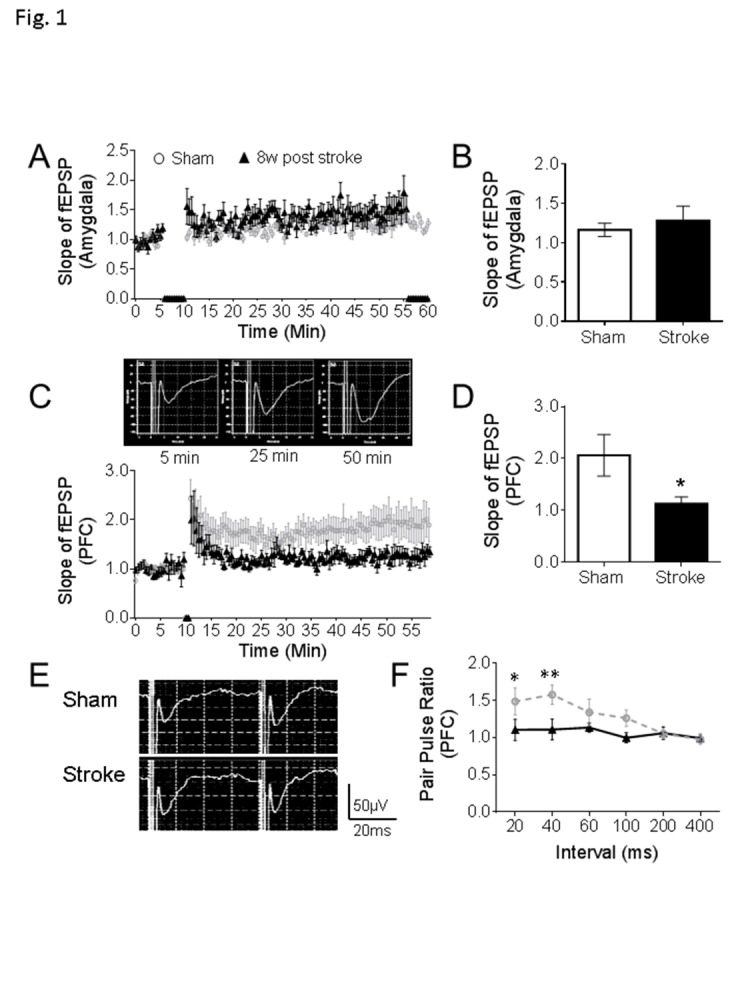
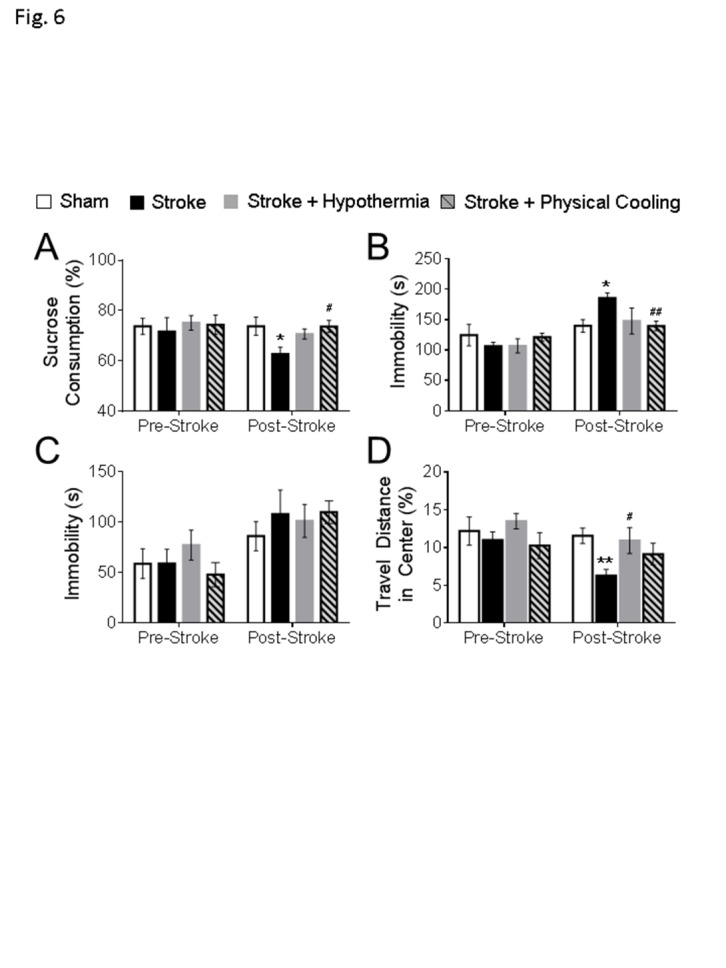
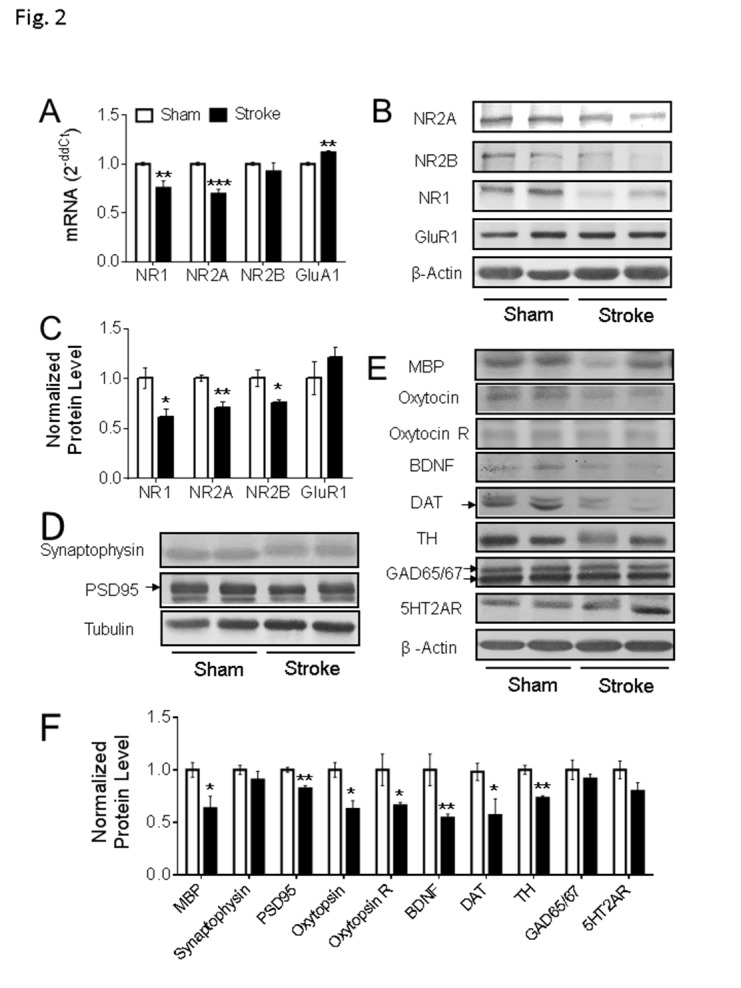
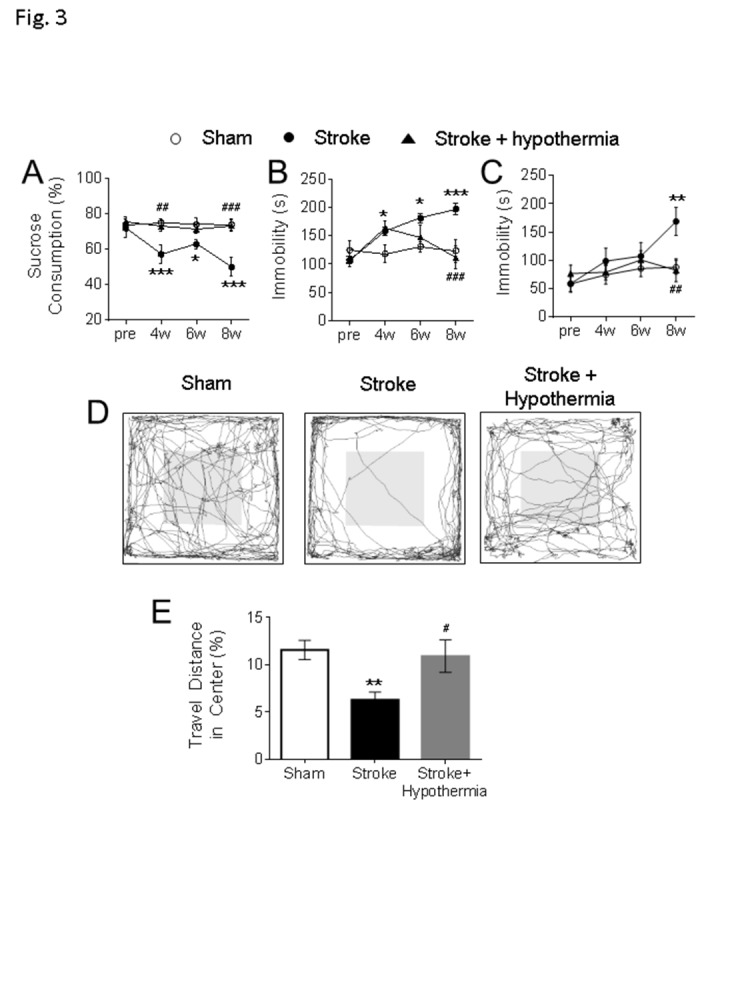
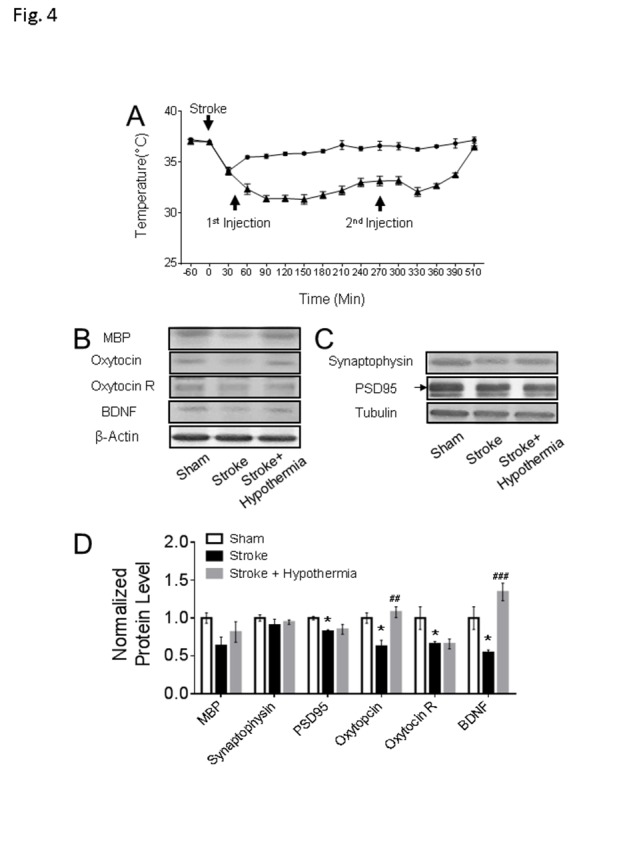
Stroke is a leading cause of human death and disability, with around 30% of stroke patients develop neuropsychological/neuropsychiatric symptoms, such as post-stroke depression (PSD). Basic and translational research on post-stroke psychological disorders is limited. In a focal ischemic stroke mouse model with selective damage to the sensorimotor cortex, sensorimotor deficits develop soon after stroke and spontaneous recovery is observed in 2-4 weeks. We identified that mice subjected to a focal ischemic insult gradually developed depression/anxiety like behaviors 4 to 8 weeks after stroke. Psychological/psychiatric disorders were revealed in multiple behavioral examinations, including the forced swim, tail suspension, sucrose preference, and open field tests. Altered neuronal plasticity such as suppressed long-term potentiation (LTP), reduced BDNF and oxytocin signaling, and disturbed dopamine synthesis/uptake were detected in the prefrontal cortex (PFC) during the chronic phase after stroke. Pharmacological hypothermia induced by the neurotensin receptor 1 (NTR1) agonist HPI-363 was applied as an acute treatment after stroke. A six-hr hypothermia treatment applied 45 min after stroke prevented depression and anxiety like behaviors examined at 6 weeks after stroke, as well as restored BDNF expression and oxytocin signaling. Additionally, hypothermia induced by physical cooling also showed an anti-depression and anti-anxiety effect. The data suggested a delayed beneficial effect of acute hypothermia treatment on chronically developed post-stroke neuropsychological disorders, associated with regulation of synaptic plasticity, neurotrophic factors, dopaminergic activity, and oxytocin signaling in the PFC.
中风是人类死亡和残疾的主要原因,约30%的中风患者会出现神经心理/神经精神症状,如中风后抑郁症(PSD)。关于中风后心理障碍的基础和转化研究有限。在一个对感觉运动皮层有选择性损伤的局灶性缺血性中风小鼠模型中,中风后不久就会出现感觉运动缺陷,并在2-4周内观察到自发恢复。我们发现,遭受局灶性缺血损伤的小鼠在中风后4至8周逐渐出现类似抑郁/焦虑的行为。在包括强迫游泳、悬尾、蔗糖偏好和旷场试验在内的多项行为检查中发现了心理/精神障碍。在中风后的慢性期,前额叶皮层(PFC)中检测到神经元可塑性改变,如长期增强(LTP)受抑制、脑源性神经营养因子(BDNF)和催产素信号减少以及多巴胺合成/摄取紊乱。由神经降压素受体1(NTR1)激动剂HPI-363诱导的药物性低温被用作中风后的急性治疗。中风后45分钟进行6小时的低温治疗可预防中风后6周检查时出现的类似抑郁和焦虑的行为,并恢复BDNF表达和催产素信号。此外,物理降温诱导的低温也显示出抗抑郁和抗焦虑作用。数据表明急性低温治疗对长期发展的中风后神经心理障碍具有延迟的有益作用,这与PFC中突触可塑性、神经营养因子、多巴胺能活性和催产素信号的调节有关。