Bally Esmee L S, Cesuroglu Tomris
Faculty of Science, Athena Institute, Vrije Universiteit Amsterdam, Amsterdam, Netherlands.
Department of Public Health, Erasmus University Medical Centre, Rotterdam, Netherlands.
Front Public Health. 2020 Jan 15;7:407. doi: 10.3389/fpubh.2019.00407. eCollection 2019.
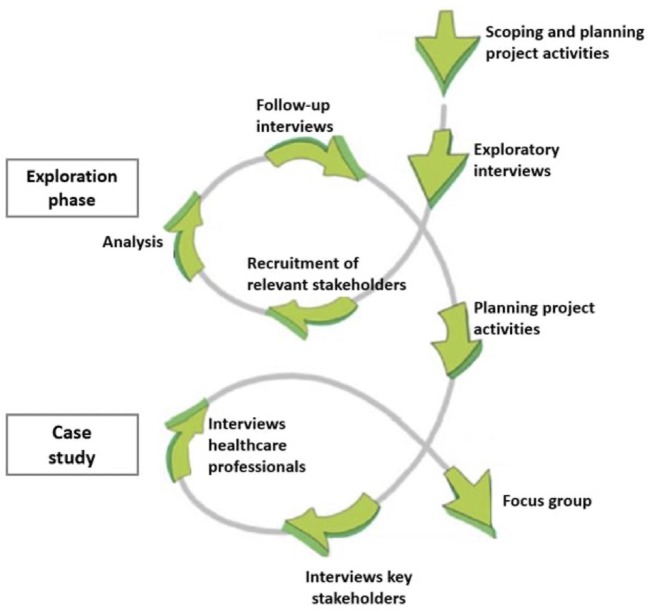
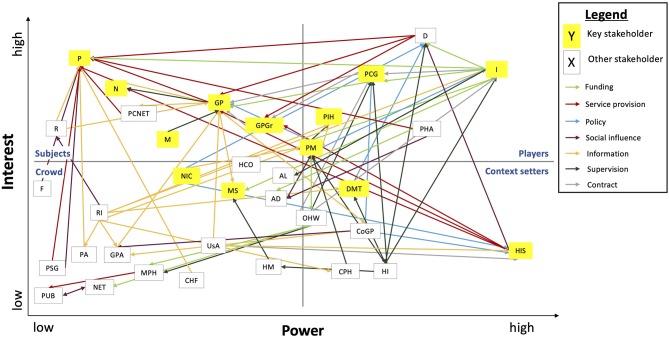
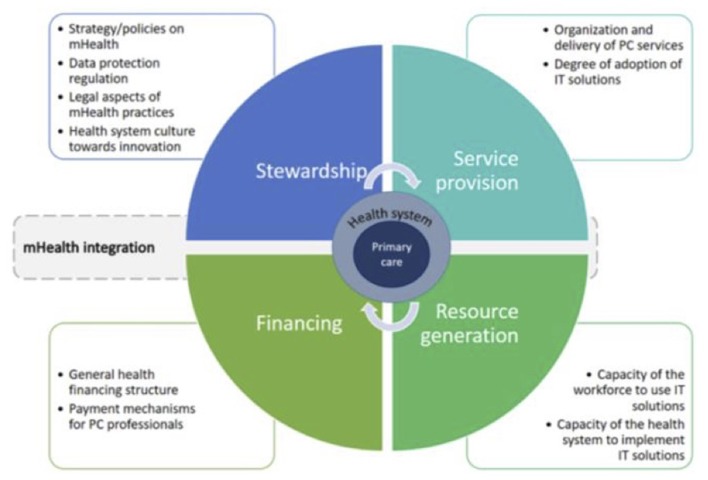
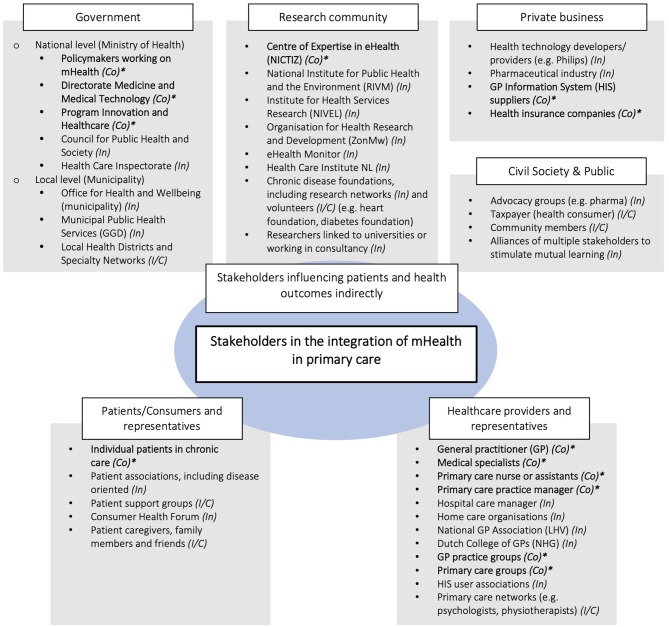
There is a growing need to structurally change the way chronic illness care is organized as health systems struggle to meet the demand for chronic care. mHealth technologies can alter traditional approaches to health care provision by stimulating self-management of chronically ill patients. The aim of this study was to understand the complex environment related to the introduction of mHealth solutions into primary care for chronic disease management while considering health system functioning and stakeholder views. A transdisciplinary approach was used informed by the Interactive Learning and Action (ILA) methodology. Exploratory interviews ( = 5) were held with representatives of stakeholder groups to identify and position key stakeholders. Subsequently, professionals and chronically ill patients were consulted separately to elaborate on the barriers and facilitators in integration, using semi-structured interviews ( = 17) and a focus group ( = 6). Follow-up interviews ( = 5) were conducted to discuss initial findings of the stakeholder analysis. Most stakeholders, in particular primary care practitioners and patients, seem to have a supporting or mixed attitude toward integration of mHealth. On the other hand, several powerful stakeholders, including primary care information system developers and medical specialists are likely to show resistance or a lack of initiative toward mHealth integration. Main barriers to mHealth integration were a lack of interoperability with existing information systems; difficulties in financing mHealth implementation; and limited readiness in general practices to change. Potential enablers of integration included co-design of mHealth solutions and incentives for pioneers. Stakeholders acknowledge the benefits of integrating mHealth in primary care. However, important barriers perceived by end-users prevent them to fully adopt and use mHealth. This study shows that the complexity of introducing mHealth into primary care calls for strategies encouraging collaboration between multiple stakeholders to enhance successful implementation.
随着卫生系统努力满足慢性病护理需求,对慢性病护理组织方式进行结构性变革的需求日益增长。移动健康技术可以通过激发慢性病患者的自我管理来改变传统的医疗保健提供方式。本研究的目的是了解在将移动健康解决方案引入初级保健以进行慢性病管理的过程中,与复杂环境相关的情况,同时考虑卫生系统的运作和利益相关者的观点。采用了一种基于互动学习与行动(ILA)方法的跨学科方法。与利益相关者群体的代表进行了探索性访谈(n = 5),以识别关键利益相关者并确定其立场。随后,分别咨询了专业人员和慢性病患者,通过半结构化访谈(n = 17)和焦点小组(n = 6)来详细阐述整合过程中的障碍和促进因素。进行了后续访谈(n = 5)以讨论利益相关者分析的初步结果。大多数利益相关者,特别是初级保健从业者和患者,似乎对移动健康的整合持支持或混合态度。另一方面,包括初级保健信息系统开发者和医学专家在内的一些有影响力的利益相关者可能会对移动健康整合表现出抵制或缺乏积极性。移动健康整合的主要障碍包括与现有信息系统缺乏互操作性;移动健康实施的融资困难;以及一般实践中对变革的准备有限。整合的潜在促进因素包括移动健康解决方案的共同设计和对先驱者的激励。利益相关者承认将移动健康整合到初级保健中的好处。然而,终端用户所感知到的重要障碍阻碍了他们充分采用和使用移动健康。本研究表明,将移动健康引入初级保健的复杂性需要鼓励多个利益相关者之间合作的策略,以提高成功实施的几率。