Kumar Avishek, Al-Jumaili Ahmed, Bazaka Kateryna, Mulvey Peter, Warner Jeffrey, Jacob Mohan V
Electronics Materials Lab, College of Science and Engineering, James Cook University, Townsville 4811, Australia.
Institute for Future Environments, Queensland University of Technology, Brisbane 4000, Australia.
Materials (Basel). 2020 Jan 27;13(3):586. doi: 10.3390/ma13030586.
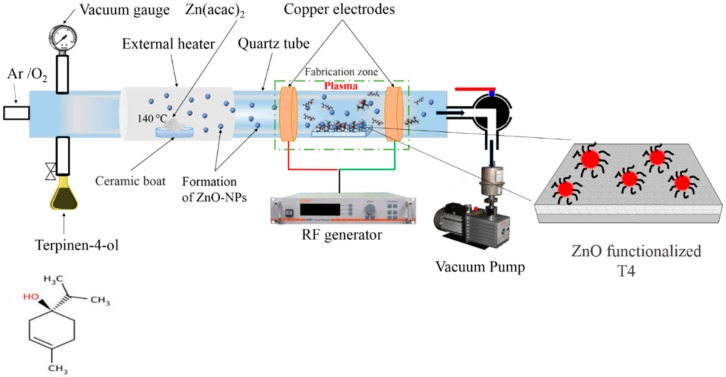
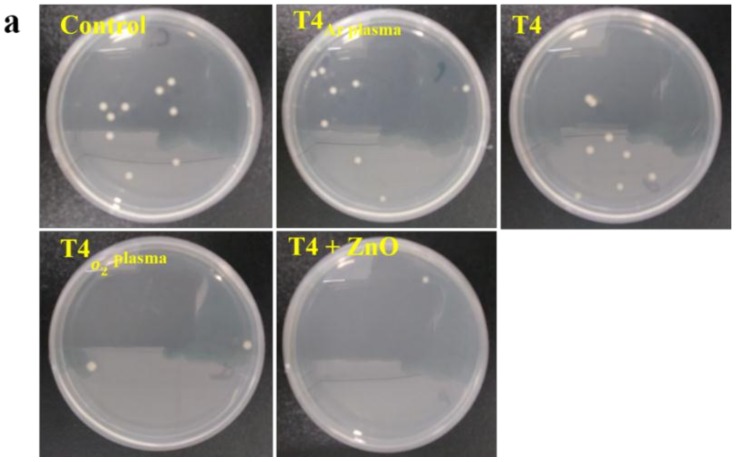
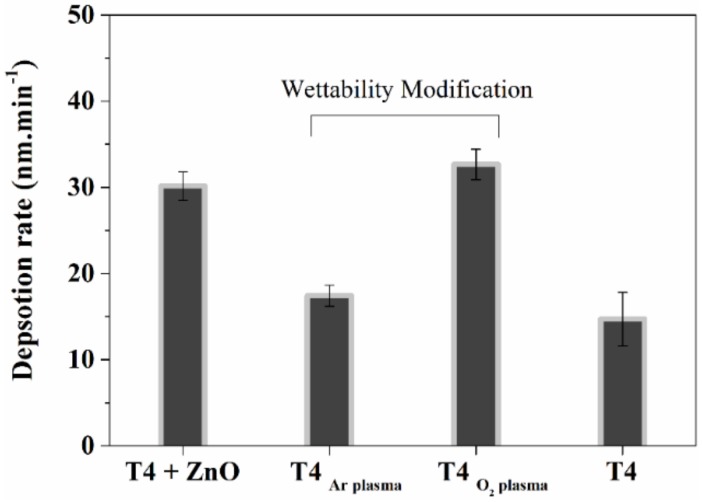
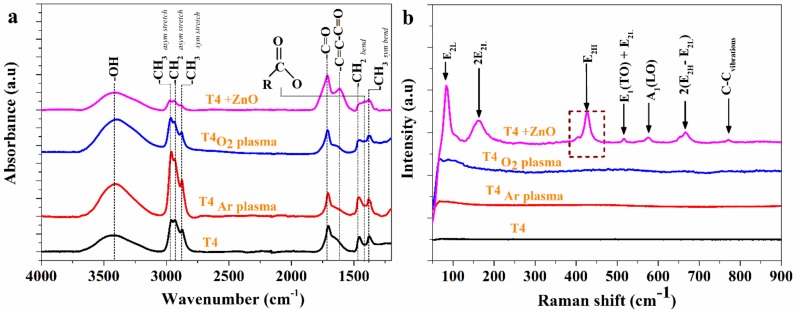
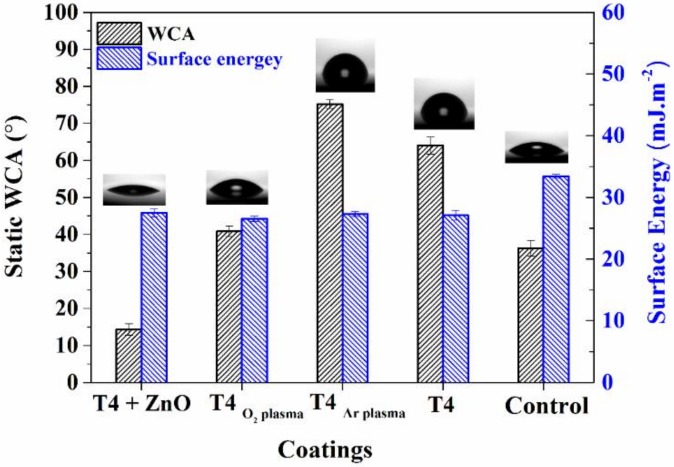
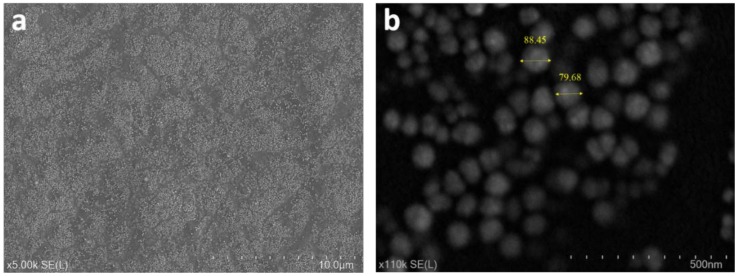
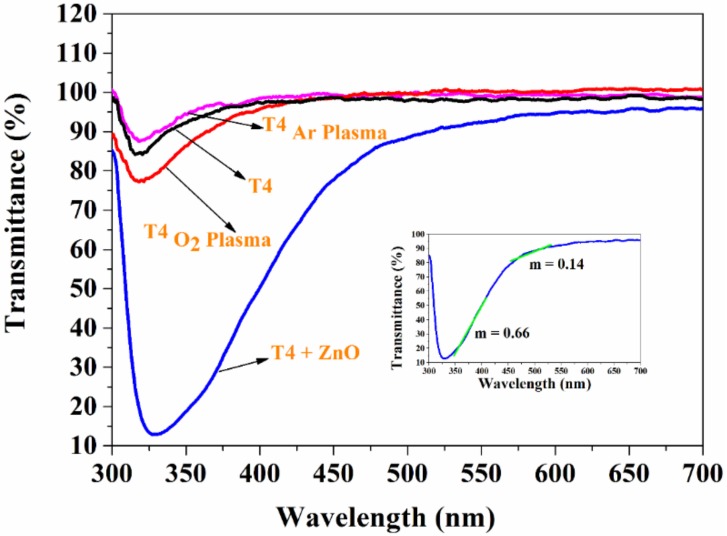
Surface modification of thin films is often performed to enhance their properties. In this work, in situ modification of Terpinen-4-ol (T4) plasma polymer is carried out via simultaneous surface functionalization and nanoparticle immobilization. Terpinen-4-ol plasma polymers surface were decorated with a layer of ZnO nanoparticles in an oxygen plasma environment immediately after polymer deposition. A combination of hydrophilic modification and ZnO nanoparticle functionalization of the T4 polymer surface led to an enhancement in antibacterial properties by factor of 3 (from 0.75 to 0.25 CFU.mm). In addition, ZnO nanoparticle-modified coatings demonstrated improved UV absorbing characteristics in the region of 300-400 nm by 60% relative to unmodified coatings. The ZnO modified coatings were transparent in the visible region of 400-700 nm. The finding points towards the potential use of ZnO nanoparticle-modified T4 plasma polymers as optically transparent UV absorbing coatings.
薄膜的表面改性通常用于增强其性能。在这项工作中,通过同时进行表面功能化和纳米颗粒固定化,对萜品-4-醇(T4)等离子体聚合物进行原位改性。在聚合物沉积后,立即在氧等离子体环境中用一层ZnO纳米颗粒修饰萜品-4-醇等离子体聚合物表面。T4聚合物表面的亲水性改性和ZnO纳米颗粒功能化相结合,使抗菌性能提高了3倍(从0.75降至0.25 CFU.mm)。此外,相对于未改性的涂层,ZnO纳米颗粒改性涂层在300-400 nm区域的紫外线吸收特性提高了60%。ZnO改性涂层在400-700 nm的可见光区域是透明的。这一发现表明,ZnO纳米颗粒改性的T4等离子体聚合物有潜力用作光学透明的紫外线吸收涂层。