Escudero María José, Yeste María Pilar, Cauqui Miguel Ángel, Muñoz Miguel Ángel
Department of Energy, CIEMAT, 28040 Madrid, Spain.
Department of Material Science, Metallurgical Engineering and Inorganic Chemistry, Faculty of Sciences, University of Cadiz, E-11510 Puerto Real, Cadiz, Spain.
Materials (Basel). 2020 Jan 28;13(3):599. doi: 10.3390/ma13030599.
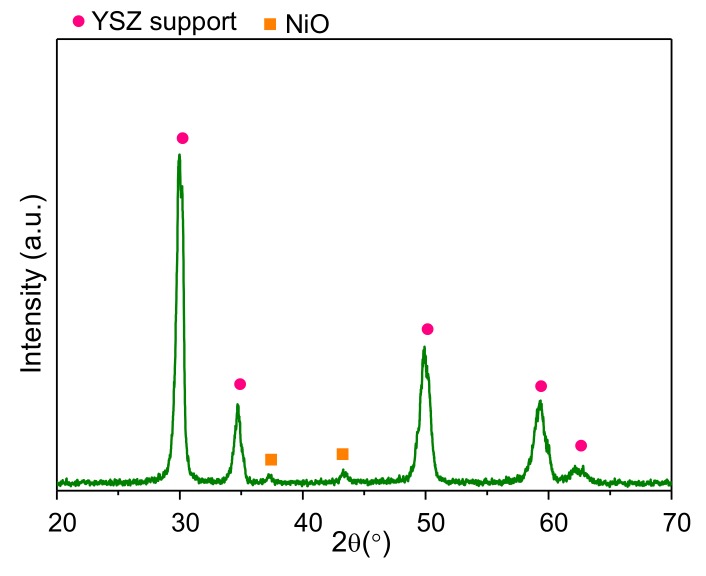
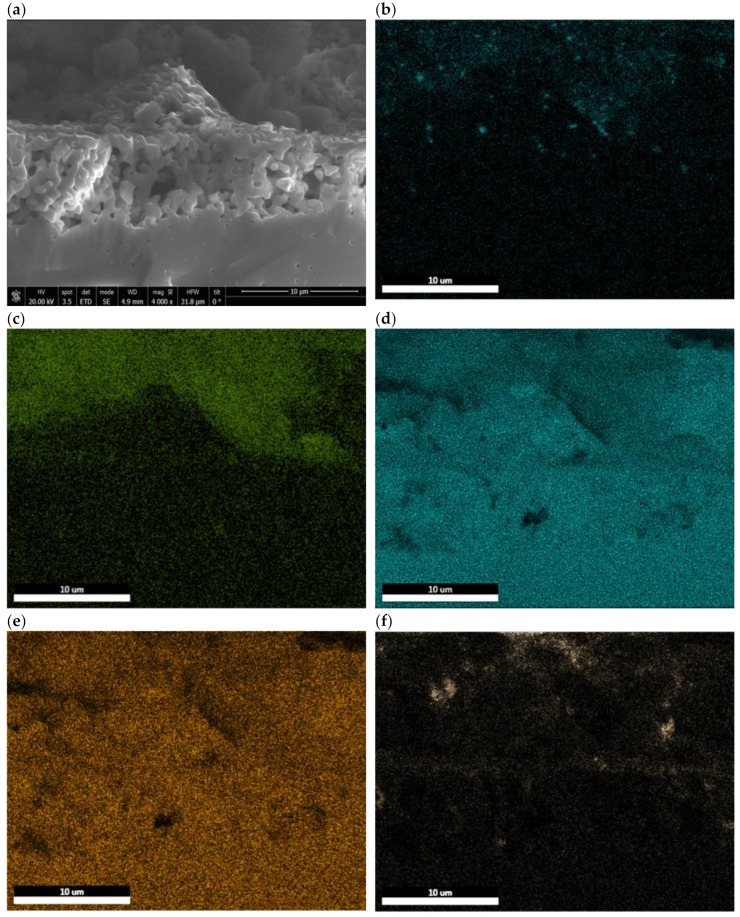
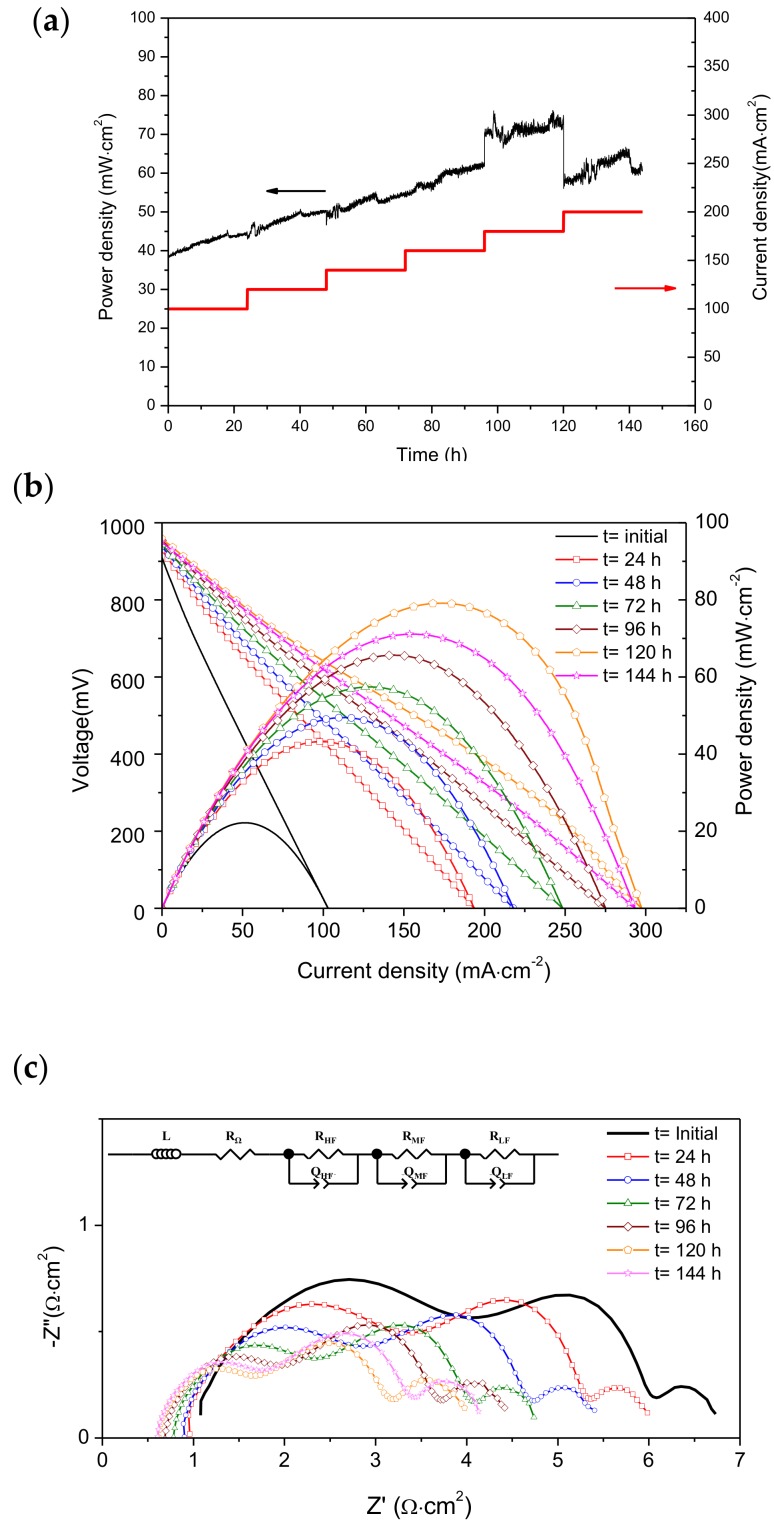
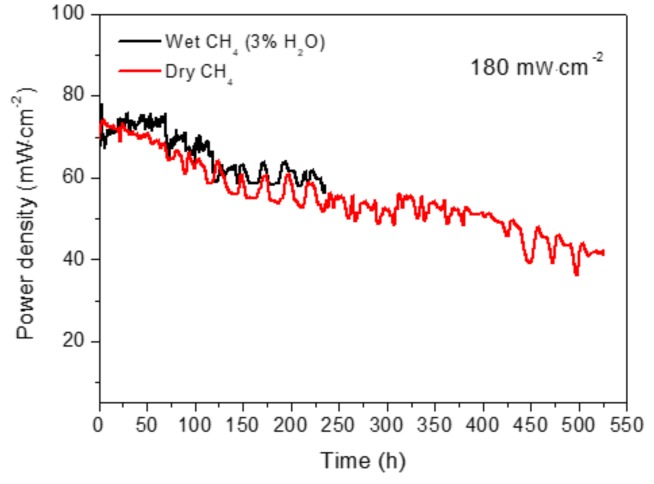
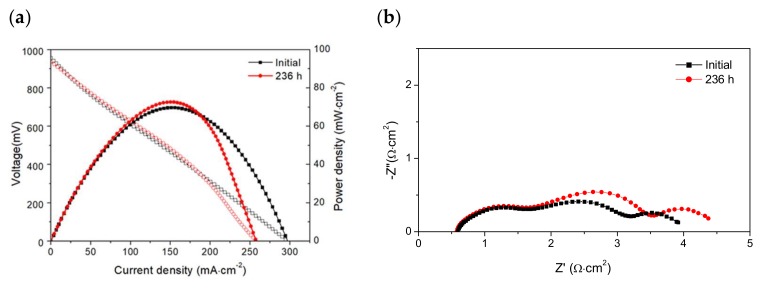
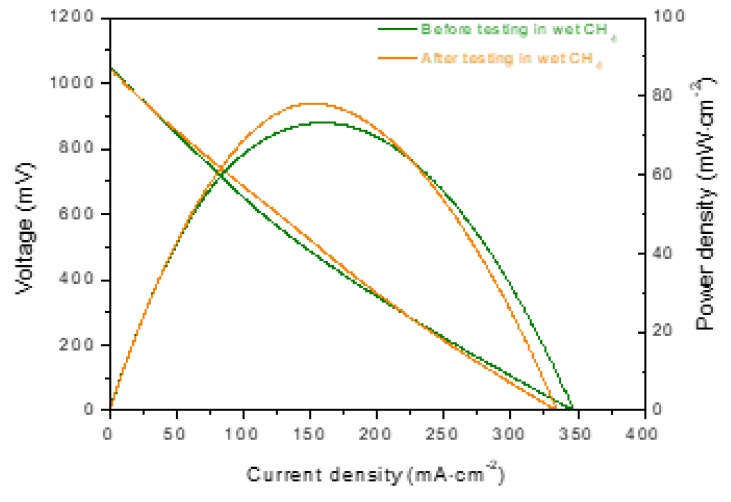
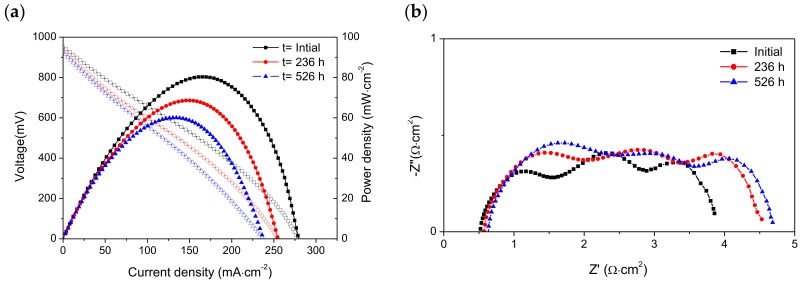
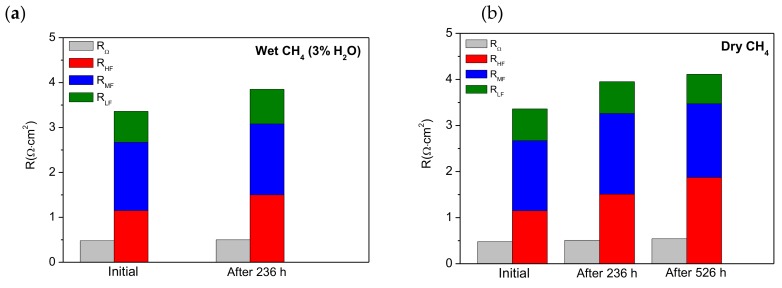
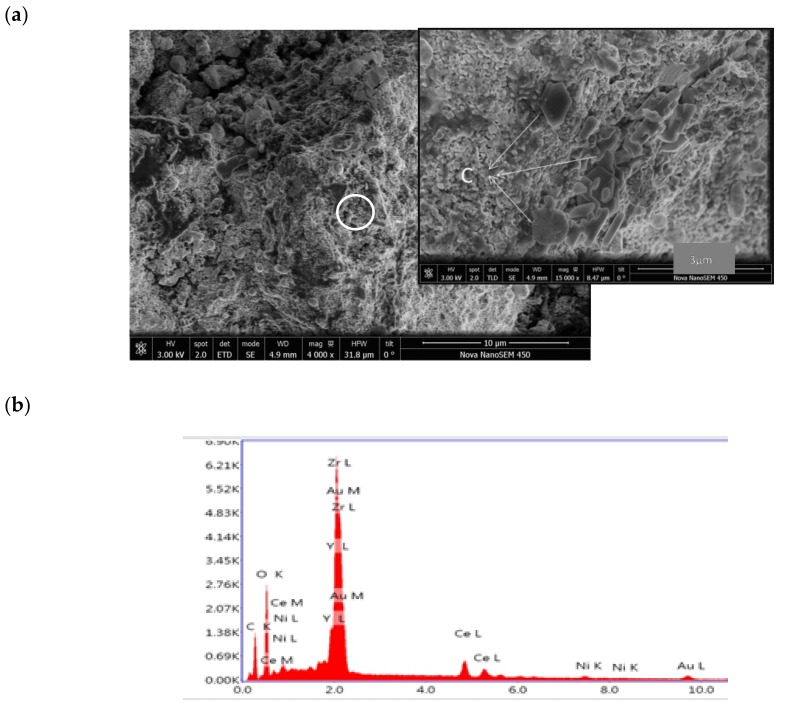
A nickel-ceria-yttria stabilized zirconia (Ni-CYSZ) cermet material was synthesized and tested as the anode for the direct oxidation of methane in a solid oxide fuel cell (SOFC) with YSZ as the electrolyte and strontium-doped lanthanum manganite (LSM) as the cathode. Initially, the electrochemical behavior was investigated under several load demands in wet (3% HO) CH at 850 °C during 144 h using I-V curves, impedance spectra, and potentiostatic measurements. Long-term tests were subsequently conducted under 180 mA·cm in wet CH for 236 h and dry CH for 526 h at 850 °C in order to assess the cell stability. Material analysis was carried out by SEM-EDS after operation was complete. Similar cell performance was observed with wet (3% HO) and dry CH, and this indicates that the presence of water is not relevant under the applied load demand. Impedance spectra of the cell showed that at least three processes govern the direct electrochemical oxidation of methane on the Ni-CYSZ anode and these are related to charge transfer at high frequency, the adsorption/desorption of charged species at medium frequency and the non-charge transfer processes at low frequency. The cell was operated for more than 900 h in CH and 806 h under load demand, with a low degradation rate of ~0.2 mV·h observed during this period. The low degradation in performance was mainly caused by the increase in charge transfer resistance, which can be attributed to carbon deposition on the anode causing a reduction in the number of active centers. Carbon deposits were detected mostly on the surface of Ni particles but not near the anode/electrolyte interface or the cerium surface. Therefore, the incorporation of cerium in the anode structure could improve the cell lifetime by reducing carbon formation.
合成了一种镍 - 二氧化铈 - 氧化钇稳定的氧化锆(Ni - CYSZ)金属陶瓷材料,并将其作为固体氧化物燃料电池(SOFC)中甲烷直接氧化的阳极进行测试,该电池以YSZ为电解质,以锶掺杂的锰酸镧(LSM)为阴极。最初,在850℃下,使用I - V曲线、阻抗谱和恒电位测量,在144小时内,在湿(3% H₂O)CH₄中,在几种负载需求下研究了其电化学行为。随后,为了评估电池稳定性,在850℃下,在湿CH₄中以180 mA·cm⁻²进行了236小时的长期测试,并在干CH₄中进行了526小时的长期测试。运行完成后,通过扫描电子显微镜 - 能谱仪(SEM - EDS)进行材料分析。在湿(3% H₂O)和干CH₄中观察到了相似的电池性能,这表明在所施加的负载需求下,水的存在并不重要。电池的阻抗谱表明,至少有三个过程控制着甲烷在Ni - CYSZ阳极上的直接电化学氧化,这些过程与高频下的电荷转移、中频下带电物种的吸附/解吸以及低频下的非电荷转移过程有关。该电池在CH₄中运行了超过900小时,在负载需求下运行了806小时,在此期间观察到的降解速率较低,约为0.2 mV·h⁻¹。性能的低降解主要是由电荷转移电阻的增加引起的,这可归因于阳极上的碳沉积导致活性中心数量减少。碳沉积物大多在Ni颗粒表面被检测到,但在阳极/电解质界面或铈表面附近未检测到。因此,在阳极结构中掺入铈可以通过减少碳的形成来提高电池寿命。