Department of Chemistry, Faculty of Science, Tokyo University of Science, 1-3 Kagurazaka, Shinjuku-ku, Tokyo 162-8601, Japan.
FEL-TUS, Tokyo University of Science, 2641 Yamazaki, Noda, Chiba 278-8510, Japan.
Int J Mol Sci. 2020 Jan 29;21(3):874. doi: 10.3390/ijms21030874.
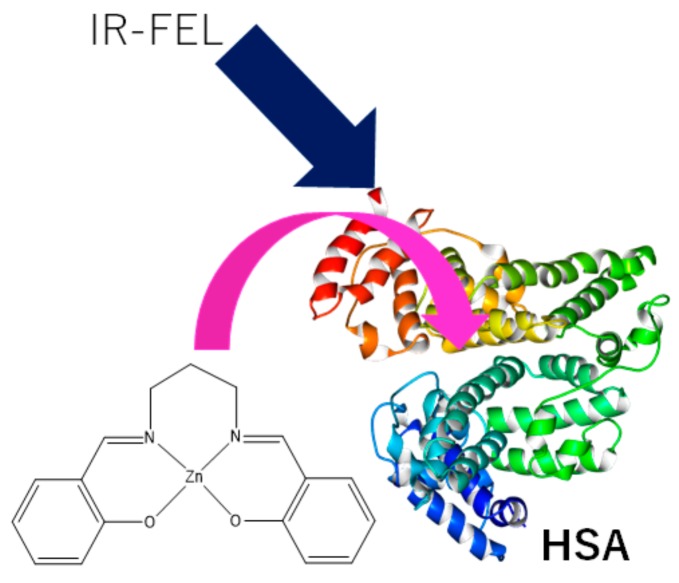
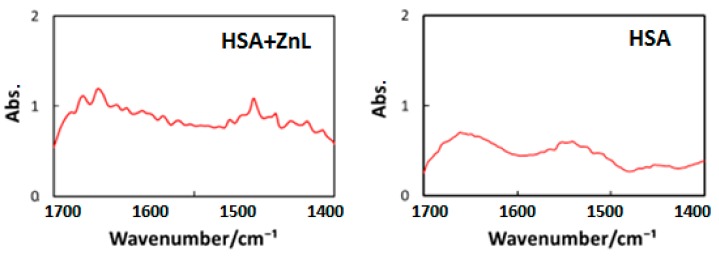
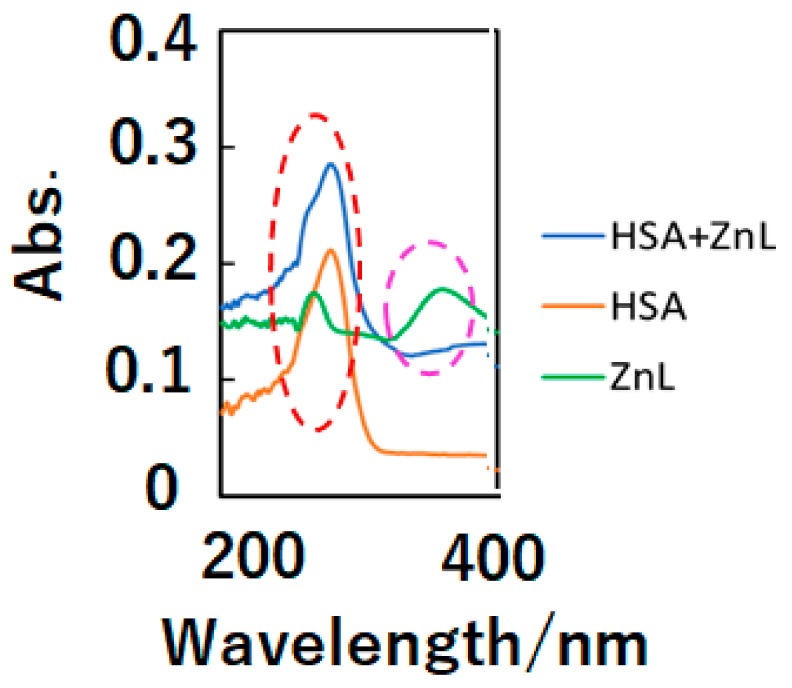
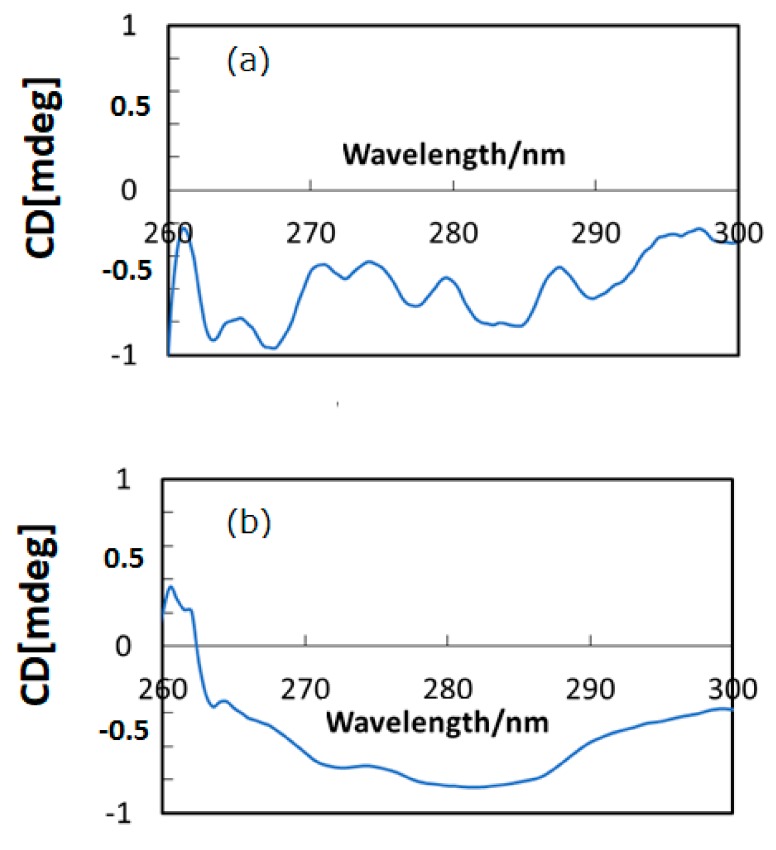
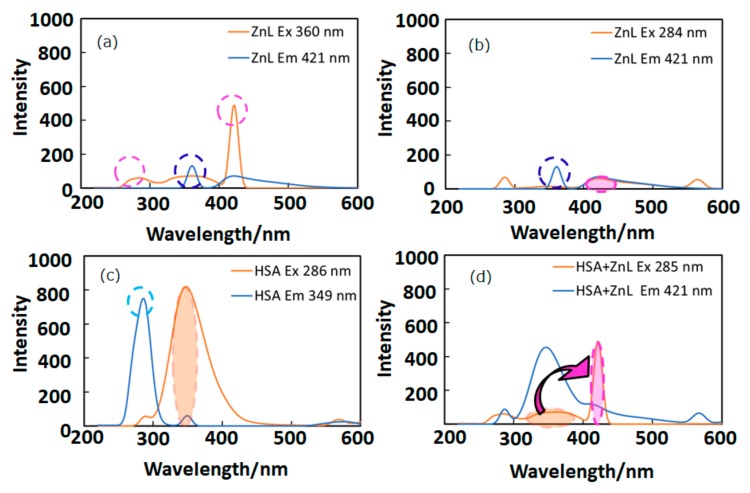
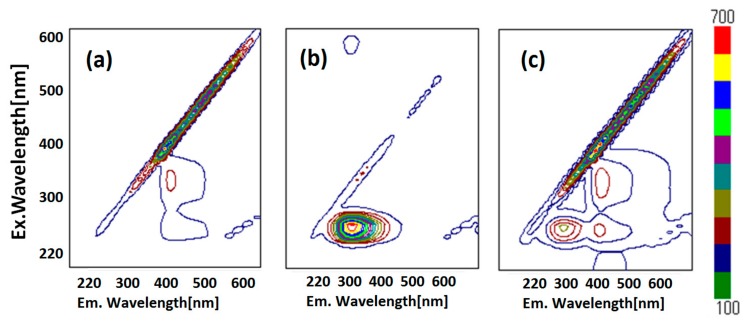
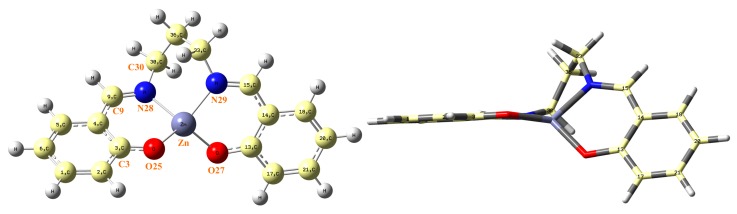
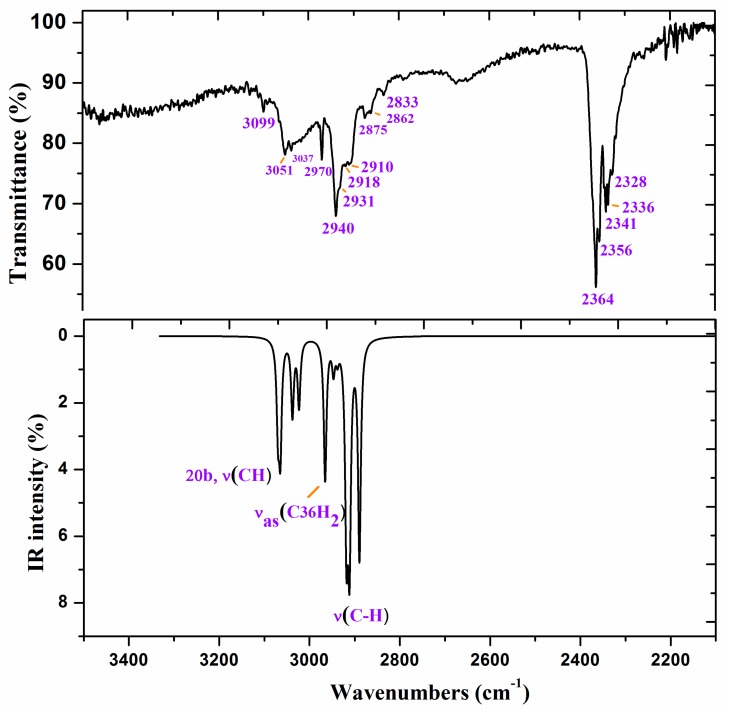
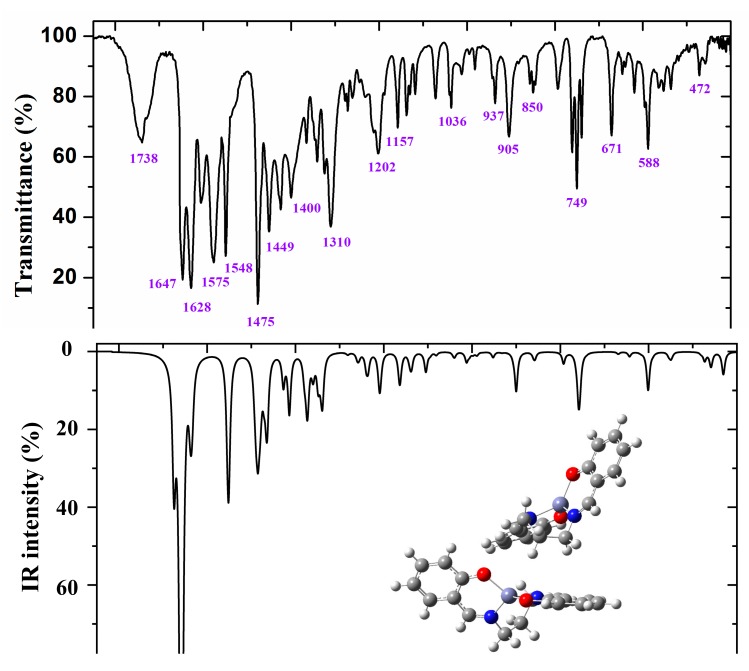
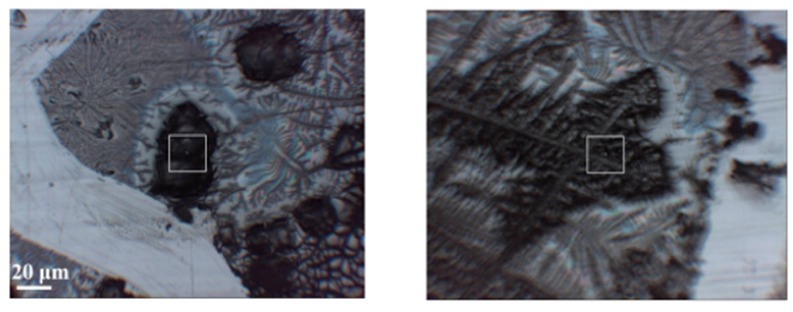
A salen-type Schiff base Zn(II) complex included in human serum albumin (HSA) protein was examined by UV-Vis, circular dichroism (CD), and fluorescence (PL) spectra. The formation of the composite material was also estimated by a GOLD program of ligand-protein docking simulation. A composite cast film of HSA and Zn(II) complex was prepared, and the effects of the docking of the metal complex on the degradation of protein molecules by mid-infrared free electron laser (IR-FEL) were investigated. The optimum wavelengths of IR-FEL irradiation to be used were based on experimental FT-IR spectra and vibrational analysis. Using TD-DFT results with 6-31G(d,p) and B3LYP, the IR spectrum of Zn(II) complex could be reasonably assigned. The respective wavelengths were 1652 cm (HSA amide I), 1537 cm (HSA amide II), and 1622 cm (Zn(II) complex C=N). Degradation of HSA based on FT-IR microscope (IRM) analysis and protein secondary structure analysis program (IR-SSE) revealed that the composite material was degraded more than pure HSA or Zn(II) complex; the inclusion of Zn(II) complex enhanced destabilization of folding of HSA.
人血清白蛋白(HSA)中包含的 Salen 型席夫碱锌(II)配合物通过紫外可见光谱(UV-Vis)、圆二色性(CD)和荧光(PL)光谱进行了研究。还通过配体-蛋白质对接模拟的 GOLD 程序估算了复合材料的形成。制备了 HSA 和 Zn(II)配合物的复合浇铸膜,并研究了金属配合物对接对中红外自由电子激光(IR-FEL)降解蛋白质分子的影响。根据实验傅里叶变换红外(FT-IR)光谱和振动分析选择了要使用的最佳 IR-FEL 辐照波长。使用 TD-DFT 结果和 6-31G(d,p)和 B3LYP,合理地分配了 Zn(II)配合物的 IR 光谱。各自的波长分别为 1652 cm(HSA 酰胺 I),1537 cm(HSA 酰胺 II)和 1622 cm(Zn(II)配合物 C=N)。基于傅里叶变换红外显微镜(IRM)分析和蛋白质二级结构分析程序(IR-SSE)的 HSA 降解表明,复合材料的降解程度高于纯 HSA 或 Zn(II)配合物;Zn(II)配合物的包含增强了 HSA 折叠的不稳定性。