Department of Medicine, Beth Israel Deaconess Medical Center and Harvard Medical School, Boston, MA, USA.
Chemistry and Chemical Biology, Stevens Institute of Technology, Hoboken, NJ, USA.
Trends Pharmacol Sci. 2020 Mar;41(3):183-198. doi: 10.1016/j.tips.2020.01.001. Epub 2020 Jan 31.
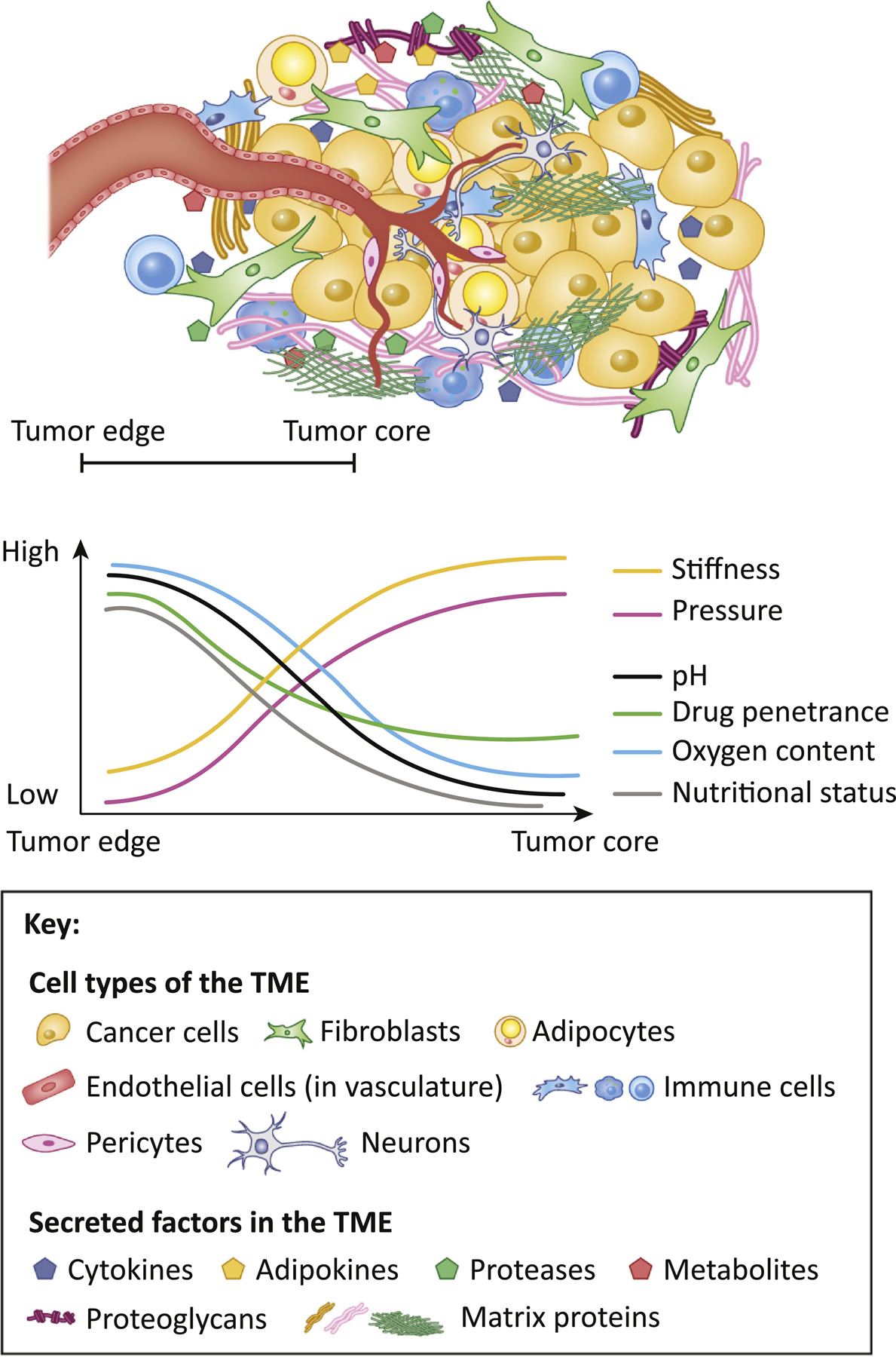
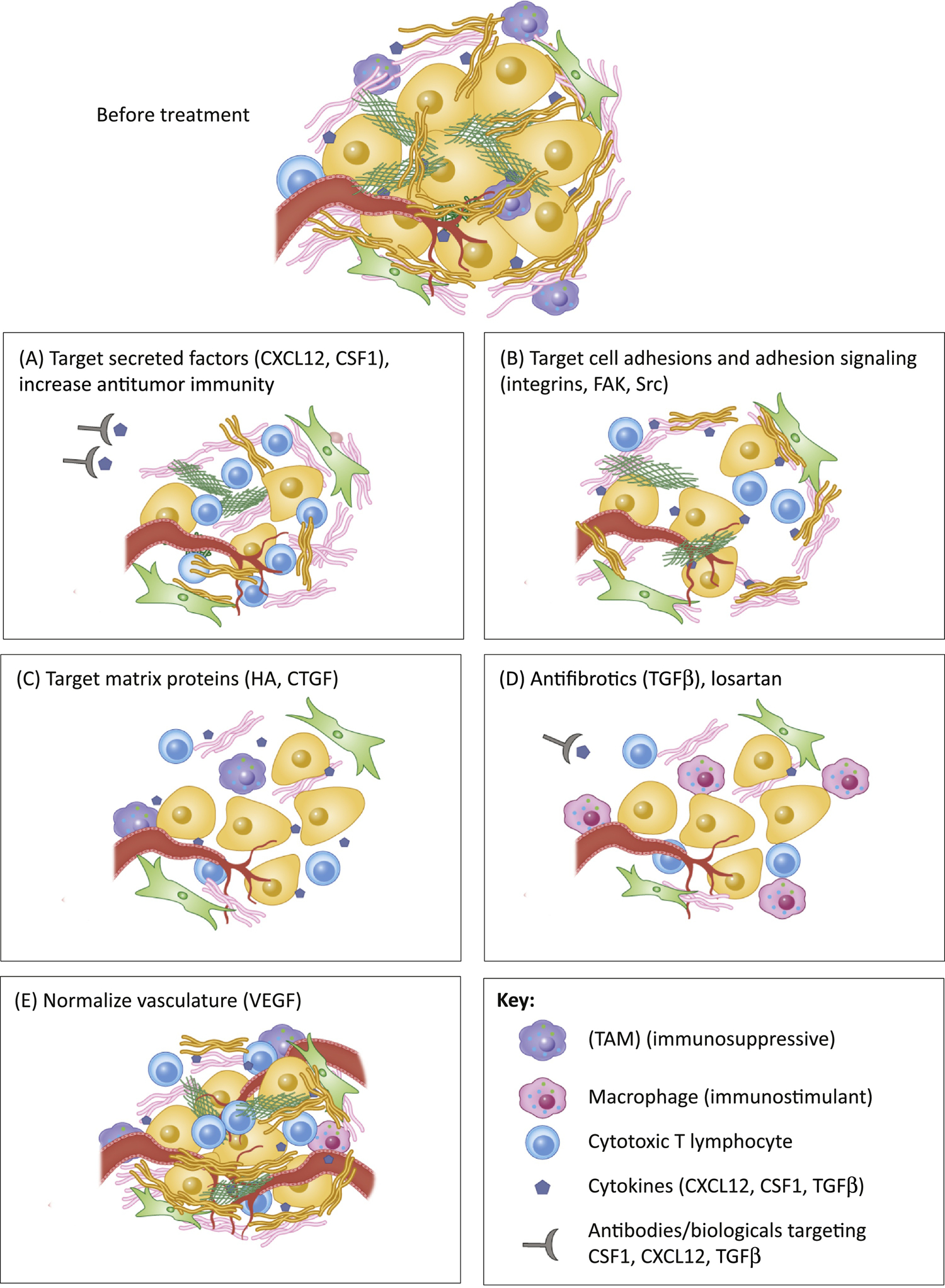
The tumor microenvironment (TME) is a complex neighborhood that consists of immune cells, fibroblasts, pericytes, adipocytes, endothelial and neuronal cells, and the extracellular matrix proteins. TME also consists of physical factors, such as oxygen availability, changing pH, interstitial fluid pressure, and tissue stiffness. As cancer progresses, the physical properties and the cells in the TME change significantly, impacting the efficacy of the therapies and modulating drug resistance. This has led to the development of several new treatments targeting the TME. This review focuses on recent advances on the role of TME in drug resistance, with a particular focus on the ongoing clinical trials aiming at disrupting the TME- and the extracellular matrix-mediated protection against therapies.
肿瘤微环境(TME)是一个复杂的邻里环境,由免疫细胞、成纤维细胞、周细胞、脂肪细胞、内皮细胞和神经元细胞以及细胞外基质蛋白组成。TME 还包括物理因素,如氧气供应、pH 值变化、细胞间质压力和组织硬度。随着癌症的发展,TME 中的物理性质和细胞会发生显著变化,从而影响治疗效果并调节耐药性。这导致了几种针对 TME 的新治疗方法的发展。本综述重点关注 TME 在耐药性中的作用的最新进展,特别关注旨在破坏 TME 和细胞外基质介导的对治疗的保护作用的正在进行的临床试验。