Hospital Italiano de Buenos Aires, Buenos Aires, Argentina.
Department of Orthopaedic Surgery, Cleveland Clinic, Cleveland, Ohio.
JBJS Rev. 2020 Feb;8(2):e0075. doi: 10.2106/JBJS.RVW.19.00075.
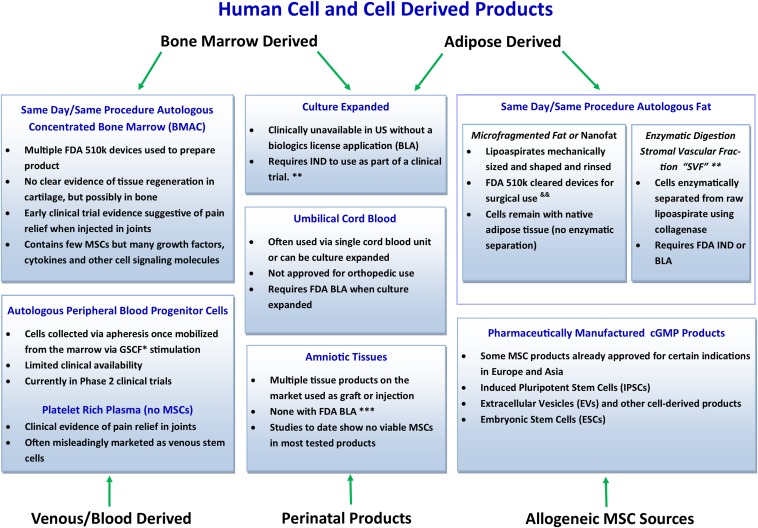
The glenohumeral (GH) joint ranks third on the list of the large joints that are most commonly affected by osteoarthritis, after the knee and the hip. General nonsurgical modalities, including changes in daily activities, physical therapy, pharmacotherapy, and corticosteroid injections, constitute the mainstay of treatment. Most of these options, however, have shown moderate and short-term effectiveness. Arthroplasty techniques have proven to be successful for elderly patients. Nevertheless, replacement options are not optimal for younger patients because their functional demands are higher and prostheses have a finite life span. This has led to the search for new nonoperative treatment options to target this subgroup of patients. It has been suggested that orthobiologic therapies, including platelet-rich plasma (PRP) and cell therapies, present great promise and opportunity for the treatment of GH osteoarthritis. Despite the promising results that have been shown by cell therapies and PRP for treating degenerative joint conditions, additional studies are needed to provide more definitive conclusions.
盂肱(GH)关节在最常受骨关节炎影响的大关节中排名第三,仅次于膝和髋。包括日常生活方式改变、物理治疗、药物治疗和皮质类固醇注射在内的一般非手术方式是治疗的主要方法。然而,这些方法中的大多数都显示出中度和短期的有效性。关节成形术技术已被证明对老年患者有效。然而,置换选择并不适合年轻患者,因为他们的功能需求更高,且假体的使用寿命有限。这导致人们寻找新的非手术治疗选择来针对这一亚组患者。有人认为,包括富含血小板的血浆(PRP)和细胞疗法在内的组织生物治疗为治疗 GH 骨关节炎带来了巨大的希望和机会。尽管细胞疗法和 PRP 治疗退行性关节疾病的结果令人鼓舞,但仍需要更多的研究来提供更明确的结论。