Department of Biomedical Engineering, Pennsylvania State University, University Park, PA 16802.
Molecular Cellular and Integrative Biological Sciences Program, Huck Institute of Life Sciences, Pennsylvania State University, University Park, PA 16802.
Mol Biol Cell. 2020 Apr 1;31(8):782-792. doi: 10.1091/mbc.E19-09-0495. Epub 2020 Feb 5.
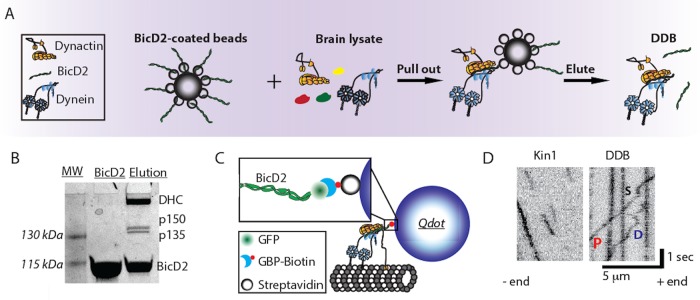
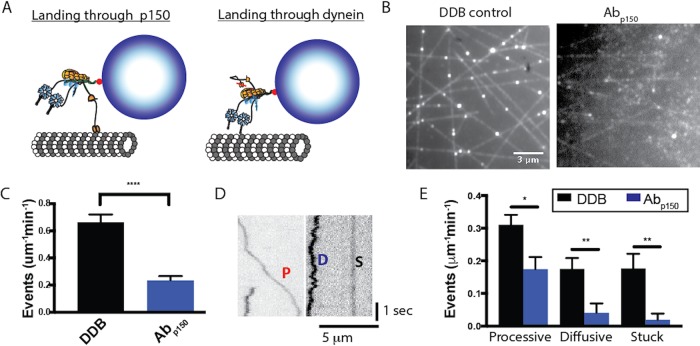
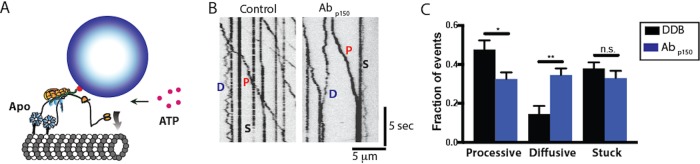
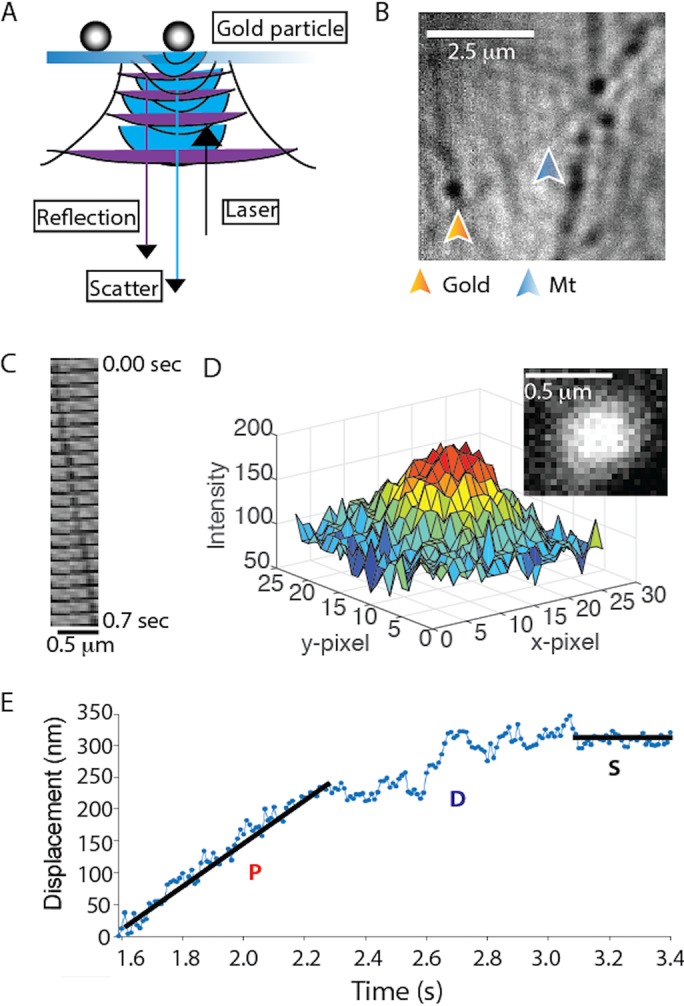
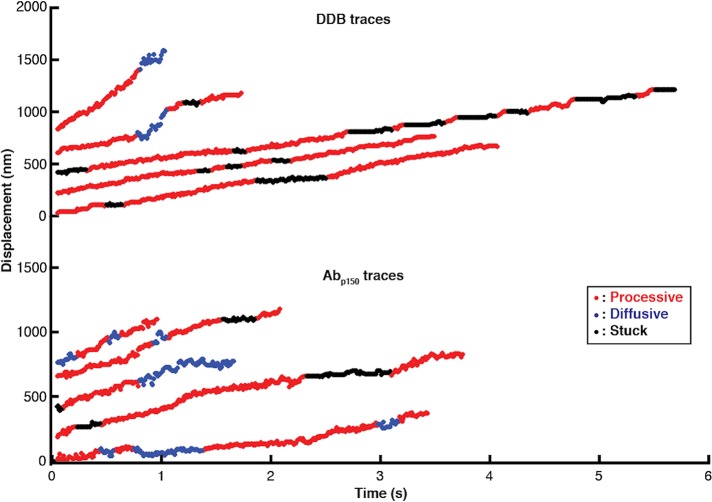
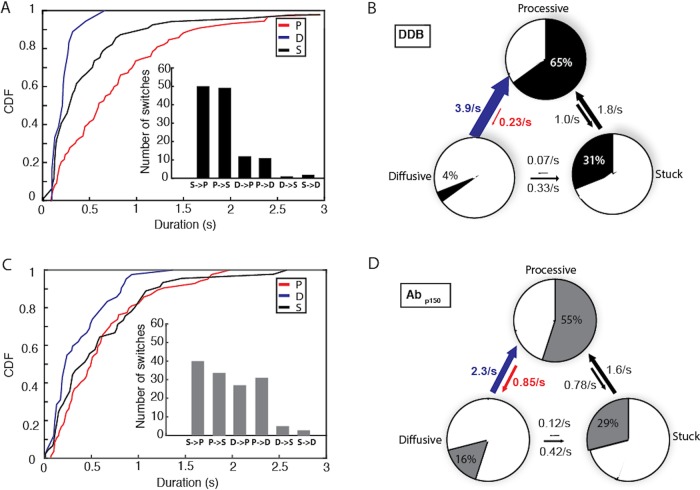
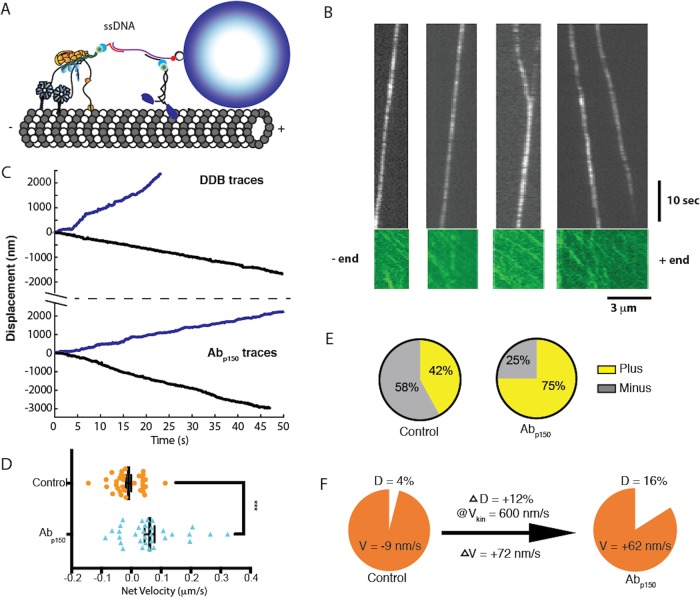
Cytoplasmic dynein is activated by forming a complex with dynactin and the adaptor protein BicD2. We used interferometric scattering (iSCAT) microscopy to track dynein-dynactin-BicD2 (DDB) complexes in vitro and developed a regression-based algorithm to classify switching between processive, diffusive, and stuck motility states. We find that DDB spends 65% of its time undergoing processive stepping, 4% undergoing 1D diffusion, and the remaining time transiently stuck to the microtubule. Although the p150 subunit was previously shown to enable dynactin diffusion along microtubules, blocking p150 enhanced the proportion of time DDB diffused and reduced the time DDB processively walked. Thus, DDB diffusive behavior most likely results from dynein switching into an inactive (diffusive) state, rather than p150 tethering the complex to the microtubule. DDB-kinesin-1 complexes, formed using a DNA adapter, moved slowly and persistently, and blocking p150 led to a 70 nm/s plus-end shift in the average velocity of the complexes, in quantitative agreement with the shift of isolated DDB into the diffusive state. The data suggest a DDB activation model in which dynactin p150 enhances dynein processivity not solely by acting as a diffusive tether that maintains microtubule association, but rather by acting as an allosteric activator that promotes a conformation of dynein optimal for processive stepping. In bidirectional cargo transport driven by the opposing activities of kinesin and dynein-dynactin-BicD2, the dynactin p150 subunit promotes retrograde transport and could serve as a target for regulators of transport.
细胞质动力蛋白通过与动力蛋白和衔接蛋白 BicD2 形成复合物而被激活。我们使用干涉散射(iSCAT)显微镜在体外追踪动力蛋白-动力蛋白复合物-衔接蛋白 BicD2(DDB)复合物,并开发了一种基于回归的算法来对连续运动、扩散和黏附运动状态之间的转换进行分类。我们发现,DDB 有 65%的时间处于连续运动状态,4%的时间处于 1D 扩散状态,其余时间则短暂地黏附在微管上。尽管先前的研究表明 p150 亚基使动力蛋白复合物能够沿着微管扩散,但阻断 p150 会增加 DDB 扩散的时间比例,并减少 DDB 连续行走的时间。因此,DDB 的扩散行为很可能是由于动力蛋白转换为非活性(扩散)状态,而不是 p150 将复合物固定在微管上。使用 DNA 接头形成的 DDB-驱动蛋白-1 复合物移动缓慢且持续,阻断 p150 会导致复合物的平均速度向前端移动 70nm/s,与将 DDB 单独隔离到扩散状态时的速度变化完全一致。数据表明,DDB 的激活模型是动力蛋白 p150 通过充当维持微管结合的扩散系绳来增强动力蛋白的连续性,而不是通过充当促进适合连续运动的动力蛋白构象的别构激活剂来增强动力蛋白的连续性。在由驱动蛋白和动力蛋白-动力蛋白复合物-衔接蛋白 BicD2 的相反活性驱动的双向货物运输中,动力蛋白 p150 亚基促进逆行运输,并且可以作为运输调节剂的靶标。