Department of Nephrology, The Second Xiangya Hospital of Central South University, Hunan Key Laboratory of Kidney Disease and Blood Purification, Changsha 410011, China.
Department of Cellular Biology and Anatomy, Medical College of Georgia at Augusta University and Charlie Norwood VA Medical Center, Augusta, GA 30912, USA.
Cells. 2020 Feb 1;9(2):338. doi: 10.3390/cells9020338.
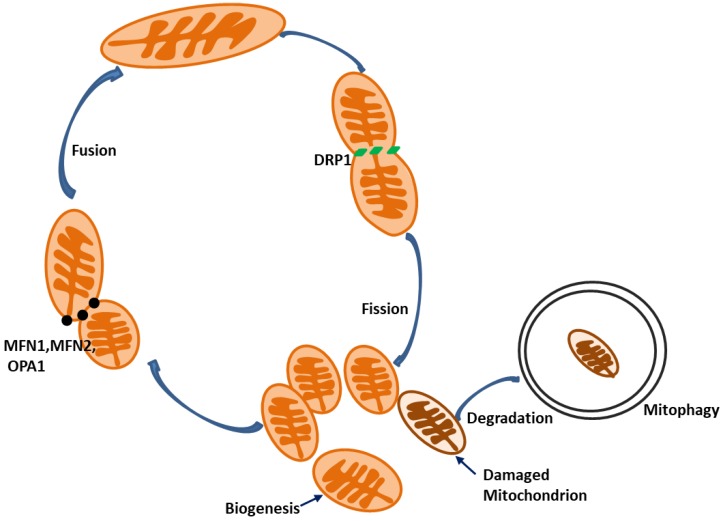
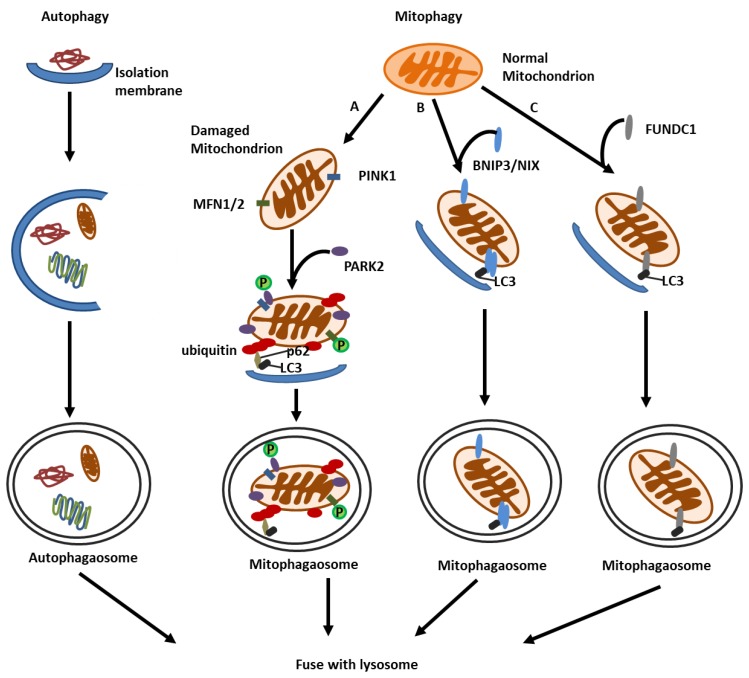
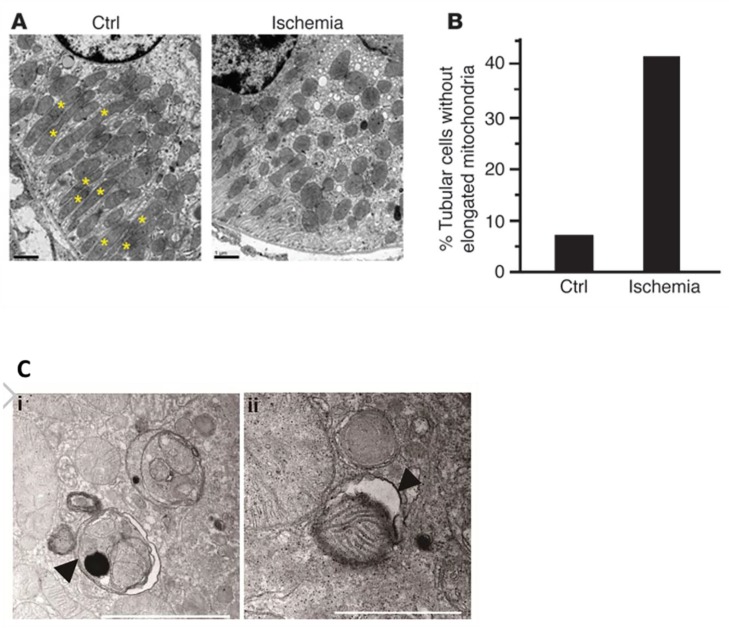
Acute kidney injury (AKI) is a major kidney disease characterized by rapid decline of renal function. Besides its acute consequence of high mortality, AKI has recently been recognized as an independent risk factor for chronic kidney disease (CKD). Maladaptive or incomplete repair of renal tubules after severe or episodic AKI leads to renal fibrosis and, eventually, CKD. Recent studies highlight a key role of mitochondrial pathology in AKI development and abnormal kidney repair after AKI. As such, timely elimination of damaged mitochondria in renal tubular cells represents an important quality control mechanism for cell homeostasis and survival during kidney injury and repair. Mitophagy is a selective form of autophagy that selectively removes redundant or damaged mitochondria. Here, we summarize our recent understanding on the molecular mechanisms of mitophagy, discuss the role of mitophagy in AKI development and kidney repair after AKI, and present future research directions and therapeutic potential.
急性肾损伤(AKI)是一种主要的肾脏疾病,其特征为肾功能迅速下降。除了其高死亡率的急性后果外,AKI 最近还被认为是慢性肾脏病(CKD)的一个独立危险因素。严重或间歇性 AKI 后肾小管的适应性或不完全修复会导致肾纤维化,最终导致 CKD。最近的研究强调了线粒体病理学在 AKI 发展和 AKI 后肾脏修复异常中的关键作用。因此,及时清除肾小管细胞中受损的线粒体是细胞在肾损伤和修复过程中维持体内平衡和存活的重要质量控制机制。自噬是一种选择性的自噬形式,可选择性地去除多余或受损的线粒体。在这里,我们总结了我们最近对自噬分子机制的理解,讨论了自噬在 AKI 发展和 AKI 后肾脏修复中的作用,并提出了未来的研究方向和治疗潜力。