Department of Materials Science and Engineering, University of California Irvine, Irvine, CA, USA.
Department of Pathology and Medical Biology, University Medical Center Groningen, University of Groningen, Groningen, the Netherlands.
Cell Transplant. 2020 Jan-Dec;29:963689719893936. doi: 10.1177/0963689719893936.
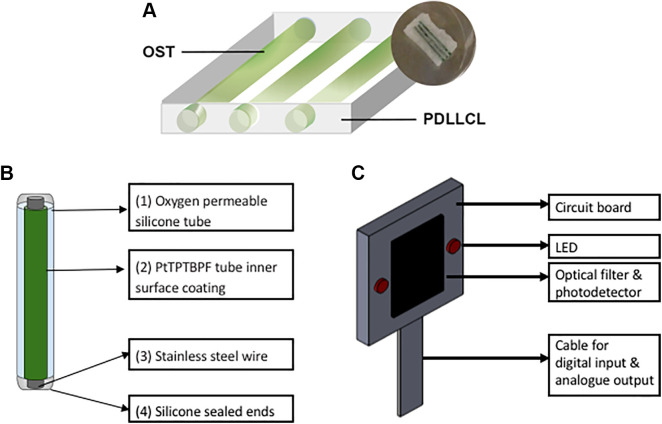
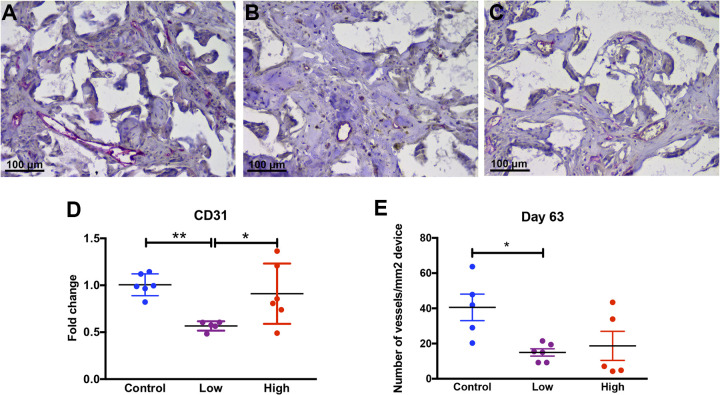
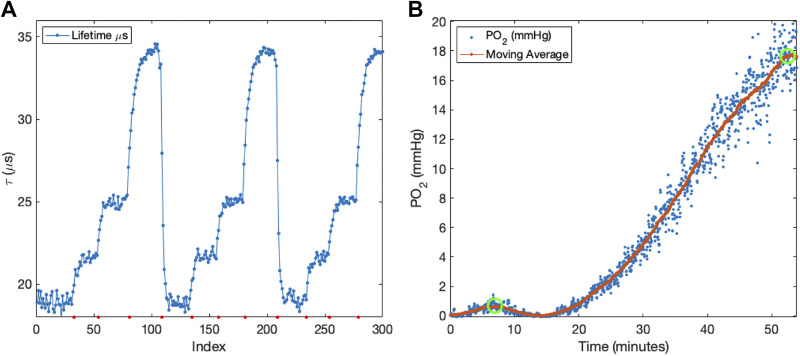
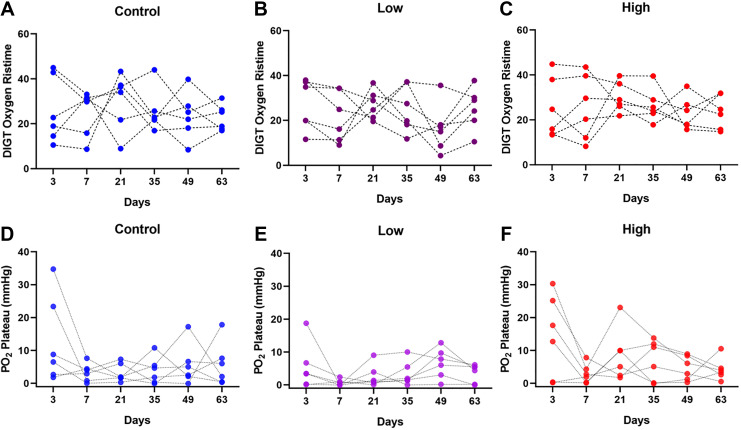
Medical devices for cell therapy can be improved through prevascularization. In this work we study the vascularization of a porous polymer device, previously used by our group for pancreatic islet transplantation with results indicating improved glycemic control. Oxygen partial pressure within such devices was monitored non-invasively using an optical technique. Oxygen-sensitive tubes were fabricated and placed inside devices prior to subcutaneous implantation in nude mice. We tested the hypothesis that vascularization will be enhanced by administration of the pro-angiogenic factor hydrogen sulfide (HS). We found that oxygen dynamics were unique to each implant and that the administration of HS does not result in significant changes in perfusion of the devices as compared with control. These observations suggest that vascular perfusion and density are not necessarily correlated, and that the rate of vascularization was not enhanced by the pro-angiogenic agent.
通过预血管化可以改善细胞治疗用医疗器械。在这项工作中,我们研究了多孔聚合物器械的血管化情况,该器械先前已被我们用于胰岛细胞移植,结果表明其能改善血糖控制。使用光学技术对这些器械中的氧分压进行了非侵入性监测。在将氧敏感管置于裸鼠皮下植入之前,将其置于器械内部。我们检验了血管生成因子硫化氢(HS)的给药将增强血管生成的假设。我们发现,每个植入物的氧动力学都是独特的,与对照相比,HS 的给药并没有导致器械灌注的显著变化。这些观察结果表明,血管灌注和密度不一定相关,并且血管生成的速度没有被血管生成剂增强。