Division of Clinical Genetics, Department of Laboratory Medicine, Lund University, Lund, Sweden.
Department of Hematology, Oncology and Radiation Physics, Skåne University Hospital, Lund, Sweden.
Nat Commun. 2020 Feb 5;11(1):579. doi: 10.1038/s41467-019-14106-0.
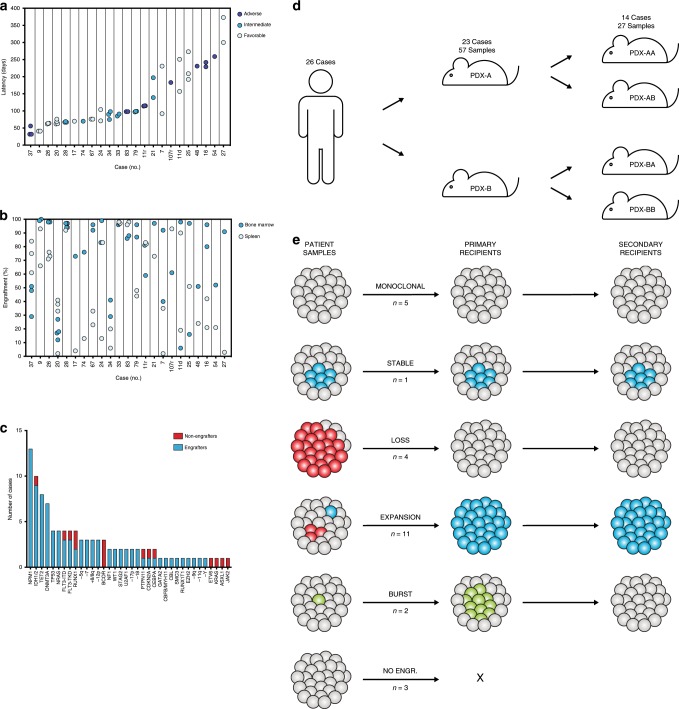
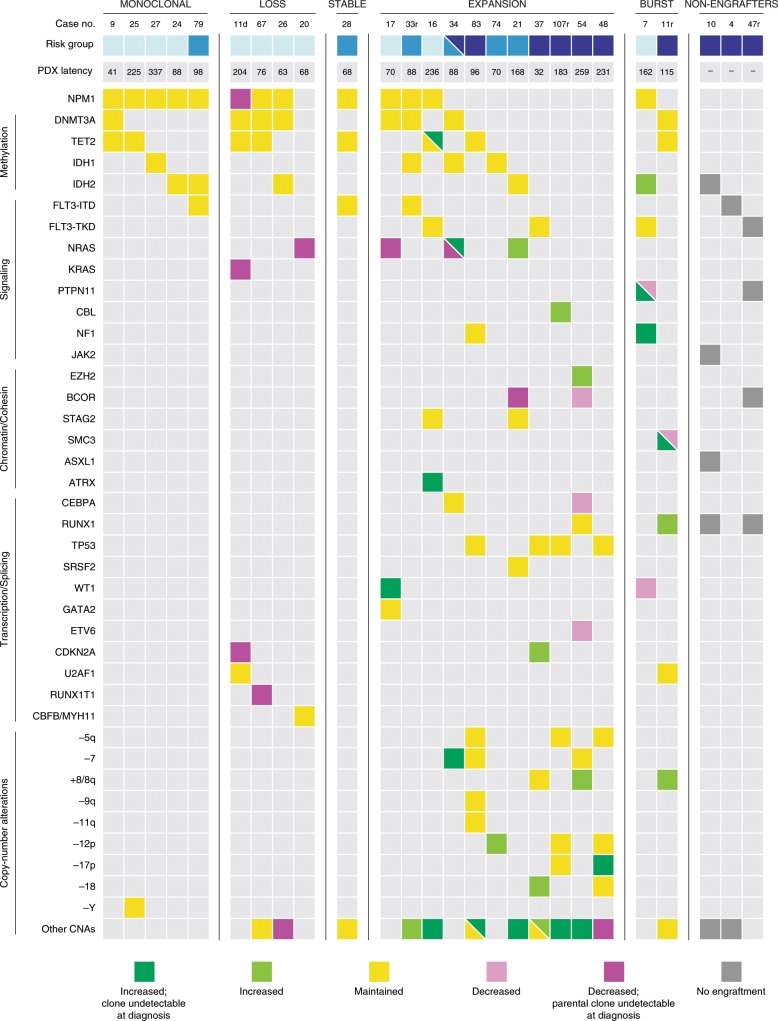
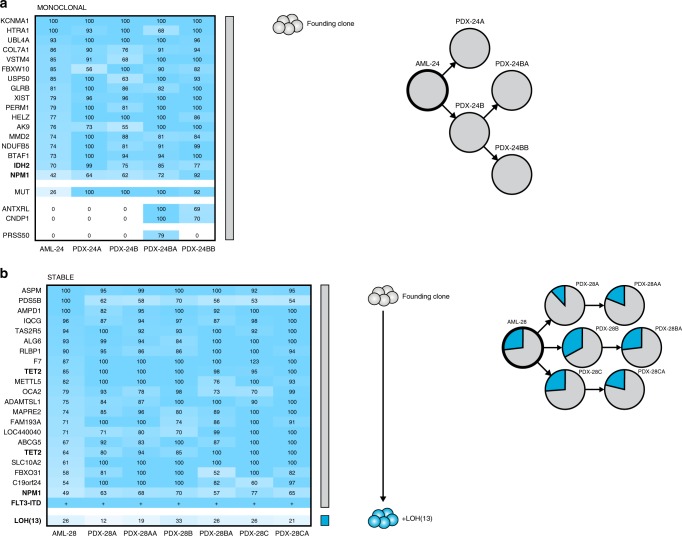
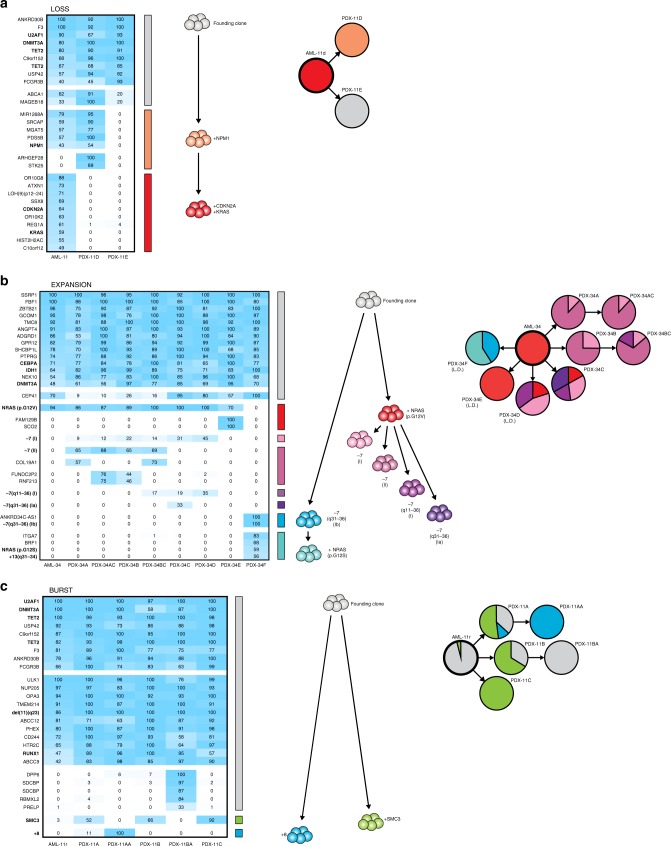
Clonal heterogeneity and evolution has major implications for disease progression and relapse in acute myeloid leukemia (AML). To model clonal dynamics in vivo, we serially transplanted 23 AML cases to immunodeficient mice and followed clonal composition for up to 15 months by whole-exome sequencing of 84 xenografts across two generations. We demonstrate vast changes in clonality that both progress and reverse over time, and define five patterns of clonal dynamics: Monoclonal, Stable, Loss, Expansion and Burst. We also show that subclonal expansion in vivo correlates with a more adverse prognosis. Furthermore, clonal expansion enabled detection of very rare clones with AML driver mutations that were undetectable by sequencing at diagnosis, demonstrating that the vast majority of AML cases harbor multiple clones already at diagnosis. Finally, the rise and fall of related clones enabled deconstruction of the complex evolutionary hierarchies of the clones that compete to shape AML over time.
克隆异质性和进化对急性髓细胞白血病(AML)的疾病进展和复发有重大影响。为了在体内模拟克隆动力学,我们将 23 例 AML 病例连续移植到免疫缺陷小鼠中,并通过对两代 84 个异种移植物进行全外显子组测序,对克隆组成进行了长达 15 个月的跟踪。我们证明了克隆性的巨大变化,这些变化随着时间的推移而不断进展和逆转,并定义了五种克隆动力学模式:单克隆、稳定、丢失、扩增和爆发。我们还表明,体内亚克隆扩增与更不利的预后相关。此外,克隆扩增使得能够检测到 AML 驱动突变的非常罕见的克隆,这些克隆在诊断时通过测序是无法检测到的,这表明绝大多数 AML 病例在诊断时已经存在多个克隆。最后,相关克隆的兴衰使得能够对随着时间推移而竞争形成 AML 的克隆的复杂进化层次结构进行解构。