Bonsor H C, MacDonald A M, Ahmed K M, Burgess W G, Basharat M, Calow R C, Dixit A, Foster S S D, Gopal K, Lapworth D J, Moench M, Mukherjee A, Rao M S, Shamsudduha M, Smith L, Taylor R G, Tucker J, van Steenbergen F, Yadav S K, Zahid A
British Geological Survey, Lyell Centre, Research Avenue South, Riccarton, Edinburgh, EH14 4AS UK.
2Department of Geology, University of Dhaka, Dhaka, 1000 Bangladesh.
Hydrogeol J. 2017;25(5):1377-1406. doi: 10.1007/s10040-017-1550-z. Epub 2017 Feb 23.
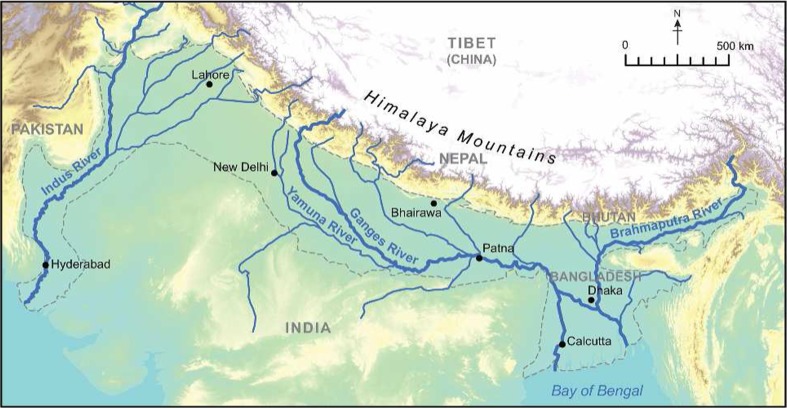
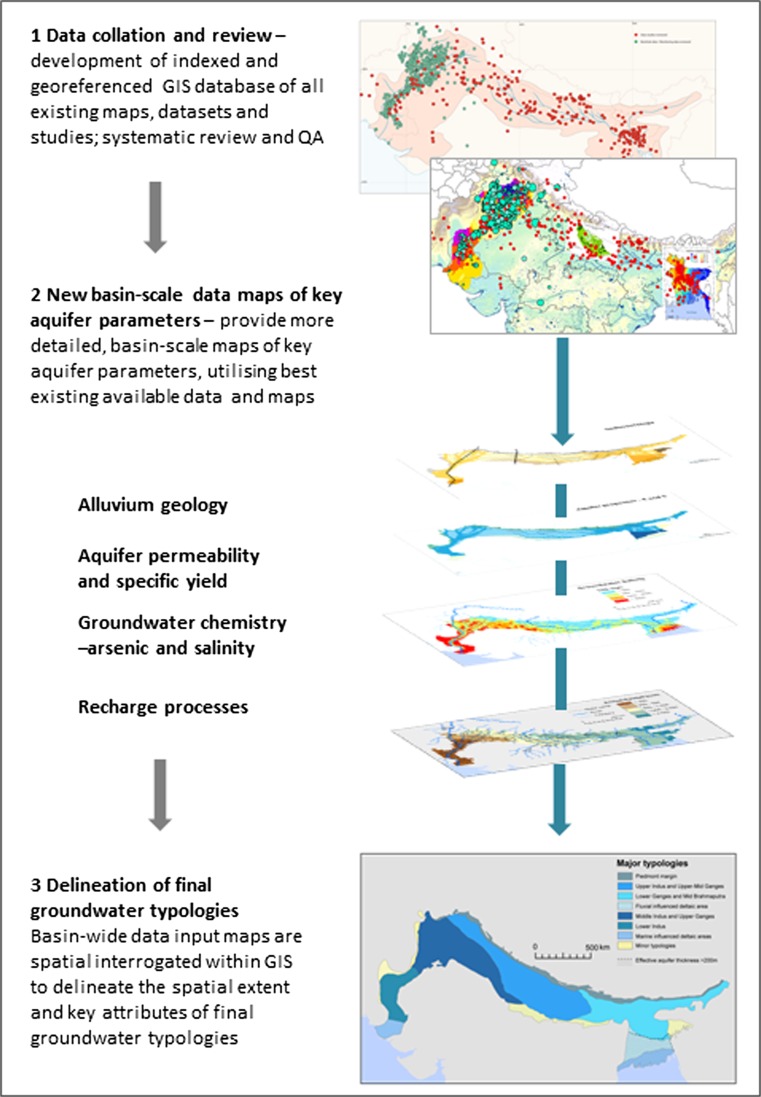
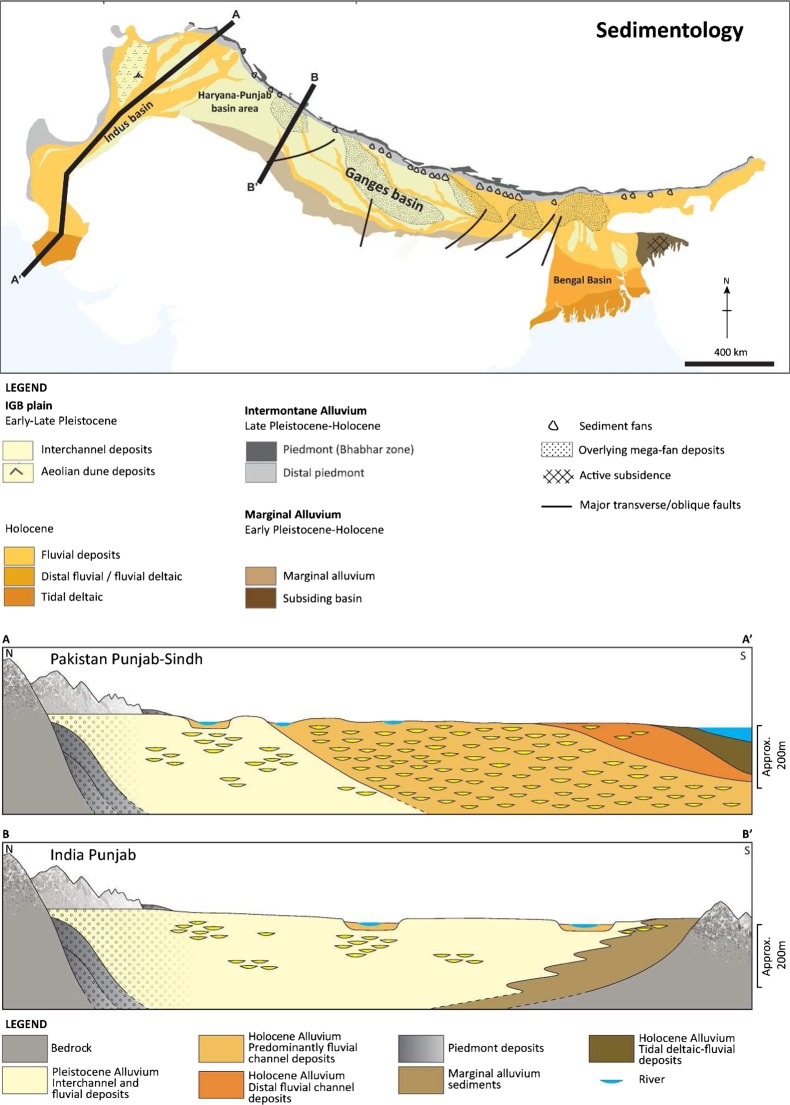
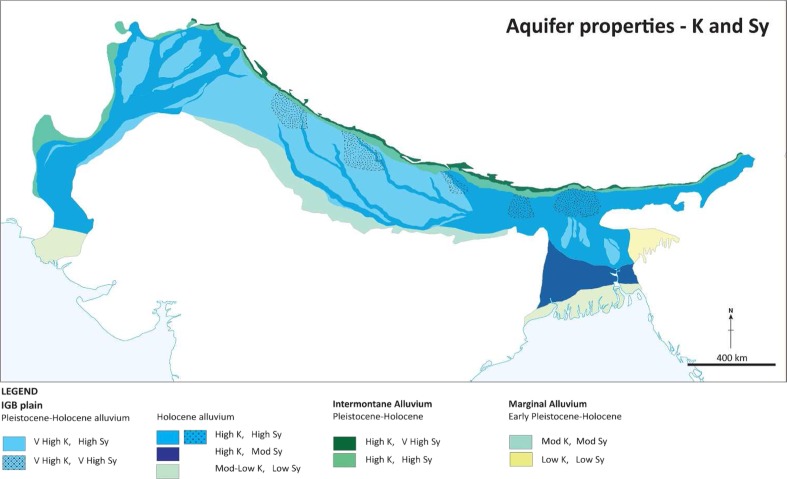
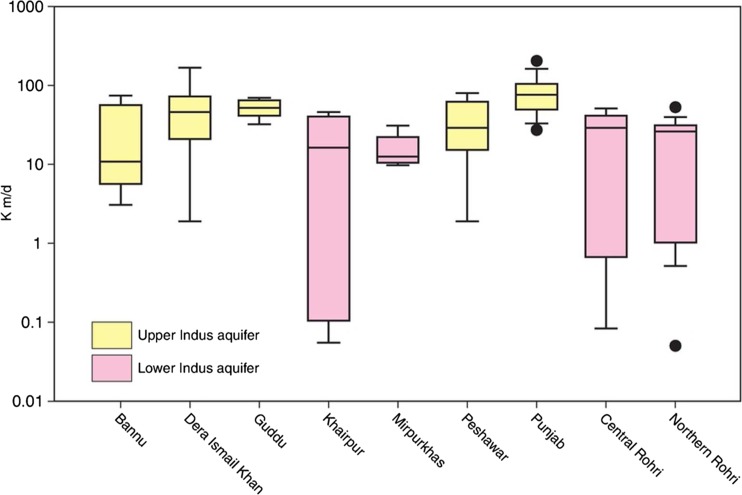
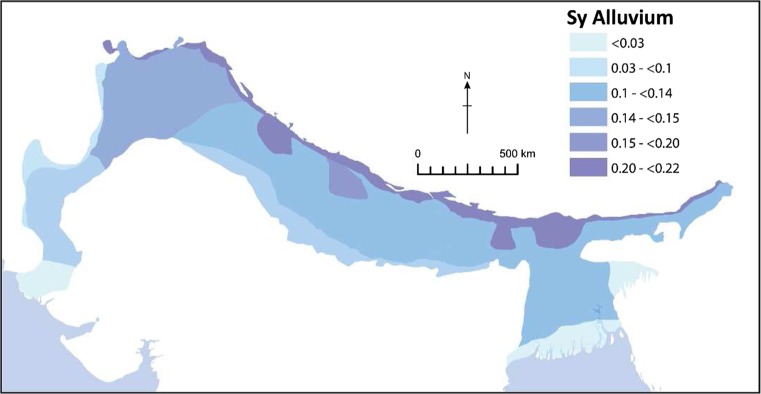
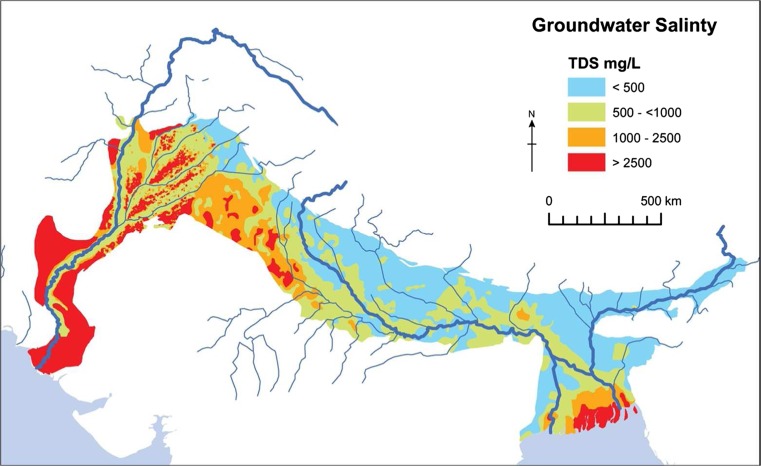
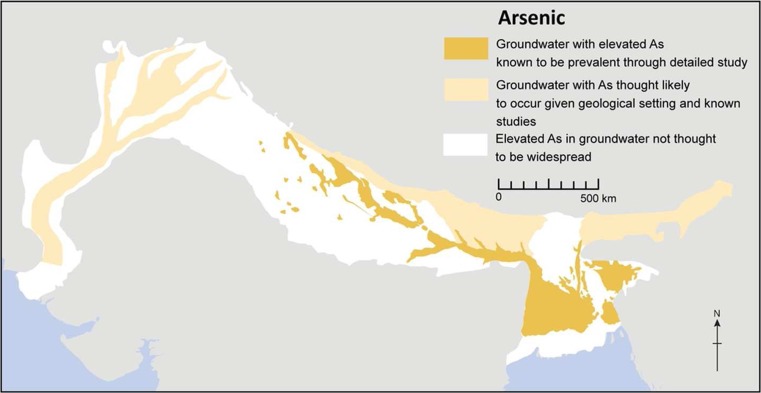
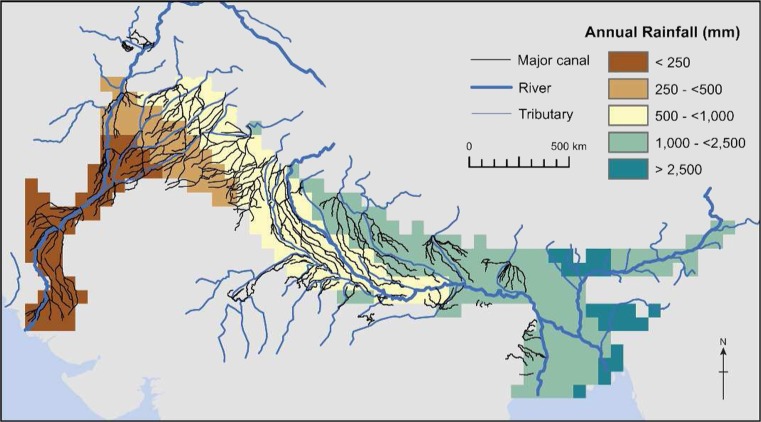
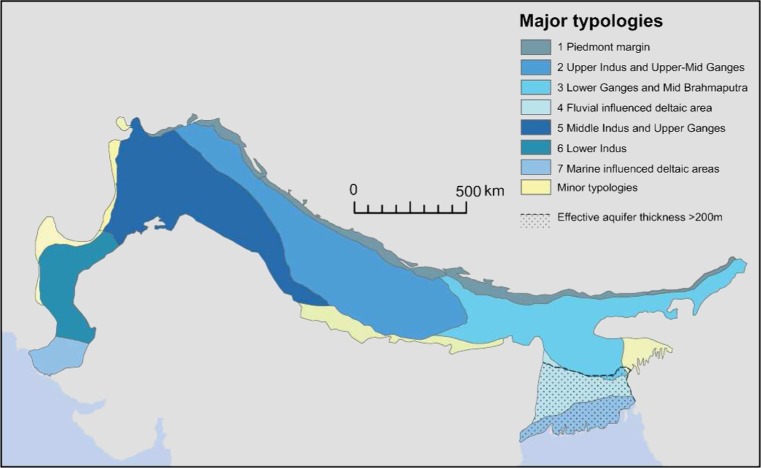
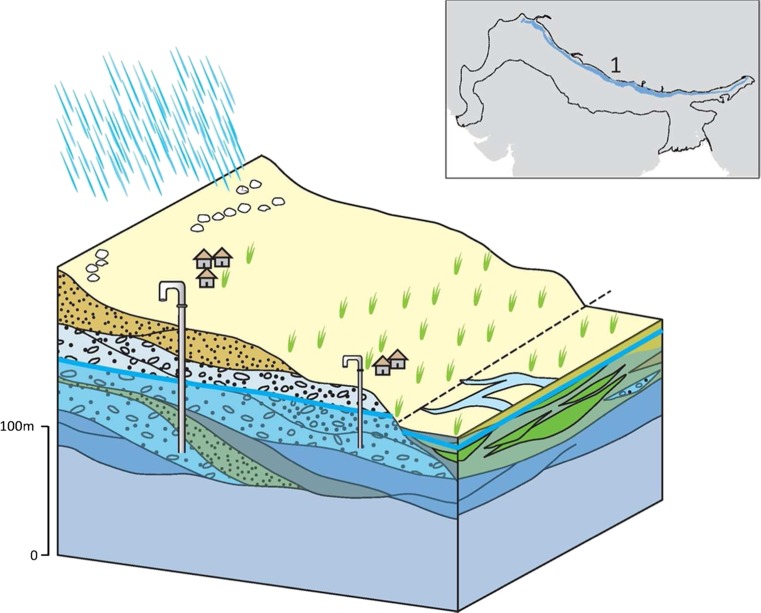
The Indo-Gangetic aquifer is one of the world's most important transboundary water resources, and the most heavily exploited aquifer in the world. To better understand the aquifer system, typologies have been characterized for the aquifer, which integrate existing datasets across the Indo-Gangetic catchment basin at a transboundary scale for the first time, and provide an alternative conceptualization of this aquifer system. Traditionally considered and mapped as a single homogenous aquifer of comparable aquifer properties and groundwater resource at a transboundary scale, the typologies illuminate significant spatial differences in recharge, permeability, storage, and groundwater chemistry across the aquifer system at this transboundary scale. These changes are shown to be systematic, concurrent with large-scale changes in sedimentology of the Pleistocene and Holocene alluvial aquifer, climate, and recent irrigation practices. Seven typologies of the aquifer are presented, each having a distinct set of challenges and opportunities for groundwater development and a different resilience to abstraction and climate change. The seven typologies are: (1) the piedmont margin, (2) the Upper Indus and Upper-Mid Ganges, (3) the Lower Ganges and Mid Brahmaputra, (4) the fluvially influenced deltaic area of the Bengal Basin, (5) the Middle Indus and Upper Ganges, (6) the Lower Indus, and (7) the marine-influenced deltaic areas.
印度河-恒河含水层是世界上最重要的跨界水资源之一,也是世界上开发最为密集的含水层。为了更好地理解该含水层系统,现已对其进行了类型划分,首次在跨界尺度上整合了印度河-恒河流域盆地的现有数据集,并为这个含水层系统提供了另一种概念化模型。传统上,该含水层在跨界尺度上被视为并绘制为具有可比含水层特性和地下水资源的单一均质含水层,而这些类型划分揭示了在这个跨界尺度上整个含水层系统在补给、渗透率、储量和地下水化学方面存在的显著空间差异。这些变化显示出具有系统性,与更新世和全新世冲积含水层的沉积学、气候以及近期灌溉实践的大规模变化同时发生。文中介绍了该含水层的七种类型,每种类型在地下水开发方面都有一套独特的挑战和机遇,并且对开采和气候变化具有不同的恢复力。这七种类型分别是:(1)山麓边缘,(2)印度河上游和恒河上中游,(3)恒河下游和布拉马普特拉河中游,(4)孟加拉盆地受河流影响的三角洲地区,(5)印度河中游和恒河上游,(6)印度河下游,以及(7)受海洋影响的三角洲地区。