Acosta Aline A, Smit Nico J, da Silva Reinaldo J
Water Research Group, Unit for Environmental Sciences and Management, Potchefstroom Campus, North-West University, Private Bag X6001, Potchefstroom, 2520, South Africa.
São Paulo State University (UNESP), Institute of Biosciences, Department of Parasitology, Rua Professor Doutor Antônio Celso Wagner Zanin, n° 250, Botucatu, São Paulo, CEP 18618-689, Brazil.
Int J Parasitol Parasites Wildl. 2020 Jan 11;11:120-128. doi: 10.1016/j.ijppaw.2020.01.003. eCollection 2020 Apr.
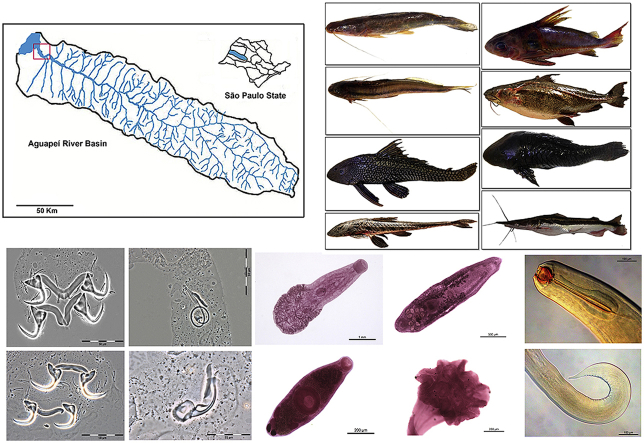
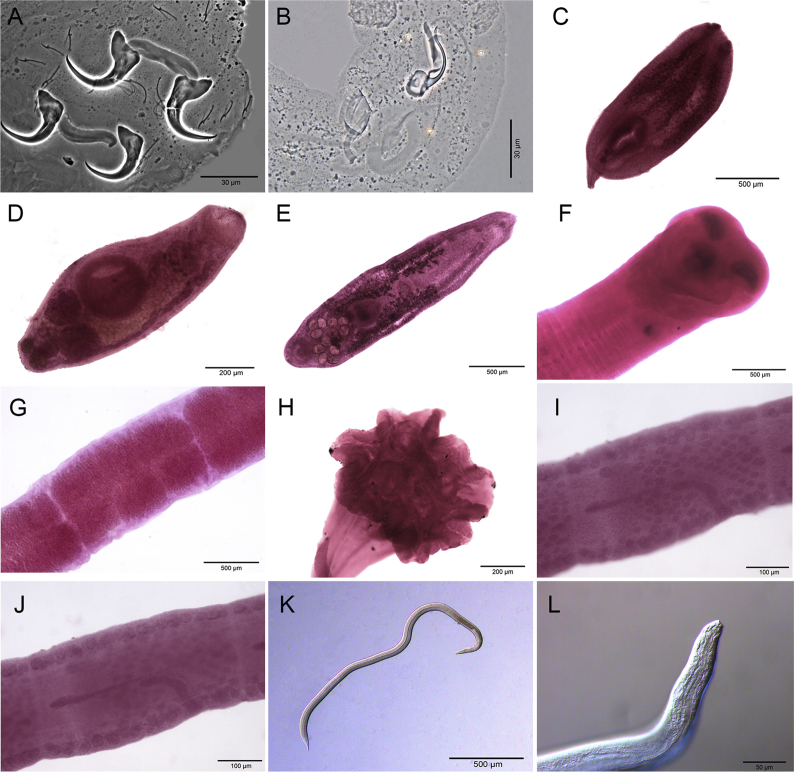
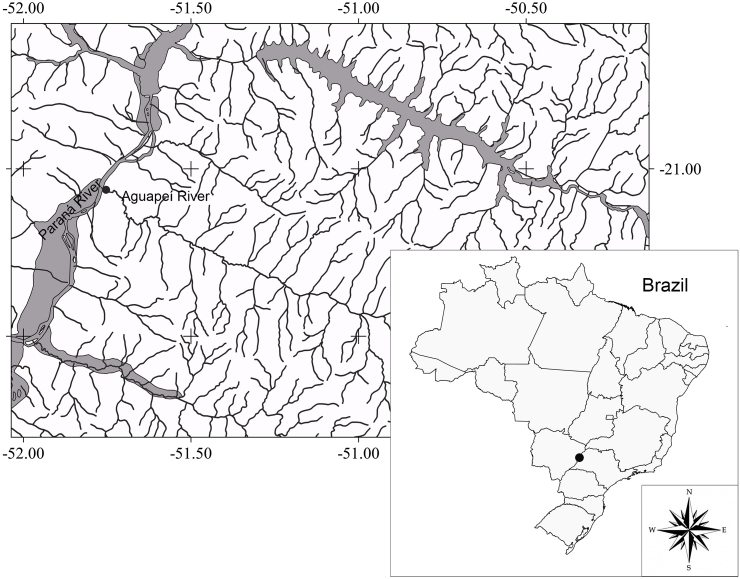
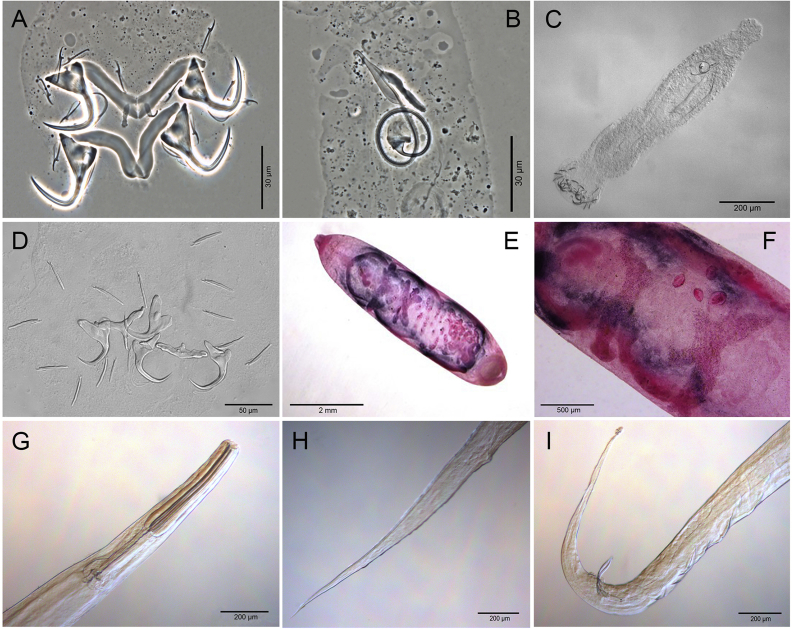
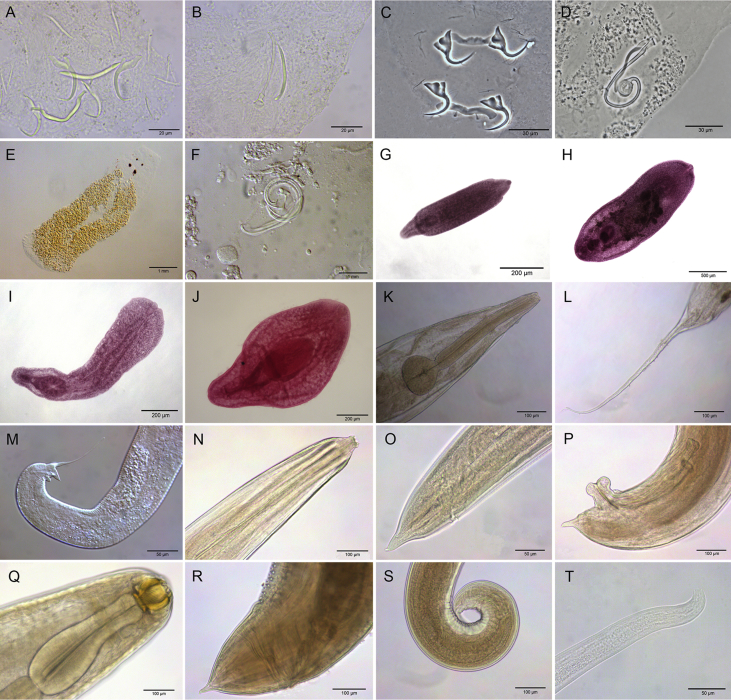
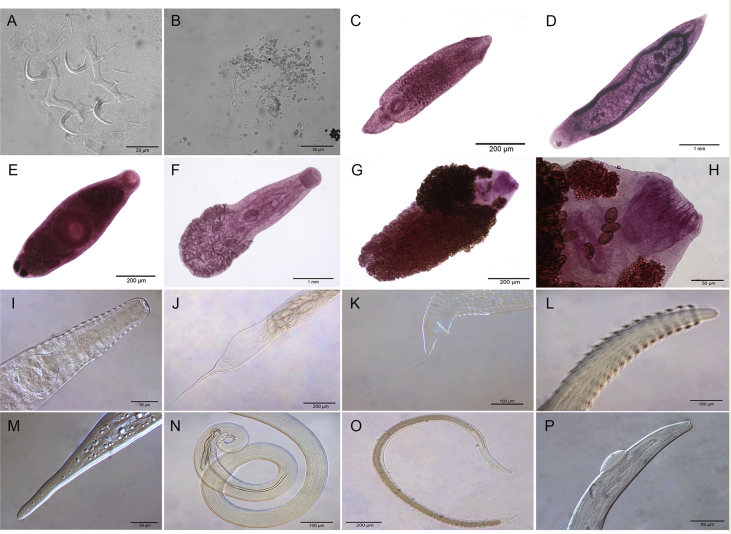
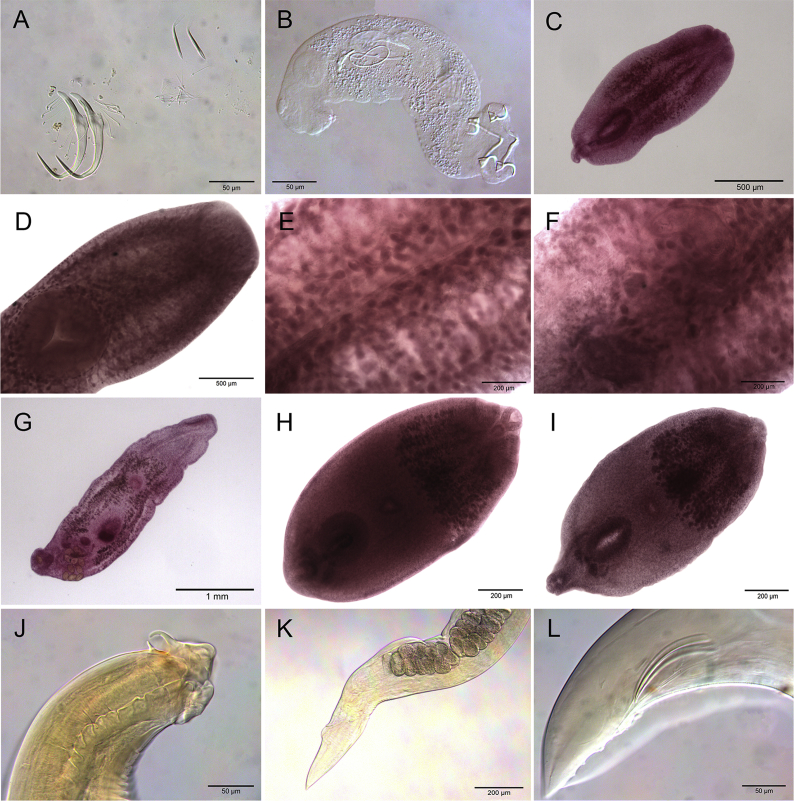
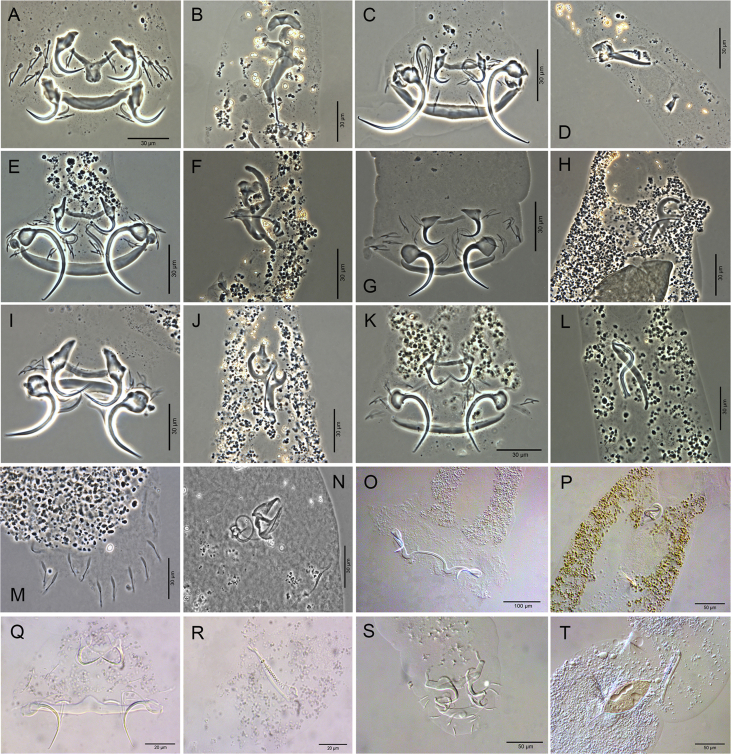
Fishes of the order Siluriformes, known as catfishes, have a global distribution with more than 3,600 valid species of which 2,087 occur in the Neotropical region. Despite being highly diverse, abundant, and of economic importance as food and ornamental fishes, knowledge about the diversity and distribution of their helminth parasites is fragmentary and scarce. Eight species of catfishes (, , , , , , , and ) from the Aguapeí River, Upper Paraná River basin, municipality of Castilho, São Paulo State, Brazil, were surveyed for helminth parasites. Collected fishes were weighed, measured, and examined for helminth parasites following standard methodology. Fifty helminth parasite taxa (23 monogeneans, 13 digeneans, 11 nematodes, and three cestodes) were found from a total of 405 fishes screened. The helminth taxon that showed the highest mean intensity of infection and mean abundance was the nematode from . , followed by the nematode from . . The ecological analyses were carried out at the component community level and at the infracommunity level. had the richest helminth component community. had the most diverse helminth component community and . had the lowest. Both hosts are loricariids and have similar diet. However, the high parasite diversity of . is due to the number of dactylogyrids species found (10), which are directly transmitted, whereas only three dactylogyrid species were found in . . At infracommunity level, the nematode species . and . dominated the parasite communities. This study presents 38 new host records, contributing considerably to increase the diffuse knowledge of helminth parasites of Neotropical siluriforms.
鲇形目鱼类,即鲶鱼,分布于全球,有超过3600个有效物种,其中2087种出现在新热带地区。尽管鲶鱼种类繁多、数量丰富,且作为食用鱼和观赏鱼具有重要经济价值,但关于其蠕虫寄生虫的多样性和分布的知识却支离破碎且匮乏。对巴西圣保罗州卡斯蒂略市上巴拉那河流域阿瓜佩伊河的8种鲶鱼( 、 、 、 、 、 、 和 )进行了蠕虫寄生虫调查。按照标准方法对采集的鱼类进行称重、测量,并检查蠕虫寄生虫。在总共筛查的405条鱼中发现了50个蠕虫寄生虫分类单元(23种单殖吸虫、13种复殖吸虫、11种线虫和3种绦虫)。感染强度均值和丰度均值最高的蠕虫分类单元是来自 的线虫 。 ,其次是来自 的线虫 。 。生态分析在群落组分水平和群落内水平进行。 拥有最丰富的蠕虫群落组分。 拥有最多样化的蠕虫群落组分,而 拥有最少的。这两种宿主都是吸甲鲶科鱼类,且饮食相似。然而, 的寄生虫多样性高是由于发现的指环虫种类数量(10种),这些是直接传播的,而在 中仅发现3种指环虫。在群落内水平,线虫种类 和 主导了寄生虫群落。本研究提供了38个新的宿主记录,极大地有助于增加对新热带鲇形目蠕虫寄生虫的零散认识。