Department of Biological Psychology, Vrije Universiteit Amsterdam, Boechorststraat 7-9, 1081 BT, Amsterdam, The Netherlands.
Amsterdam Public Health Research Institute, Vrije Universiteit Amsterdam, Amsterdam, The Netherlands.
Eur Child Adolesc Psychiatry. 2020 Dec;29(12):1683-1692. doi: 10.1007/s00787-020-01485-9. Epub 2020 Feb 5.
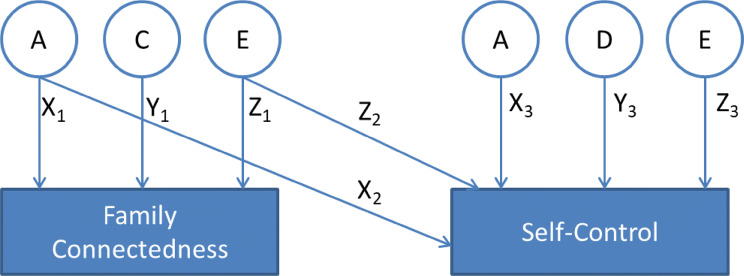
Family connectedness is key for the development of self-control in early and middle childhood. But is family connectedness still important during the transitional phase of adolescence, when adolescents demand more independence from their parents and rely more on their peers? The aim of the present study was to investigate the association between family connectedness and self-control, and whether it still holds in adolescence using a genetically sensitive design. Data were used from a large sample of twins aged 14 (N = 11,260) and aged 16 (N = 8175), all enrolled in the Netherlands Twin Register. We applied bivariate twin models and monozygotic twin difference models to investigate the association between family connectedness and self-control and to unravel to what extent genetic and environmental factors explain this association. The results showed that more family connectedness is significantly related to better self-control in adolescence, albeit with a small effect size. Twin analyses revealed that this association was mainly explained by common genetic factors and that the effects of environmental factors were small. The current findings confirm the role of family connectedness in adolescent self-control. Importantly, however, the results demonstrate that phenomena we see within families seem the product of parent and children sharing the same genes rather than being exclusively attributable to environmental processes.
家庭联系对于儿童早期和中期自我控制的发展至关重要。但是,在青少年的过渡阶段,当青少年要求更多的独立性并更多地依赖同龄人时,家庭联系还重要吗?本研究的目的是使用遗传敏感设计,调查家庭联系与自我控制之间的关联,以及这种关联在青少年时期是否仍然存在。该研究使用了来自荷兰双胞胎登记处的一个大型双胞胎样本的数据,这些双胞胎的年龄分别为 14 岁(N=11260)和 16 岁(N=8175)。我们应用双变量双胞胎模型和同卵双胞胎差异模型来研究家庭联系与自我控制之间的关联,并揭示遗传和环境因素在多大程度上解释了这种关联。研究结果表明,家庭联系越紧密,青少年的自我控制能力就越好,尽管这种关联的效应较小。双胞胎分析表明,这种关联主要是由共同的遗传因素解释的,环境因素的影响较小。目前的研究结果证实了家庭联系在青少年自我控制中的作用。然而,重要的是,结果表明,我们在家庭中看到的现象似乎是父母和孩子共享相同基因的产物,而不是完全归因于环境过程。