Syrimi Eleni, Lewison Grant, Sullivan Richard, Kearns Pamela
University of Birmingham, Institute of Immunology and Immunotherapy, Birmingham, United Kingdom.
King's College London, Institute of Cancer Policy, Conflict and Health Research Group, School of Cancer Sciences, Guy's Hospital, London, United Kingdom.
JCO Glob Oncol. 2020 Feb;6:9-18. doi: 10.1200/JGO.19.00227.
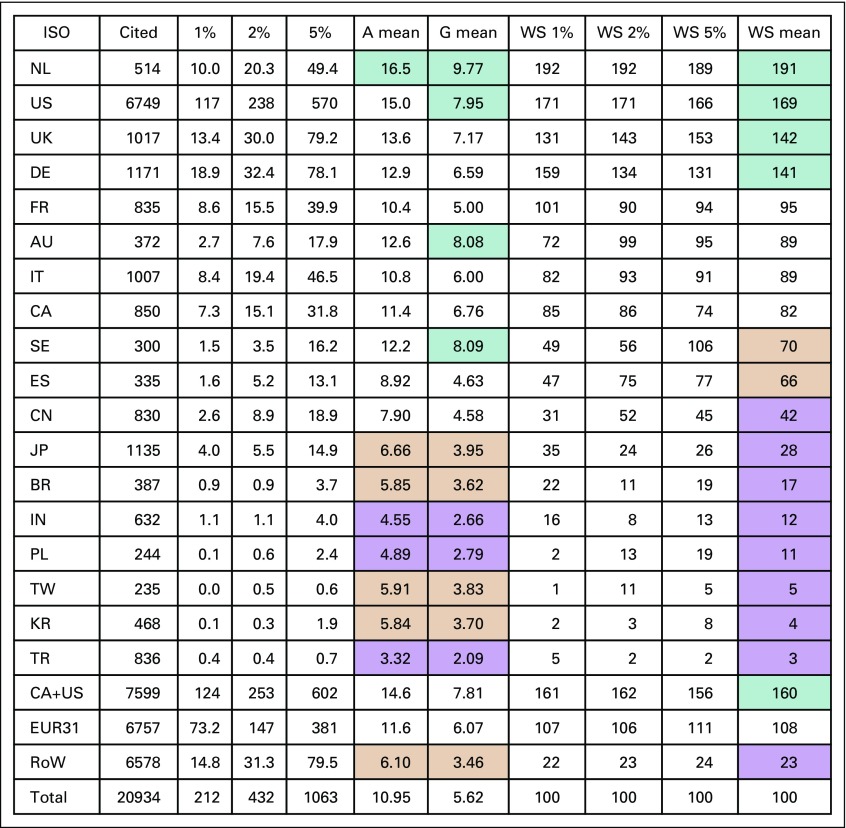
This study sought to investigate the amount of global research activity and investment in pediatric cancer research, using publications as a proxy measure, and to understand geographical differences in research activity. To do this, we used a quantitative method-bibliometrics-to analyze Web of Science publications in the 10 years from 2007 to 2016. We found that global pediatric cancer research outputs have increased from 2,937 in 2007 to 4,513 in 2016, at an annual growth rate of 4.3%. This rate is slower than for both cancer research as a whole and general pediatric research. The increase in output was due almost entirely to China. International collaboration was similar to that in cancer research overall, with the highest levels among countries in close geographical proximity. Hematological and CNS childhood cancers are the main areas for research. Genetics and prognosis were the main research domains, and there was little work on radiotherapy or palliative care. In terms of citations, the best-performing countries were the Netherlands, the United States, and the United Kingdom. On the basis of estimates of the cost of research papers in different countries, the total world pediatric cancer research expenditure is estimated to have been 1.54 billion US dollars (USD) in 2013, and 1.79 billion USD in 2016. Our data suggest that current global policy toward pediatric cancer needs significant review and change to increase investments, balance research portfolios, and improve research that is relevant to low- and middle-income countries.
本研究旨在利用出版物作为替代指标,调查全球儿科癌症研究的活动量和投资额,并了解研究活动的地理差异。为此,我们采用了一种定量方法——文献计量学——来分析2007年至2016年这10年间科学网数据库中的出版物。我们发现,全球儿科癌症研究产出从2007年的2937篇增加到2016年的4513篇,年增长率为4.3%。这一增长率低于整个癌症研究以及一般儿科研究的增长率。产出的增加几乎完全归功于中国。国际合作情况与整体癌症研究类似,地理距离较近的国家之间合作水平最高。血液学和中枢神经系统儿童癌症是主要研究领域。遗传学和预后是主要研究方向,而放疗或姑息治疗方面的研究较少。在引用方面,表现最佳的国家是荷兰、美国和英国。根据不同国家研究论文成本的估算,2013年全球儿科癌症研究总支出估计为15.4亿美元,2016年为17.9亿美元。我们的数据表明,当前全球针对儿科癌症的政策需要进行重大审查和变革,以增加投资、平衡研究组合,并改进与低收入和中等收入国家相关的研究。