Department of Chemical and Biological Engineering, University of Colorado - Boulder, 3415 Colorado Avenue, Boulder, CO, 80303, USA.
Molecular Biophysics and Integrated Bioimaging, Lawrence Berkeley National Laboratory, 1 Cyclotron Road, Berkeley, CA, 94720, USA.
Nat Commun. 2020 Feb 7;11(1):788. doi: 10.1038/s41467-020-14567-8.
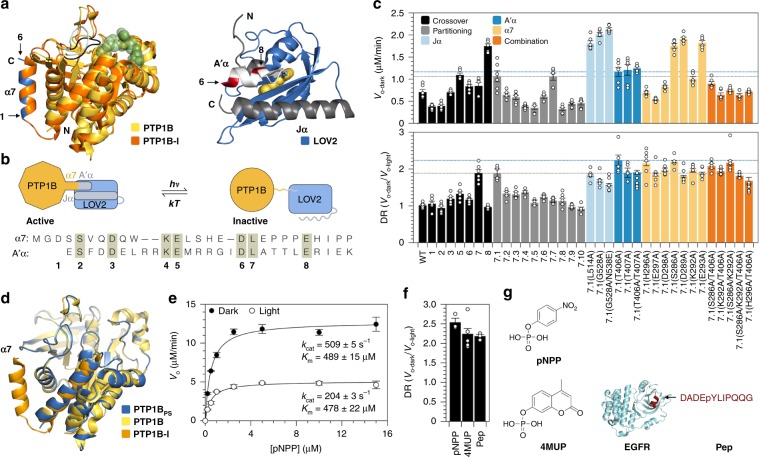
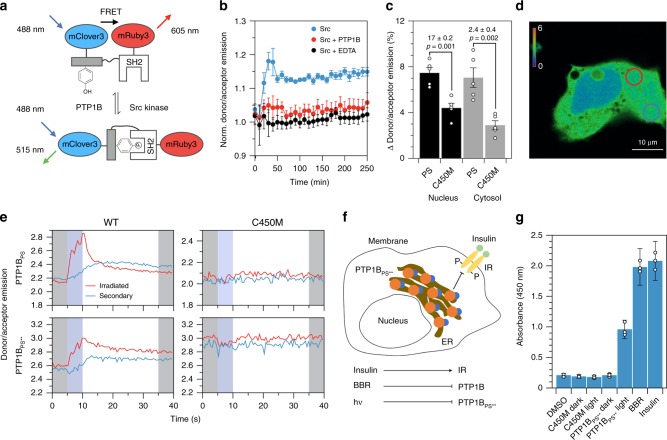
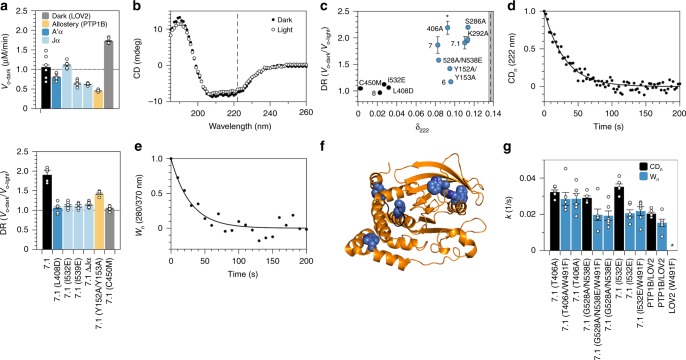
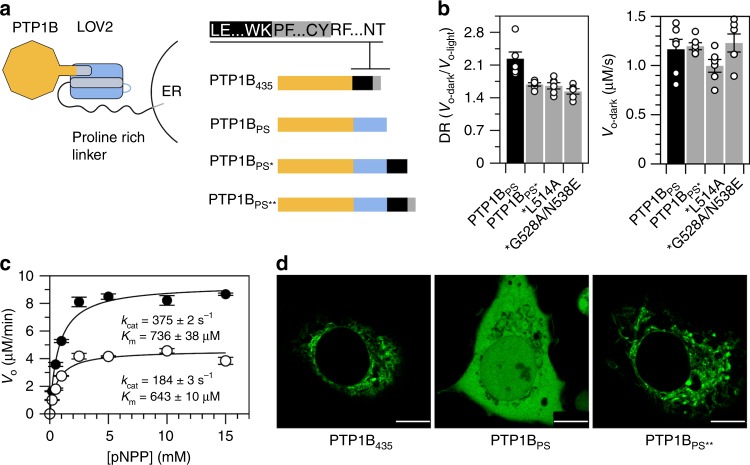
Protein tyrosine phosphatases regulate a myriad of essential subcellular signaling events, yet they remain difficult to study in their native biophysical context. Here we develop a minimally disruptive optical approach to control protein tyrosine phosphatase 1B (PTP1B)-an important regulator of receptor tyrosine kinases and a therapeutic target for the treatment of diabetes, obesity, and cancer-and we use that approach to probe the intracellular function of this enzyme. Our conservative architecture for photocontrol, which consists of a protein-based light switch fused to an allosteric regulatory element, preserves the native structure, activity, and subcellular localization of PTP1B, affords changes in activity that match those elicited by post-translational modifications inside the cell, and permits experimental analyses of the molecular basis of optical modulation. Findings indicate, most strikingly, that small changes in the activity of PTP1B can cause large shifts in the phosphorylation states of its regulatory targets.
蛋白质酪氨酸磷酸酶调节着无数重要的细胞内信号事件,但它们在其自然的生物物理环境中仍然难以研究。在这里,我们开发了一种最小干扰的光学方法来控制蛋白质酪氨酸磷酸酶 1B(PTP1B)——一种受体酪氨酸激酶的重要调节剂,也是治疗糖尿病、肥胖症和癌症的治疗靶点——并利用这种方法来探测这种酶的细胞内功能。我们的光控保守结构由一个融合到别构调节元件的基于蛋白质的光开关组成,它保留了 PTP1B 的天然结构、活性和亚细胞定位,使活性变化与细胞内的翻译后修饰所引发的变化相匹配,并允许对光调节的分子基础进行实验分析。研究结果表明,最显著的是,PTP1B 活性的微小变化可以导致其调节靶标的磷酸化状态发生大的转变。