Novartis Pharma AG, Basel, Switzerland.
Novartis Pharmaceuticals UK Limited, London, UK.
Adv Ther. 2020 Mar;37(3):1233-1247. doi: 10.1007/s12325-020-01243-y. Epub 2020 Feb 7.
Voretigene neparvovec (VN) is a gene therapy and the first approved pharmacological treatment for biallelic RPE65-mediated inherited retinal dystrophies (IRD), a rare condition that starts in early life and causes vision to progressively deteriorate towards complete blindness. In a phase III trial, treatment with VN significantly improved functional vision and visual function, and in October 2019 the National Institute for Health and Care Excellence (NICE) Highly Specialised Technologies (HST) process recommended VN for patients in England and Wales. We assessed the cost-effectiveness of VN compared with best supportive care (BSC) in individuals with biallelic RPE65-mediated IRD in the UK.
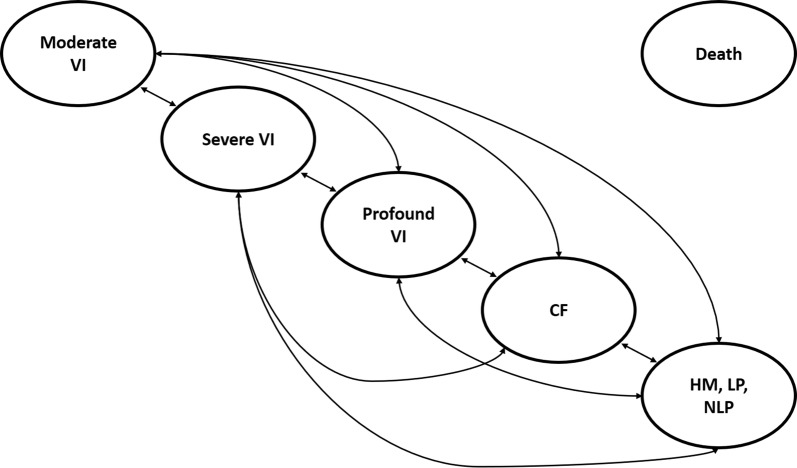
A Markov model was developed to estimate the incremental cost per quality-adjusted life-year (QALY) gained for VN compared with BSC, from the perspective of the UK National Health Service and Personal Social Services. Phase III trial data were used to inform transition probabilities up to year 1, after which the treatment effect was assumed to be maintained for 40 years, followed by a decline in vision. A bespoke elicitation exercise involving clinical experts, patients and carers was conducted to estimate utility values for each model health state.
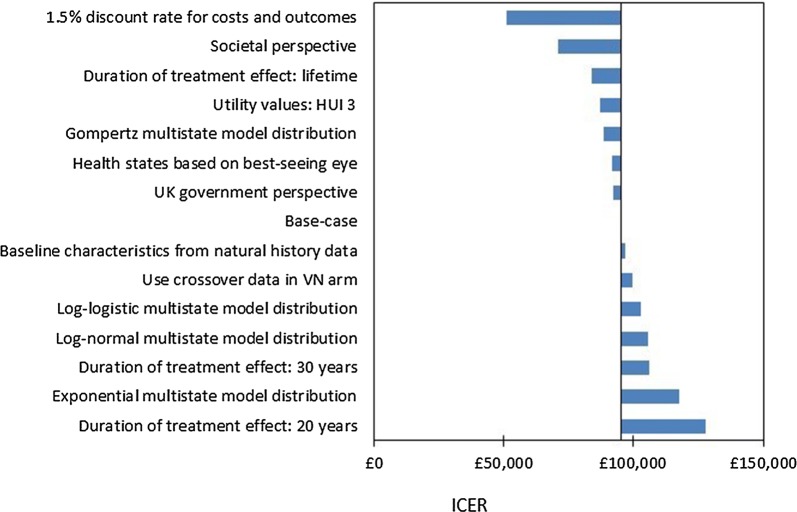
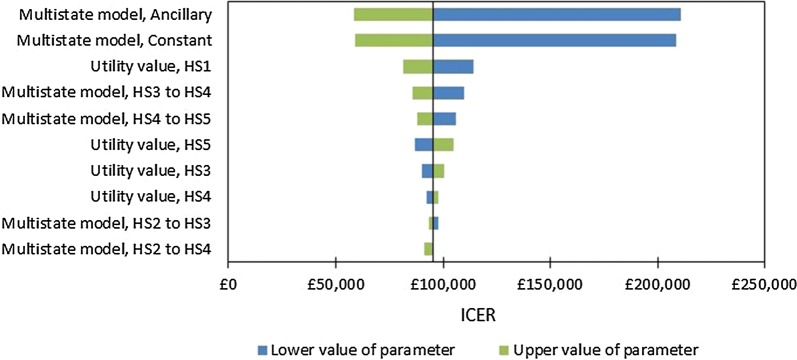
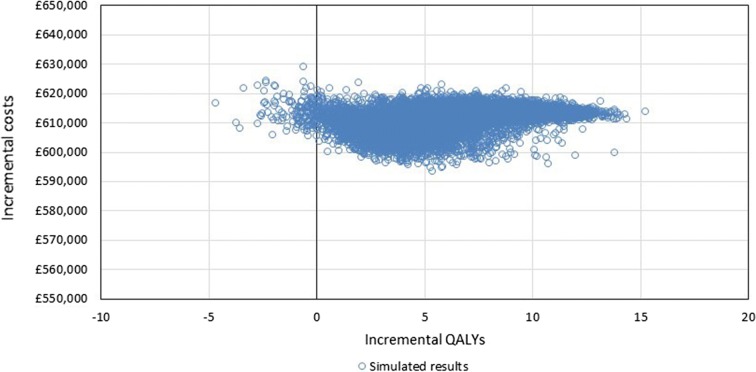
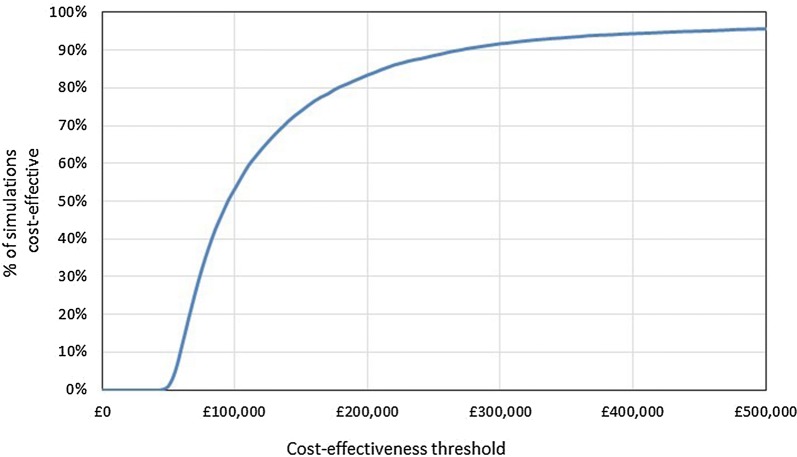
At list price, VN is associated with incremental costs of £612,404 and incremental QALYs of 6.4, resulting in an incremental cost-effectiveness ratio (ICER) of £95,072 per QALY gained. Voretigene neparvovec is associated with a significant undiscounted QALY gain (20.5) and is therefore eligible for additional QALY weighting under the NICE HST process; an ICER of up to £205,000 per QALY gained could be considered cost-effective under this framework.
The results of the model show VN to be a cost-effective use of healthcare resources in the UK at list price. The availability of a commercial discount in the UK (as considered in the NICE appraisal) means that in reality the ICER will be even lower. Plain language summary available for this article.
Voretigene neparvovec(VN)是一种基因疗法,也是首个经批准用于治疗双等位基因 RPE65 介导的遗传性视网膜营养不良(IRD)的药物治疗方法。IRD 是一种罕见疾病,始于生命早期,会导致视力逐渐恶化直至完全失明。在一项 III 期临床试验中,VN 治疗显著改善了患者的功能性视力和视功能,并且 2019 年 10 月,英国国家卫生与保健卓越研究所(NICE)高度专业化技术(HST)程序建议将 VN 用于英格兰和威尔士的患者。我们评估了 VN 相对于最佳支持性治疗(BSC)在英国双等位基因 RPE65 介导的 IRD 患者中的成本效益。
我们开发了一个马尔可夫模型,从英国国家卫生服务和个人社会服务的角度,估算 VN 相对于 BSC 的增量成本效益比(每获得一个质量调整生命年的增量成本)。该模型使用 III 期临床试验数据来提供至第 1 年的转移概率信息,此后假设治疗效果可以维持 40 年,然后视力会下降。我们进行了一项定制的 elicitation 实践,涉及临床专家、患者和护理人员,以估算每个模型健康状况的效用值。
按标价计算,VN 相关的增量成本为 612404 英镑,增量 QALY 为 6.4,增量成本效益比(ICER)为每获得一个 QALY 增加 95072 英镑。Voretigene neparvovec 与显著的未贴现 QALY 增益(20.5)相关,因此根据 NICE HST 程序,有资格获得额外的 QALY 加权;在该框架下,高达 205000 英镑/ QALY 的增量成本效益比可能被认为是具有成本效益的。
模型结果表明,VN 按标价在英国是一种具有成本效益的医疗资源利用方式。英国商业折扣的存在(如 NICE 评估中所考虑的那样)意味着实际上 ICER 会更低。本文提供了通俗易懂的概要。