Oliveira Ludmila, Neumann Pavel, Jang Tae-Soo, Klemme Sonja, Schubert Veit, Koblížková Andrea, Houben Andreas, Macas Jiří
Biology Centre, Czech Academy of Sciences, Institute of Plant Molecular Biology, České Budějovice, Czechia.
Department of Breeding Research, Leibniz Institute of Plant Genetics and Crop Plant Research, Gatersleben, Germany.
Front Plant Sci. 2020 Jan 24;10:1799. doi: 10.3389/fpls.2019.01799. eCollection 2019.
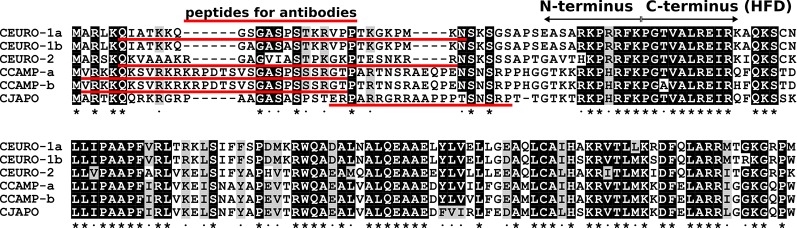
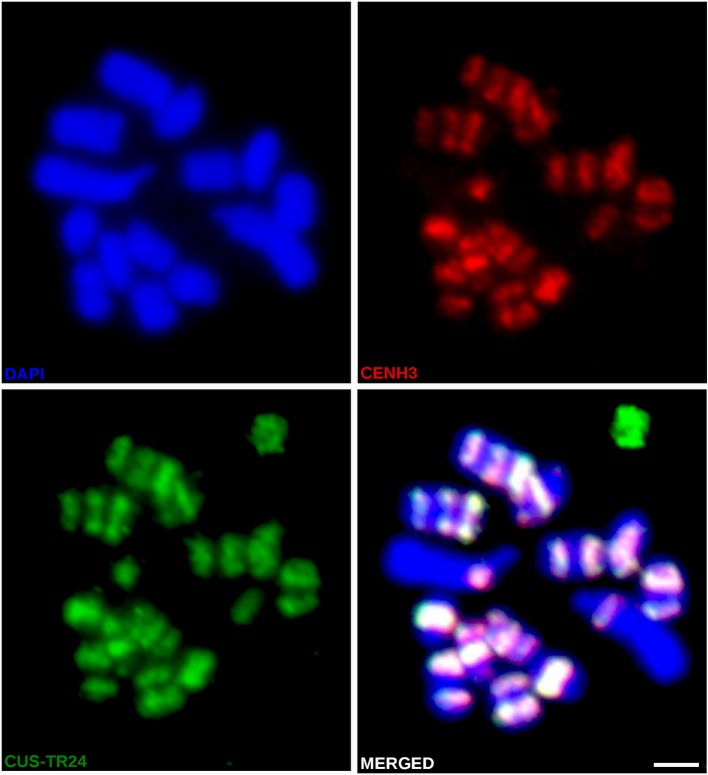
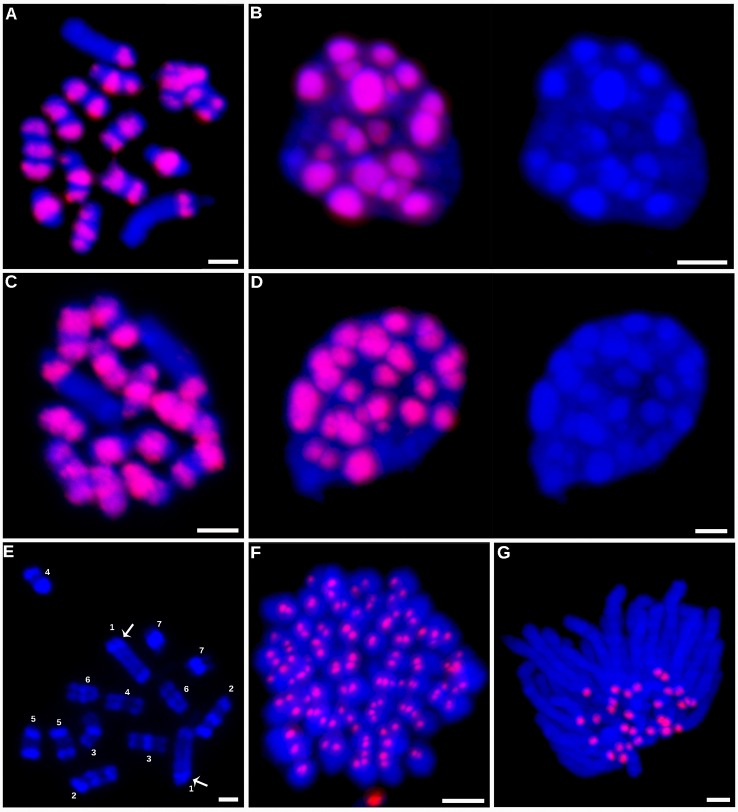
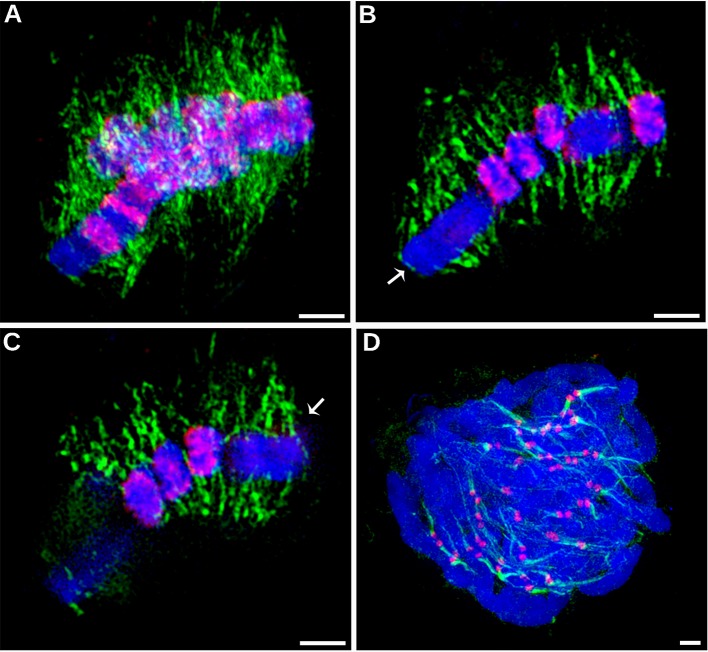
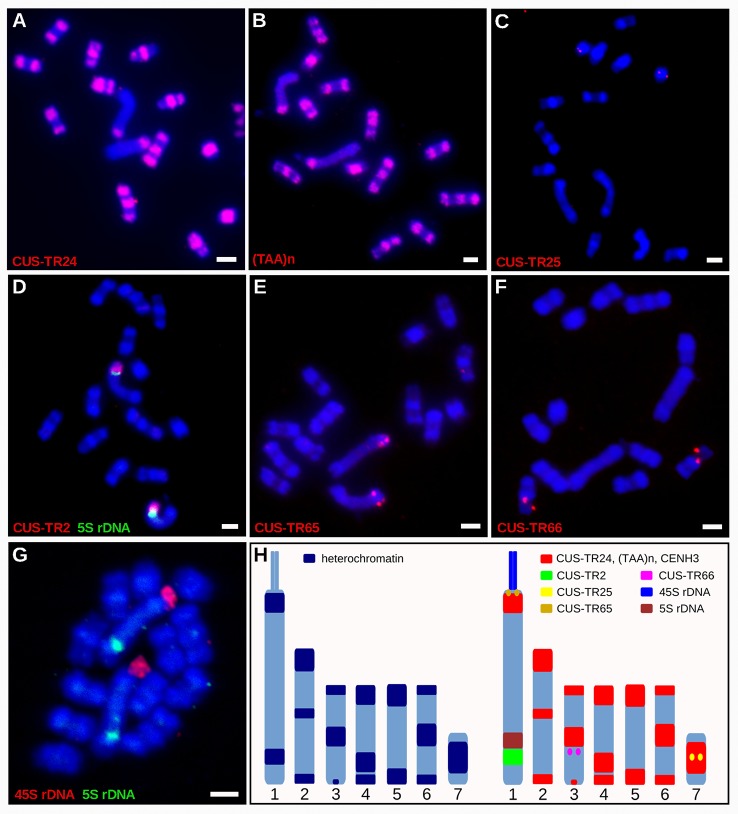
The centromere is the region on a chromosome where the kinetochore assembles and spindle microtubules attach during mitosis and meiosis. In the vast majority of eukaryotes, the centromere position is determined epigenetically by the presence of the centromere-specific histone H3 variant CENH3. In species with monocentric chromosomes, CENH3 is confined to a single chromosomal region corresponding to the primary constriction on metaphase chromosomes. By contrast, in holocentrics, CENH3 (and thus centromere activity) is distributed along the entire chromosome length. Here, we report a unique pattern of CENH3 distribution in the holocentric plant . This species expressed two major variants of CENH3, both of which were deposited into one to three discrete regions per chromosome, whereas the rest of the chromatin appeared to be devoid of CENH3. The two CENH3 variants fully co-localized, and their immunodetection signals overlapped with the positions of DAPI-positive heterochromatic bands containing the highly amplified satellite repeat CUS-TR24. This CENH3 distribution pattern contrasted with the distribution of the mitotic spindle microtubules, which attached at uniform density along the entire chromosome length. This distribution of spindle attachment sites proves the holocentric nature of chromosomes and also suggests that, in this species, CENH3 either lost its function or acts in parallel to an additional CENH3-free mechanism of kinetochore positioning.
着丝粒是染色体上的一个区域,在有丝分裂和减数分裂期间,动粒在此组装,纺锤体微管在此附着。在绝大多数真核生物中,着丝粒的位置由着丝粒特异性组蛋白H3变体CENH3的存在表观遗传地决定。在具有单着丝粒染色体的物种中,CENH3局限于与中期染色体上的主缢痕相对应的单个染色体区域。相比之下,在全着丝粒染色体中,CENH3(以及着丝粒活性)沿整个染色体长度分布。在此,我们报道了全着丝粒植物中CENH3分布的一种独特模式。该物种表达了两种主要的CENH3变体,这两种变体均沉积在每条染色体的一到三个离散区域中,而其余染色质似乎不含CENH3。这两种CENH3变体完全共定位,并且它们的免疫检测信号与含有高度扩增的卫星重复序列CUS-TR24的DAPI阳性异染色质带的位置重叠。这种CENH3分布模式与有丝分裂纺锤体微管的分布形成对比,纺锤体微管沿整个染色体长度以均匀密度附着。纺锤体附着位点的这种分布证明了染色体的全着丝粒性质,也表明在该物种中,CENH3要么失去了其功能,要么与一种额外的无CENH3的动粒定位机制并行起作用。