Lu Zhihua, Yan Lianqi, Pei Ming
Stem Cell and Tissue Engineering Laboratory, Department of Orthopaedics, West Virginia University, Morgantown, WV, 26506, USA.
Department of Orthopaedics, Orthopaedics Institute, Clinical Medical College of Yangzhou University, Subei People's Hospital of Jiangsu Province, Yangzhou, Jiangsu, 225001, China.
F1000Res. 2020 Jan 23;9. doi: 10.12688/f1000research.21207.1. eCollection 2020.
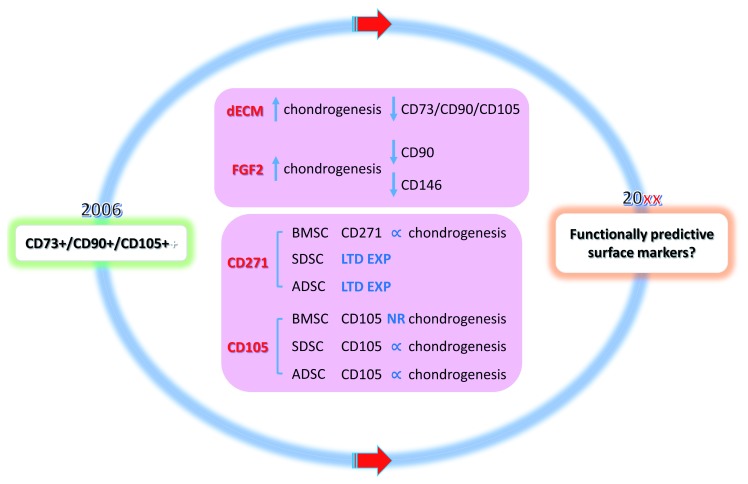
In the last decade, researchers have searched for predictive surface markers of multipotent mesenchymal stromal/stem cells (MSCs) for ensuring improved therapeutic outcomes following cartilage damage in humans. However, we have achieved only limited progress because of the challenge presented by conflicting data. This commentary provides some evidence to prove a lack of success with current efforts, including an inconsistency in accepted surface markers and chondrogenic potential of MSCs as well as the tissue source-dependent MSC surface markers that correlate with chondrogenic potential. A brief discussion on these disputed topics and perspective about functionally predictive surface markers and standardization of analytic procedures are also highlighted.
在过去十年中,研究人员一直在寻找多能间充质基质/干细胞(MSC)的预测性表面标志物,以确保人类软骨损伤后治疗效果得到改善。然而,由于相互矛盾的数据带来的挑战,我们只取得了有限的进展。本评论提供了一些证据来证明目前的努力缺乏成效,包括公认的表面标志物与MSC的软骨形成潜能不一致,以及与软骨形成潜能相关的组织来源依赖性MSC表面标志物。还强调了对这些有争议话题的简要讨论以及关于功能预测性表面标志物和分析程序标准化的观点。