Department of Psychiatry, Inje University Haeundae Paik Hospital, Busan, Republic of Korea.
Department of Counseling Psychology, Honam University College of Humanities and Social Sciences, Gwangju, Republic of Korea.
Psychiatry Clin Neurosci. 2020 Jun;74(6):344-353. doi: 10.1111/pcn.12989. Epub 2020 Mar 5.
We aimed to estimate the network structures of depressive symptoms using network analysis and evaluated the geographic regional differences in theses network structures among Asian patients with depressive disorders.
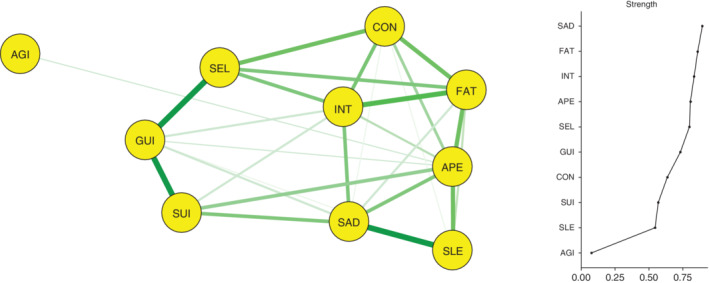
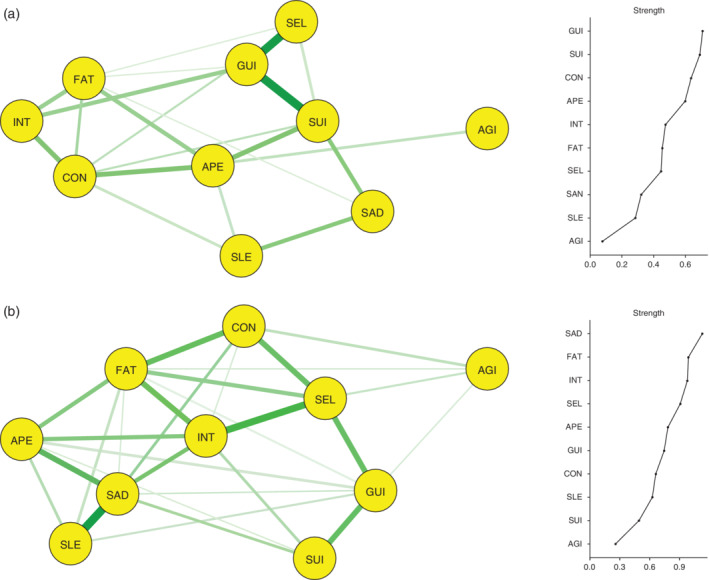
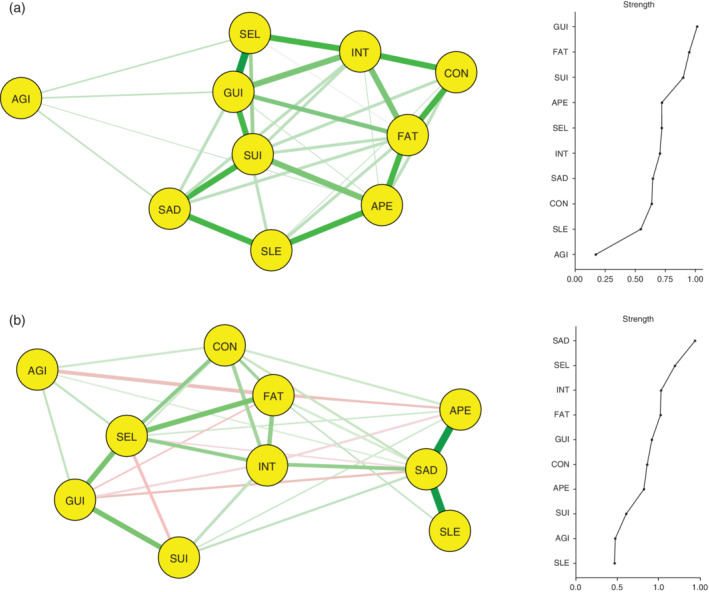
Using data from the Research on Asian Psychotropic Prescription Patterns for Antidepressants (REAP-AD), the network of the ICD-10 diagnostic criteria for depressive episode was estimated from 1174 Asian patients with depressive disorders. The node strength centrality of all ICD-10 diagnostic criteria for a depressive episode was estimated using a community-detection algorithm. In addition, networks of depressive symptoms were estimated separately among East Asian patients and South or Southeast Asian patients. Moreover, networks were estimated separately among Asian patients from high-income countries and those from middle-income countries.
Persistent sadness, fatigue, and loss of interest were the most centrally situated within the network of depressive symptoms in Asian patients with depressive disorders overall. A community-detection algorithm estimated that when excluding psychomotor disturbance as an outlier, the other nine symptoms formed the largest clinically meaningful cluster. Geographic and economic variations in networks of depressive symptoms were evaluated.
Our findings demonstrated that the typical symptoms of the ICD-10 diagnostic criteria for depressive episode are the most centrally situated within the network of depressive symptoms. Furthermore, our findings suggested that cultural influences related to geographic and economic distributions of participants could influence the estimated depressive symptom network in Asian patients with depressive disorders.
本研究旨在使用网络分析来估计抑郁症状的网络结构,并评估亚洲抑郁障碍患者中这些网络结构的地理区域差异。
本研究利用亚洲抗抑郁药物处方模式研究(REAP-AD)的数据,从 1174 例抑郁障碍患者中估计出 ICD-10 诊断标准的抑郁发作网络。采用社区检测算法估计所有 ICD-10 诊断标准的节点强度中心度。此外,还分别在东亚患者和南亚或东南亚患者中估计抑郁症状网络,以及在高收入国家和中等收入国家的亚洲患者中分别估计抑郁症状网络。
在所有抑郁障碍的亚洲患者的抑郁症状网络中,持续性悲伤、疲劳和兴趣丧失是网络中位于中心位置的症状。社区检测算法估计,当排除精神运动障碍作为异常值时,其他九个症状构成了最大的有临床意义的簇。评估了抑郁症状网络的地理和经济差异。
本研究结果表明,ICD-10 诊断标准的抑郁发作典型症状在抑郁症状网络中处于中心位置。此外,我们的研究结果表明,与参与者的地理和经济分布相关的文化影响可能会影响亚洲抑郁障碍患者中估计的抑郁症状网络。