Liu Cheng, Hou Zhaoping, Jia Quanli, Liu Xueyin, Zhang Shaowei
College of Engineering, Mathematics and Physical Sciences, University of Exeter, Exeter EX4 4QF, UK.
College of Materials Science and Engineering, Taiyuan University of Technology, Taiyuan 030024, China.
Materials (Basel). 2020 Feb 9;13(3):785. doi: 10.3390/ma13030785.
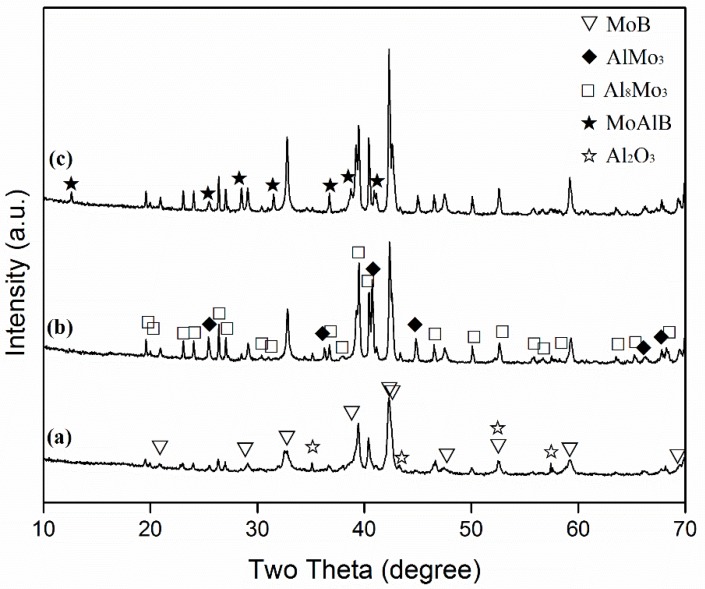
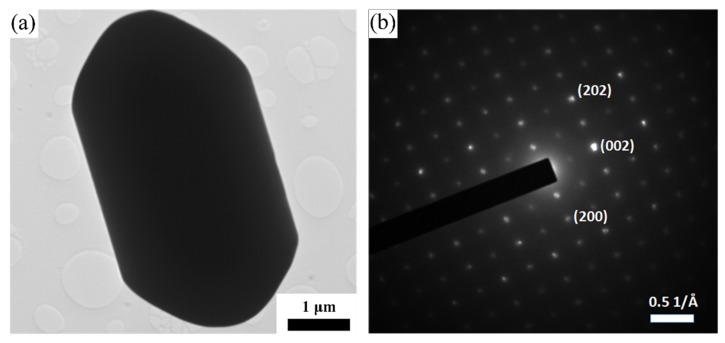
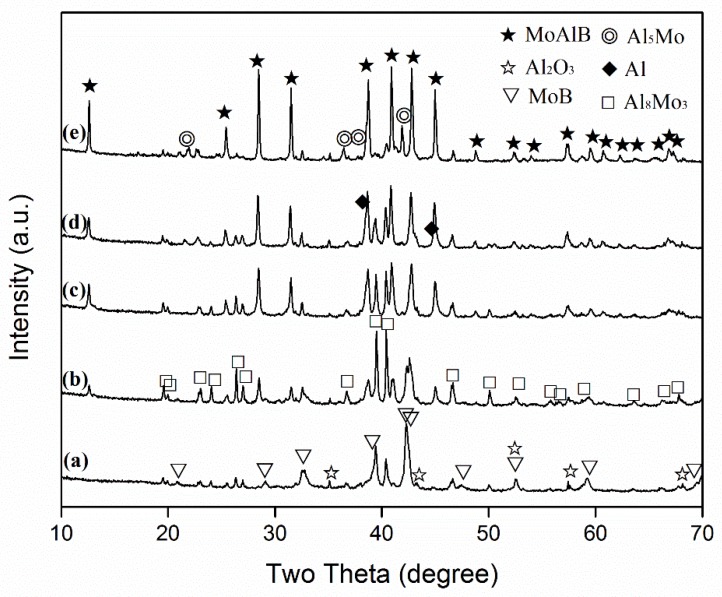
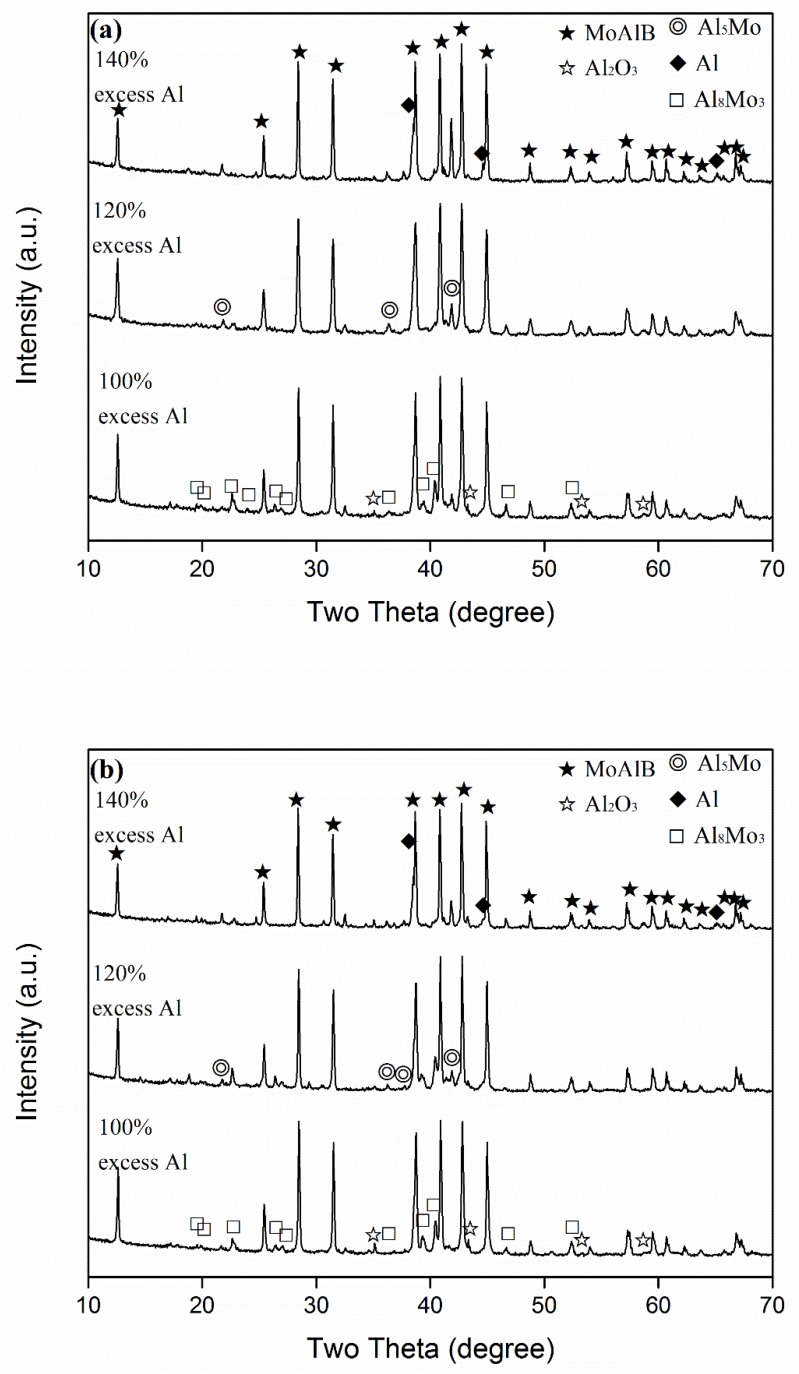
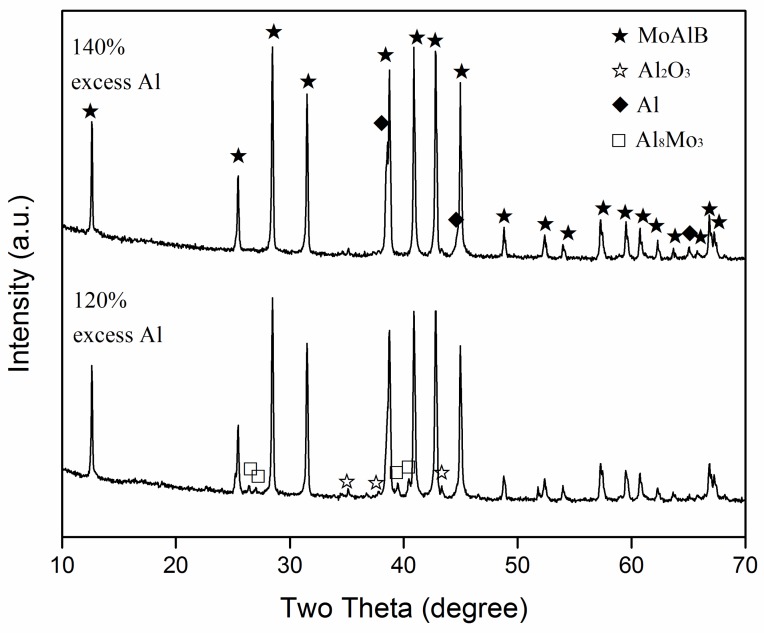
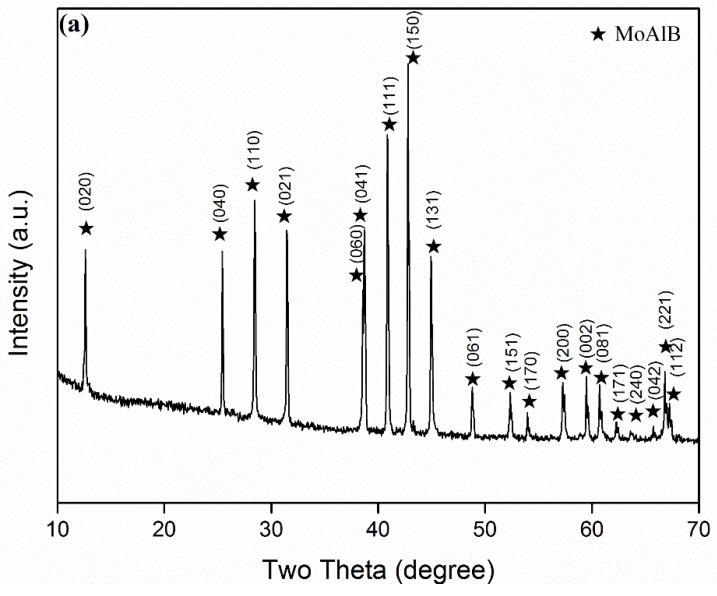
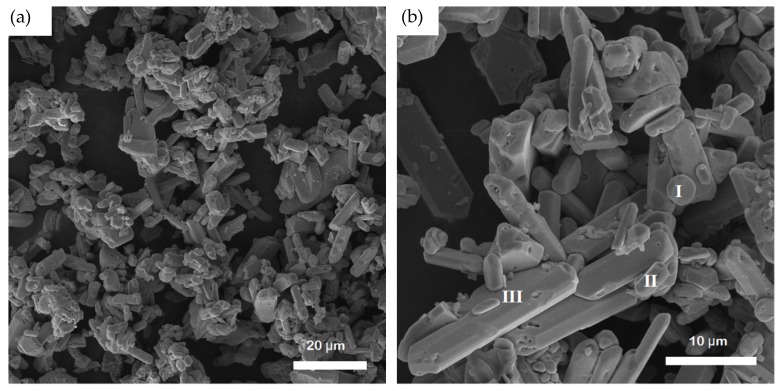
MoAlB fine powders were prepared in molten NaCl from Al, B and Mo powders. The effects of key parameters affecting the synthesis process and phase morphology were examined and the underpinning mechanisms proposed. MoAlB product particles exhibited different shapes/sizes, as follows: spherical grains (1~3 μm), plate-like particles (<5 μm in diameter) and columnar crystals with lengths up to 20 μm and diameters up to 5 μm, resultant from different reaction processes. Phase pure MoAlB was synthesised under the following optimal conditions: use of 140% excess Al and 6 h of firing at 1000 °C. This temperature was at least 100 °C lower than required by other methods/techniques previously reported. At the synthesis condition, Mo first reacted with Al and B, forming AlMo and MoB, respectively, which further reacted with excess Al to form Al-rich Al-Mo phases and MoAlB. The Al-rich Al-Mo phases further reacted with the residual B, forming additional MoAlB. The molten NaCl played an important role in accelerating the overall synthesis process.
通过铝粉、硼粉和钼粉在熔融氯化钠中制备了MoAlB细粉。研究了影响合成过程和相形态的关键参数的影响,并提出了相关的基础机制。MoAlB产物颗粒呈现出不同的形状和尺寸,具体如下:球形颗粒(1~3μm)、板状颗粒(直径<5μm)以及长度可达20μm、直径可达5μm的柱状晶体,这些是由不同的反应过程产生的。在以下最佳条件下合成了纯相MoAlB:使用过量140%的铝,并在1000°C下焙烧6小时。该温度比先前报道的其他方法/技术所需的温度至少低100°C。在合成条件下,钼首先与铝和硼反应,分别形成AlMo和MoB,它们进一步与过量的铝反应形成富铝的Al-Mo相和MoAlB。富铝的Al-Mo相进一步与残余的硼反应,形成额外的MoAlB。熔融氯化钠在加速整个合成过程中起着重要作用。