Hwang In Chang, Bang Ji In, Yoon Yeonyee E, Lee Won Woo
Department of Cardiology, Cardiovascular Center, Seoul National University Bundang Hospital, Seongnam, Korea.
Department of Internal Medicine, Seoul National University College of Medicine, Seoul, Korea.
J Cardiovasc Imaging. 2020 Apr;28(2):79-93. doi: 10.4250/jcvi.2019.0103. Epub 2020 Jan 13.
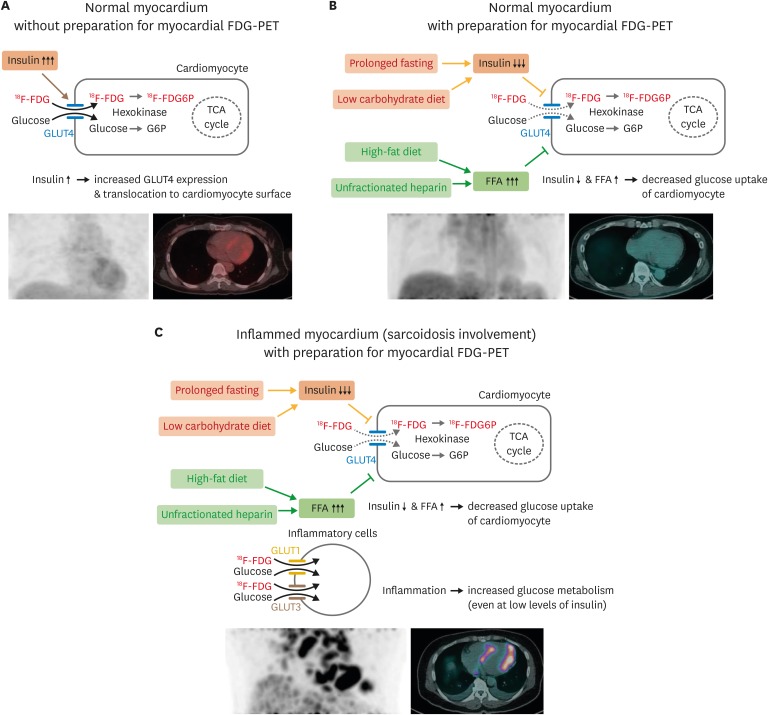
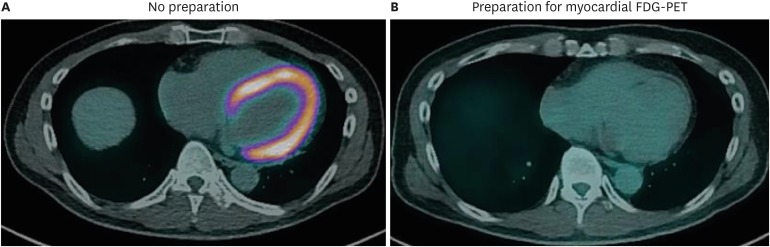
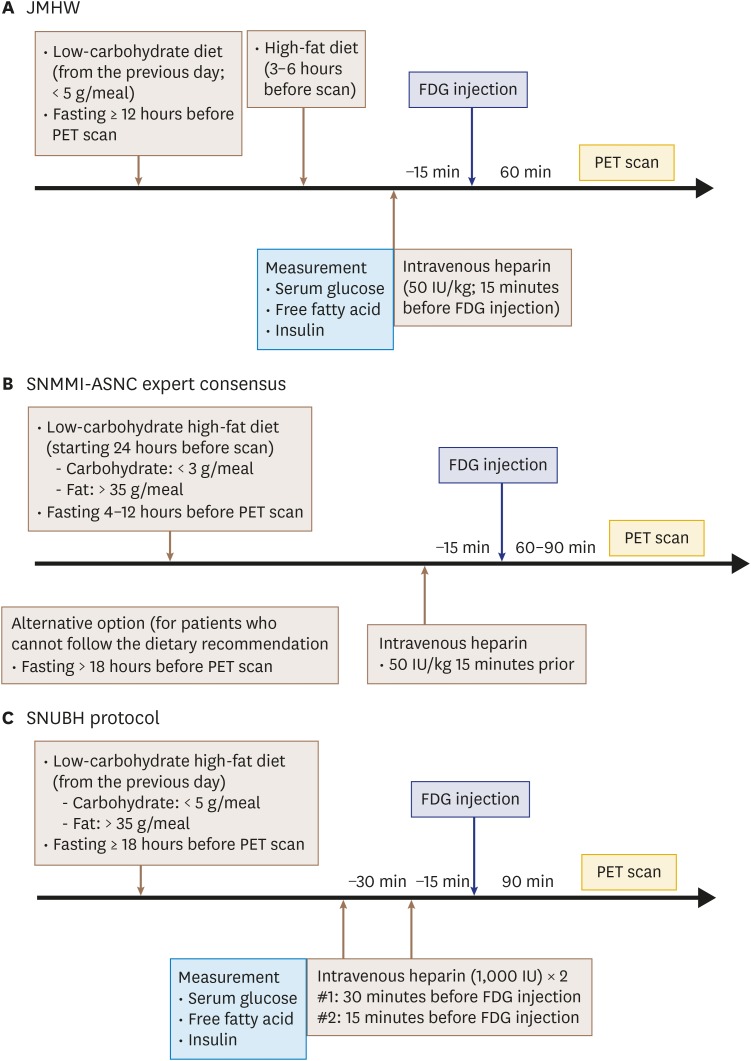
Sarcoidosis is a multisystemic granulomatous disease of unknown etiology with various clinical presentations depending on the organs involved. Since cardiac sarcoidosis (CS) portends a higher risk of morbidity and mortality, early diagnosis and aggressive medical treatment are essential to improve the prognosis. F-Fluorodeoxyglucose (FDG) positron emission tomography (PET) has emerged as an important tool with practical advantages in assessing disease activity and monitoring the treatment response in patients with CS. While it has high sensitivity, it also has great variability in specificity, probably due to normal physiologic myocardial FDG uptake, which interferes with the evaluation and follow-up of CS using FDG-PET. This review details the technical aspects of FDG-PET imaging for evaluating and diagnosing CS, assessing disease activity, and monitoring therapeutic response.
结节病是一种病因不明的多系统肉芽肿性疾病,根据受累器官不同有多种临床表现。由于心脏结节病(CS)预示着更高的发病和死亡风险,早期诊断和积极的药物治疗对于改善预后至关重要。F-氟脱氧葡萄糖(FDG)正电子发射断层扫描(PET)已成为评估CS患者疾病活动度和监测治疗反应的重要工具,具有实际优势。虽然它具有高敏感性,但特异性也存在很大差异,这可能是由于正常生理性心肌FDG摄取,干扰了使用FDG-PET对CS的评估和随访。本综述详细介绍了FDG-PET成像在评估和诊断CS、评估疾病活动度以及监测治疗反应方面的技术要点。