Parker Tariq, Huang Yongzhi, Raghu Ashley L B, FitzGerald James J, Green Alexander L, Aziz Tipu Z
Nuffield Department of Surgical Sciences, University of Oxford, Oxford OX3 9DU, UK.
Brain Sci. 2020 Feb 11;10(2):95. doi: 10.3390/brainsci10020095.
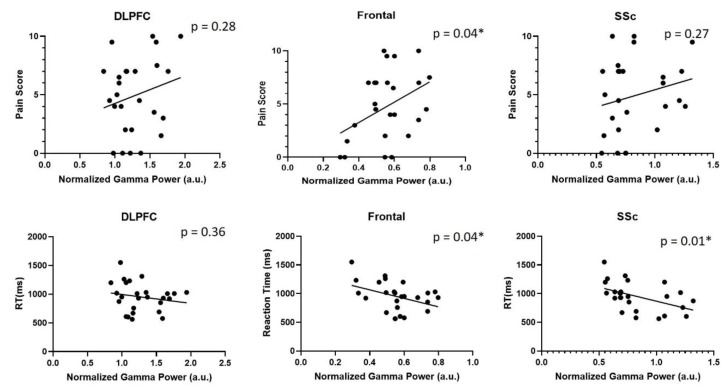
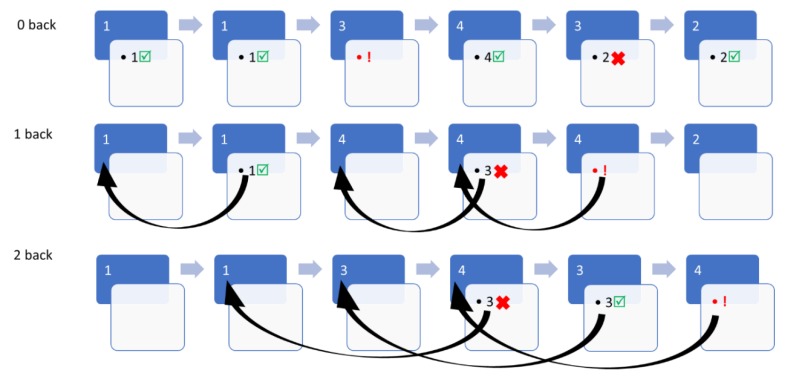
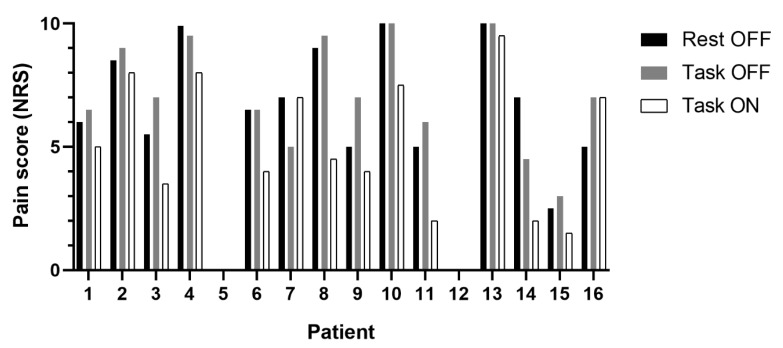
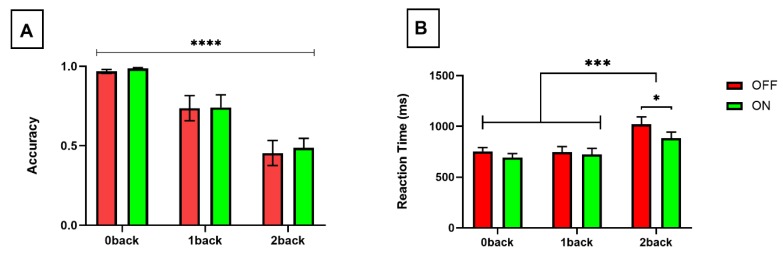
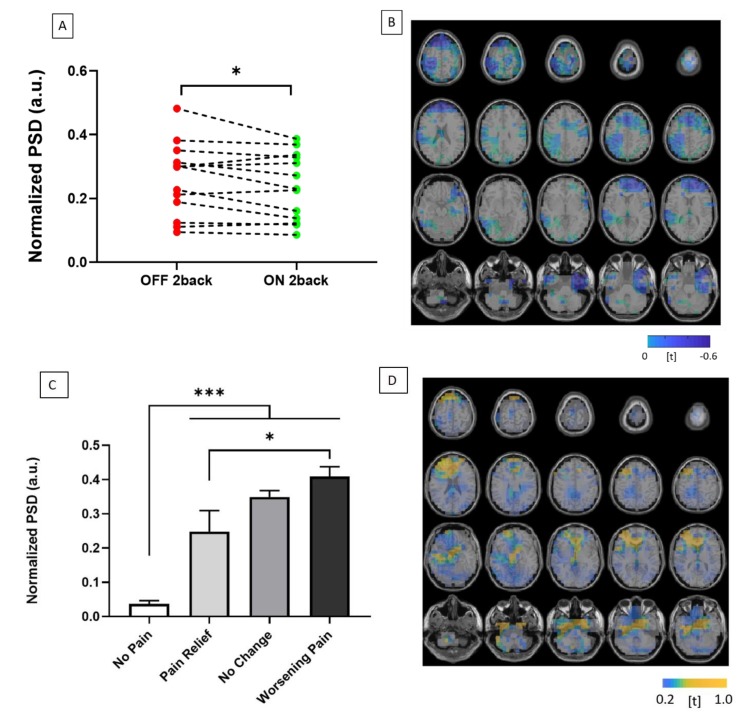
A cognitive task, the n-back task, was used to interrogate the cognitive dimension of pain in patients with implanted dorsal root ganglion stimulators (DRGS). Magnetoencephalography (MEG) signals from thirteen patients with implanted DRGS were recorded at rest and while performing the n-back task at three increasing working memory loads with DRGS-OFF and the task repeated with DRGS-ON. MEG recordings were pre-processed, then power spectral analysis and source localization were conducted. DRGS resulted in a significant reduction in reported pain scores (mean 23%, = 0.001) and gamma oscillatory activity ( = 0.036) during task performance. DRGS-induced pain relief also resulted in a significantly reduced reaction time during high working memory load ( = 0.011). A significant increase in average gamma power was observed during task performance compared to the resting state. However, patients who reported exacerbations of pain demonstrated a significantly elevated gamma power (F(3,80) = 65.011612, < 0.001, adjusted -value = 0.01), compared to those who reported pain relief during the task. Our findings demonstrate that gamma oscillatory activity is differentially modulated by cognitive load in the presence of pain, and this activity is predominantly localized to the prefrontal and anterior cingulate cortices in a chronic pain cohort.
一项认知任务,即n-back任务,被用于探究植入背根神经节刺激器(DRGS)的患者疼痛的认知维度。记录了13名植入DRGS的患者在休息时以及在DRGS关闭状态下以三种递增的工作记忆负荷执行n-back任务时的脑磁图(MEG)信号,并在DRGS开启状态下重复该任务。对MEG记录进行预处理,然后进行功率谱分析和源定位。DRGS导致任务执行期间报告的疼痛评分显著降低(平均降低23%,P = 0.001)以及伽马振荡活动降低(P = 0.036)。DRGS诱导的疼痛缓解还导致在高工作记忆负荷期间反应时间显著缩短(P = 0.