Carbonetto Belén, Nidelet Thibault, Guezenec Stéphane, Perez Marc, Segond Diego, Sicard Delphine
SPO, University Montpellier, INRAE, Montpellier Supagro, 34060 Montpellier, France.
Microorganisms. 2020 Feb 11;8(2):240. doi: 10.3390/microorganisms8020240.
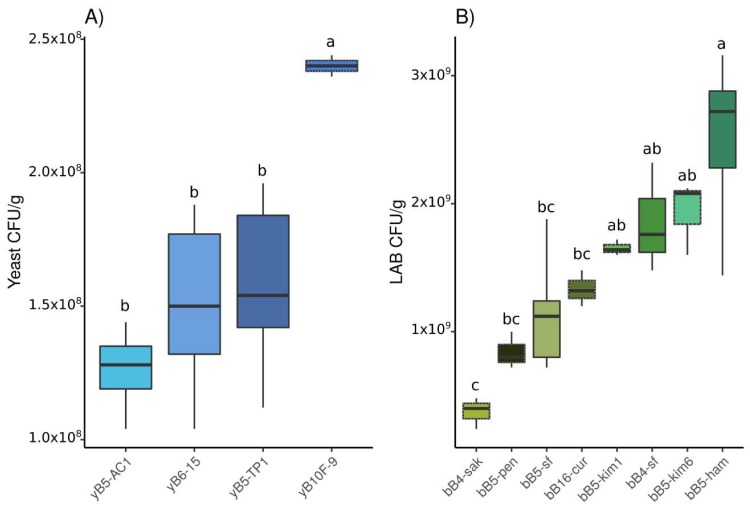
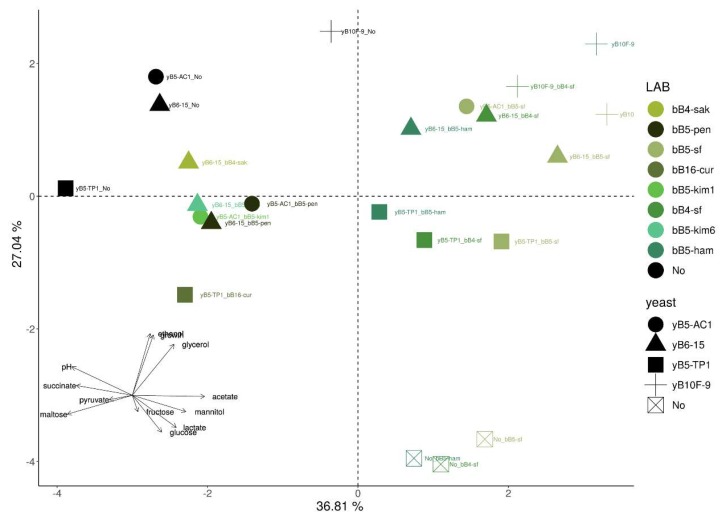
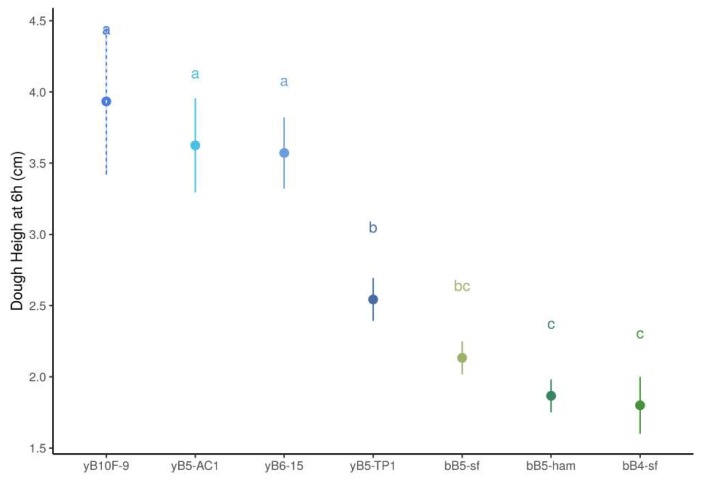
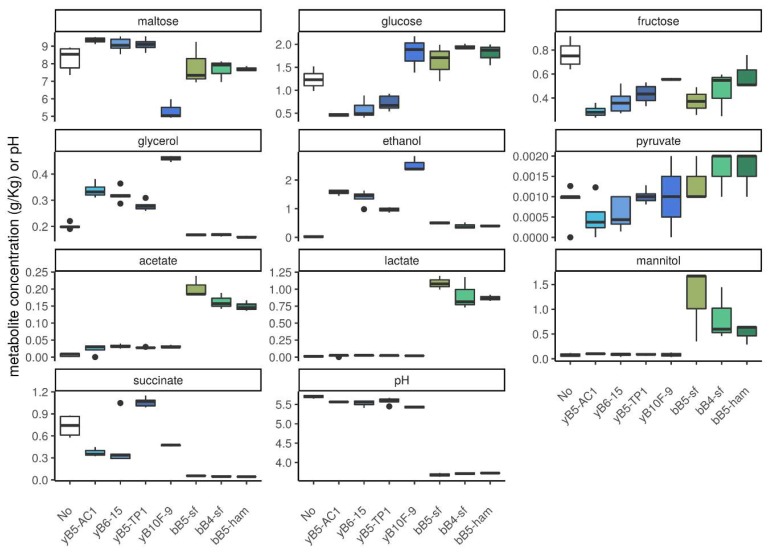
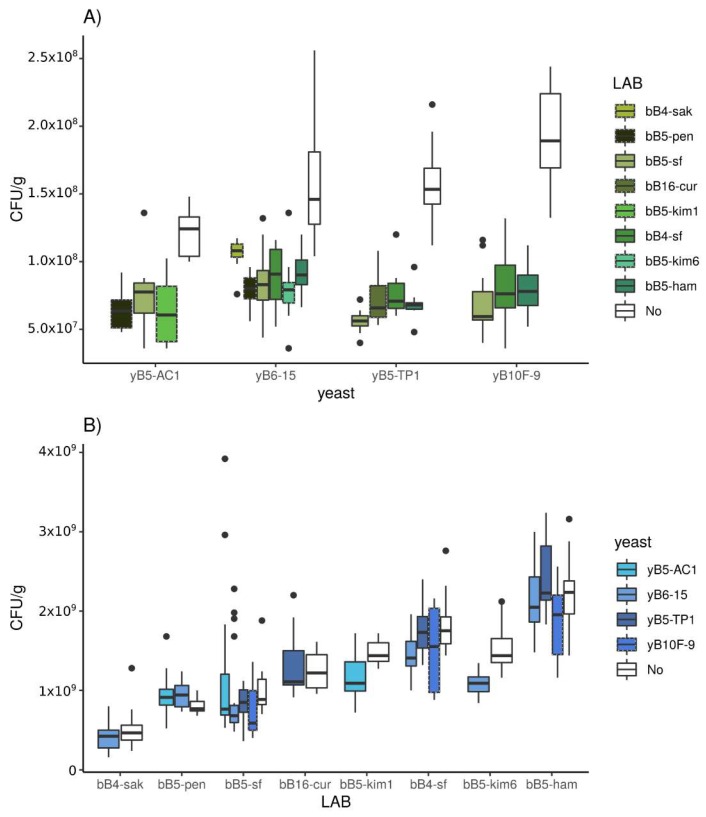
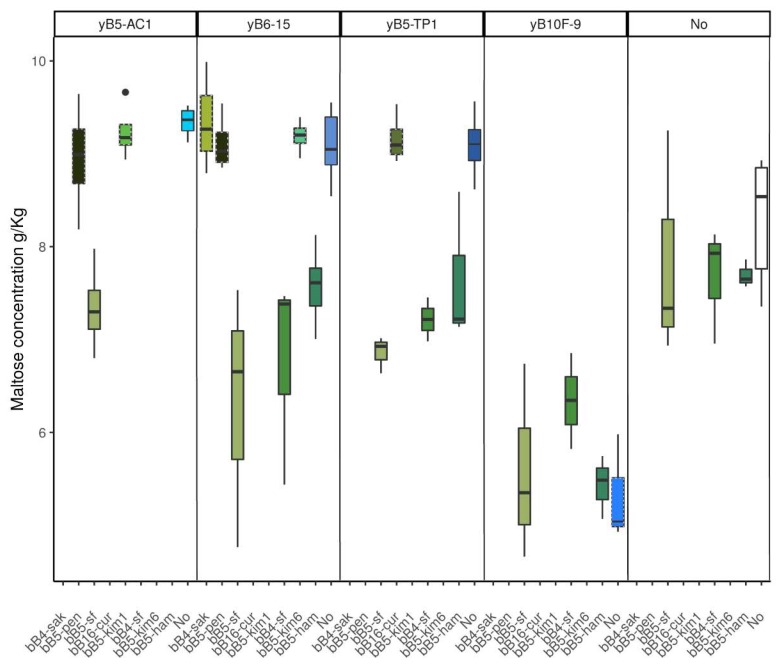
Sourdoughs harbor simple microbial communities usually composed of a few prevailing lactic acid bacteria species (LAB) and yeast species. However, yeast and LAB found in sourdough have been described as highly diverse. Even if LAB and yeast associations have been widely documented, the nature of the interactions between them has been poorly described. These interactions define the composition and structure of sourdough communities, and therefore, the characteristics of the final bread product. In this study, the nature of the interactions between strains of two commonly found sourdough yeast species, and , and lactic acid bacteria isolated from sourdoughs has been analyzed. Population density analysis showed no evidence of positive interactions, but instead revealed neutral or negative asymmetric interaction outcomes. When in coculture, the yeasts´ population size decreased in the presence of LAB regardless of the strain, while the LAB´s population size was rarely influenced by the presence of yeasts. However, a higher maltose depletion was shown in maltose-negative and maltose-positive obligately heterofermentative LAB cocultures compared to monocultures. In addition, tested pairs of obligately heterofermentative LAB and strains leavened dough as much as couples of LAB and strains, while strains never leavened dough as much as when in monoculture. Taken together, our results demonstrate that even if higher fermentation levels with increased maltose depletion were detected for and obligately heterofermentative LAB pairs, these interactions cannot be ecologically classified as positive, leading us to rethink the established hypothesis of coexistence by facilitation in sourdoughs.
酸面团中存在简单的微生物群落,通常由几种占主导地位的乳酸菌(LAB)和酵母菌种组成。然而,酸面团中发现的酵母和LAB种类繁多。尽管LAB和酵母之间的关联已有广泛记载,但它们之间相互作用的本质却鲜有描述。这些相互作用决定了酸面团群落的组成和结构,进而决定了最终面包产品的特性。在本研究中,分析了两种常见酸面团酵母菌种( 和 )的菌株与从酸面团中分离出的乳酸菌之间相互作用的本质。种群密度分析未发现积极相互作用的证据,反而揭示了中性或消极的不对称相互作用结果。共培养时,无论何种菌株,LAB的存在都会使酵母的种群数量减少,而酵母的存在对LAB的种群数量影响很小。然而,与单培养相比,在麦芽糖阴性的 和麦芽糖阳性的专性异型发酵LAB共培养中,麦芽糖消耗更高。此外,测试的专性异型发酵LAB和 菌株对发酵面团的效果与LAB和 菌株对相同,而 菌株在单培养时发酵面团的效果从未达到 的水平。综上所述,我们的结果表明,尽管在 和专性异型发酵LAB对中检测到更高的发酵水平和更多的麦芽糖消耗,但这些相互作用在生态学上不能归类为积极的,这促使我们重新思考酸面团中通过促进作用实现共存的既定假设。