Gazibera Belma, Suljic-Mehmedika Enra, Serdarevic Nafija, Baljic Rusmir, Gojak Refet
Clinic for Infectious Diseases, Clinical Centre University of Sarajevo, Sarajevo, Bosnia and Herzegovina.
Clinic of Neurology, Clinical Centre University of Sarajevo, Sarajevo, Bosnia and Herzegovina.
Acta Inform Med. 2019 Dec;27(4):234-239. doi: 10.5455/aim.2019.27.234-239.
Electroencephalography can also be used to monitor long-term recovery of the patient after acute phase of the disease. Impaired neurocognitive function after infection, similar to brain injury, may present a transient but also prolonged problem for the functioning of an individual. Some studies have shown that importance of EEG may not be significant in sequel monitoring, because the extensive changes in EEG seen with severe forms of CNS infection do not necessarily imply a longer-term poor outcome.
To examine the predictive potential of electroencephalography (EEG) in regard to the emergence of neurological and cognitive sequelae of acute central nervous system (CNS) infection.
The study included 62 patients treated at the Clinic for Infectious Diseases, Clinical Center of Sarajevo University, who were diagnosed with acute CNS infection. The EEG record was characterized as: normal, non-specific changes of mild, moderate and severe degree and specific changes. The sequelae (headache, cognitive dysfunction, neurological and neurophysiological disorders, audiological and behavioral disorders) was evaluated by combining neurological, psychiatric, pediatric, otolaryngological, ophthalmic and infectological examination in the Neuroinfective Counseling Department for up to 6 months after discharge.
After a treatment of an acute CNS infection 25 (40.3%) patients had no sequelae and 37 (59.7%) were with sequelae. The EEG in the initial stage of the disease (Wald's coefficient = 12.8), followed by the age of the patients (Wald = 6.4), had the greatest influence on the prediction of sequela (p=0.0001). For each additional degree of verified pathological changes in the EEG, the risk of sequelae was increased by 5 degrees (OR = 5.3), respectively. There was no statistically significant association between changes in cerebrospinal fluid (CSF) findings, meningeal symptoms, and signs with sequelae development.
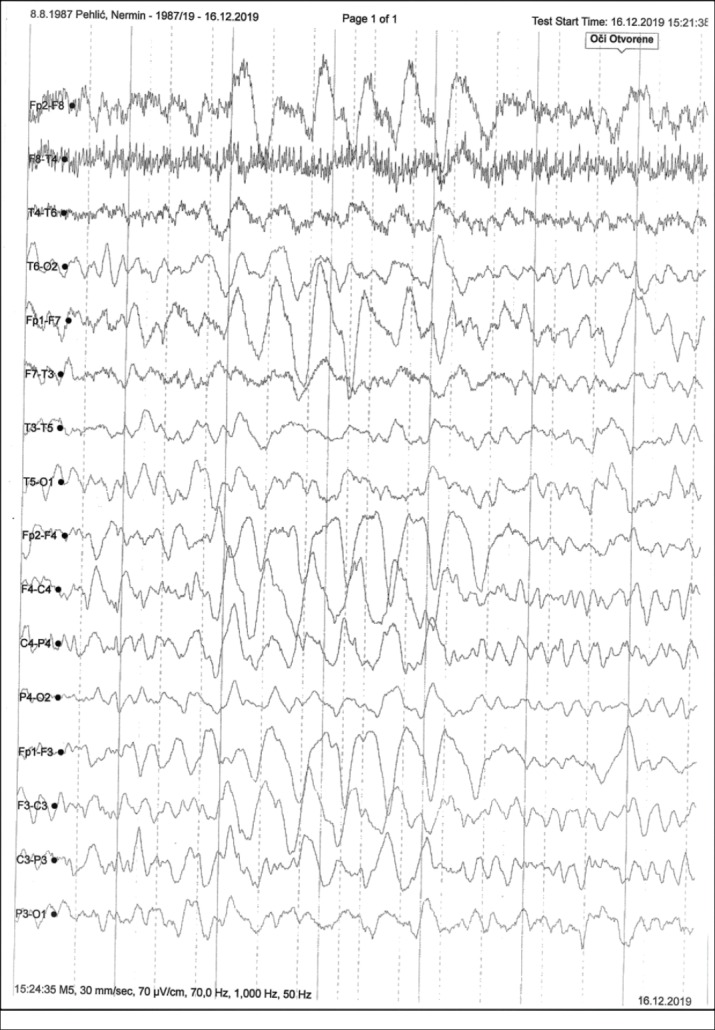
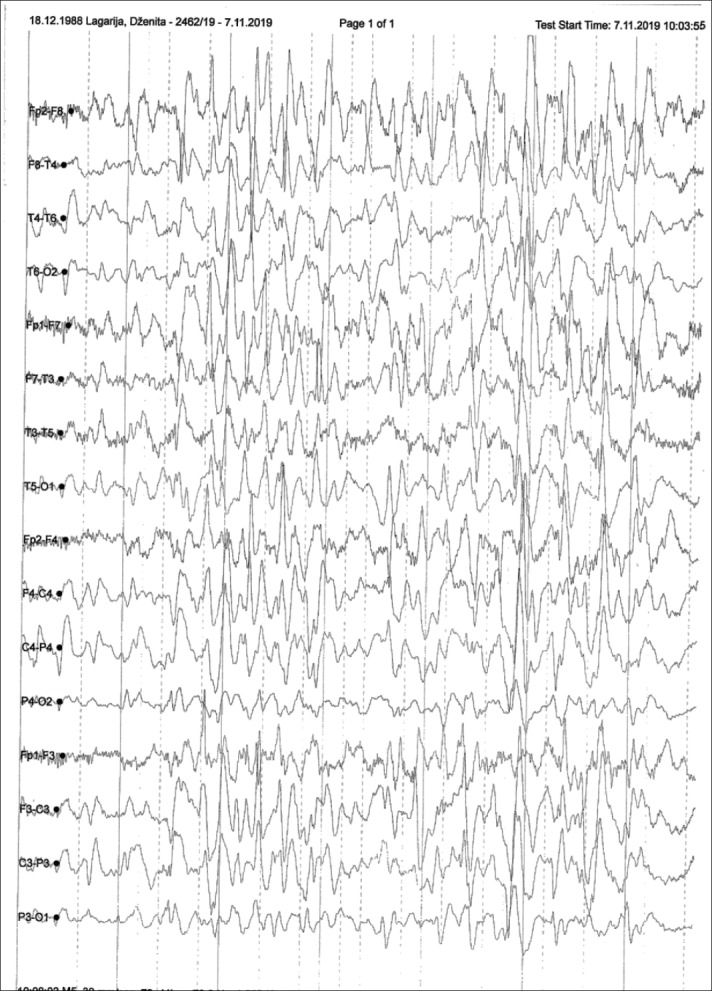
Younger age, as well as severe clinical status of a patient, which implies a disorder of consciousness and seizures on admission, are associated with irreversible consequences on a previously mentally healthy individual. Pathological changes (Delta and Theta waves, spike slow complex wave) on the EEG finding significantly predicted presence of sequelae. .
脑电图也可用于监测疾病急性期后患者的长期恢复情况。感染后神经认知功能受损,类似于脑损伤,可能对个体功能造成短暂但也可能持续较长时间的问题。一些研究表明,脑电图在后遗症监测中的重要性可能不显著,因为在严重形式的中枢神经系统感染中看到的脑电图广泛变化不一定意味着长期预后不良。
研究脑电图(EEG)对急性中枢神经系统(CNS)感染后神经和认知后遗症发生的预测潜力。
该研究纳入了萨拉热窝大学临床中心传染病诊所治疗的62例被诊断为急性中枢神经系统感染的患者。脑电图记录特征为:正常、轻度、中度和重度非特异性改变以及特异性改变。在出院后长达6个月的时间里,通过神经感染咨询科的神经科、精神科、儿科、耳鼻喉科、眼科和感染科检查相结合的方式评估后遗症(头痛、认知功能障碍、神经和神经生理障碍、听力学和行为障碍)。
急性中枢神经系统感染治疗后,25例(40.3%)患者无后遗症,37例(59.7%)有后遗症。疾病初始阶段的脑电图(Wald系数 = 12.8),其次是患者年龄(Wald = 6.4),对后遗症预测的影响最大(p = 0.0001)。脑电图中每增加一个经证实的病理改变程度,后遗症风险分别增加5度(OR = 5.3)。脑脊液(CSF)检查结果、脑膜症状和体征的变化与后遗症发生之间无统计学显著关联。
年龄较小以及患者严重的临床状态,即入院时意识障碍和癫痫发作,与之前精神健康个体的不可逆后果相关。脑电图检查中的病理改变(δ波和θ波、棘慢复合波)显著预测了后遗症的存在。