Gerislioglu Burak, Ahmadivand Arash
Department of Physics & Astronomy, Rice University, 6100 Main St, Houston, Texas 77005, USA.
Department of Electrical & Computer Engineering, Rice University, 6100 Main St, Houston, Texas 77005, USA.
Research (Wash D C). 2020 Jan 30;2020:9468692. doi: 10.34133/2020/9468692. eCollection 2020.
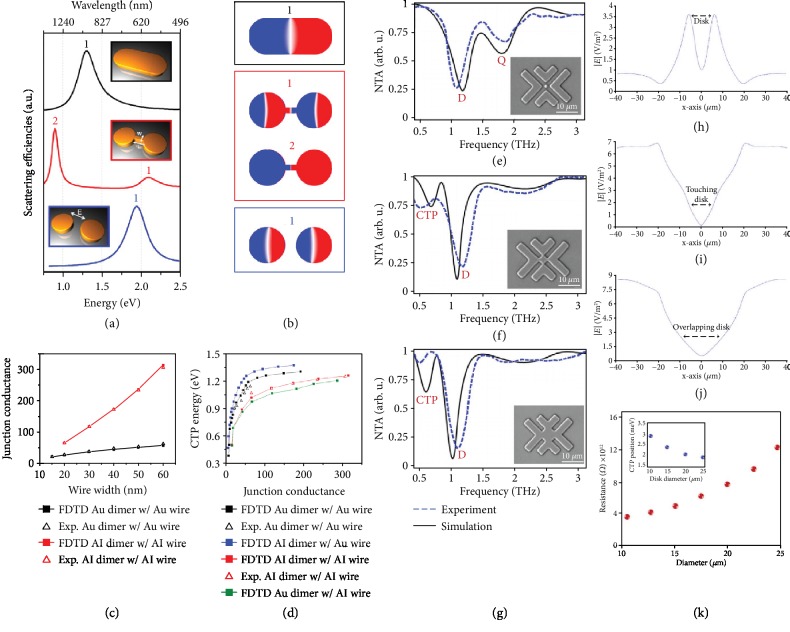
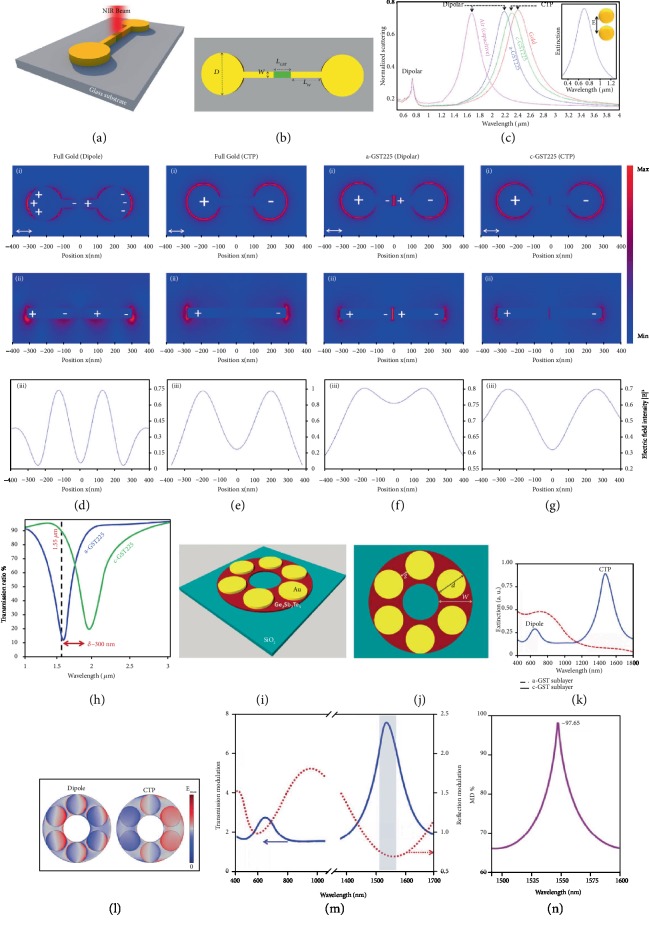
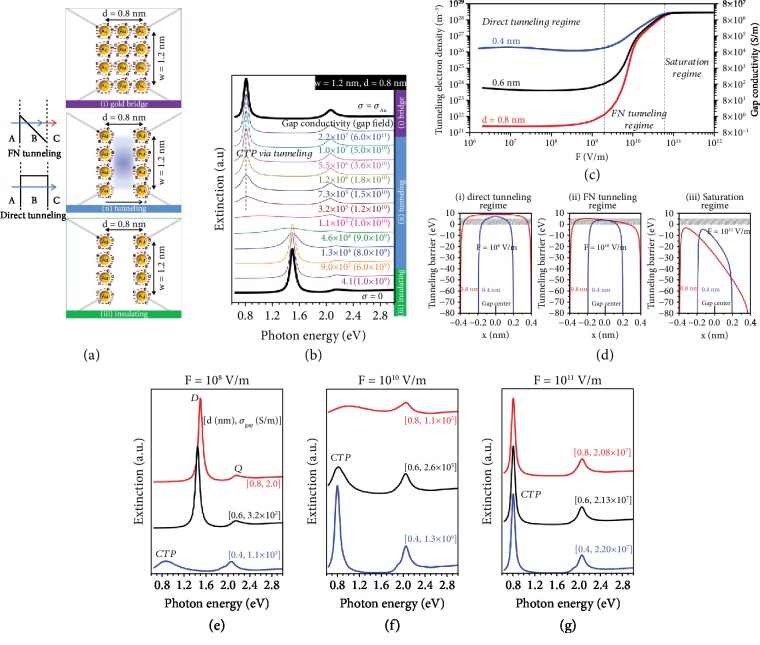
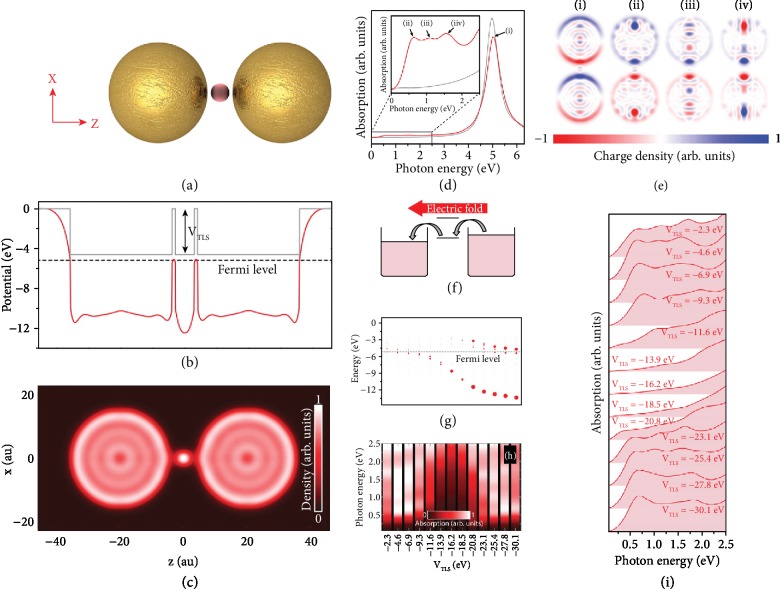
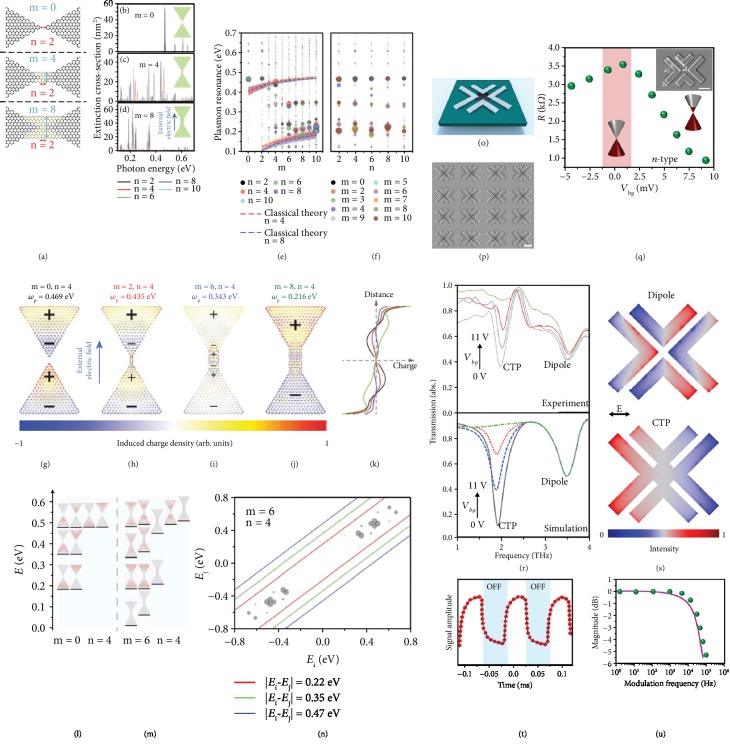
Reducing the capacitive opening between subwavelength metallic objects down to atomic scales or bridging the gap by a conductive path reveals new plasmonic spectral features, known as charge transfer plasmon (CTP). We review the origin, properties, and trending applications of this modes and show how they can be well-understood by classical electrodynamics and quantum mechanics principles. Particularly important is the excitation mechanisms and practical approaches of such a unique resonance in tailoring high-response and efficient extreme-subwavelength hybrid nanophotonic devices. While the quantum tunneling-induced CTP mode possesses the ability to turn on and off the charge transition by varying the intensity of an external light source, the excited CTP in conductively bridged plasmonic systems suffers from the lack of tunability. To address this, the integration of bulk plasmonic nanostructures with optothermally and optoelectronically controllable components has been introduced as promising techniques for developing multifunctional and high-performance CTP-resonant tools. Ultimate tunable plasmonic devices such as metamodulators and metafilters are thus in prospect.
将亚波长金属物体之间的电容性开口缩小到原子尺度,或通过导电路径弥合间隙,会揭示出新的等离子体光谱特征,即电荷转移等离子体(CTP)。我们回顾了这种模式的起源、特性和发展趋势应用,并展示了如何通过经典电动力学和量子力学原理对其进行很好的理解。特别重要的是这种独特共振在定制高响应和高效极亚波长混合纳米光子器件中的激发机制和实际方法。虽然量子隧穿诱导的CTP模式具有通过改变外部光源强度来开启和关闭电荷转移的能力,但在导电桥接等离子体系统中激发的CTP缺乏可调谐性。为了解决这个问题,将体等离子体纳米结构与光热和光电可控组件集成已被引入,作为开发多功能和高性能CTP共振工具的有前途的技术。因此,诸如元调制器和元滤波器等终极可调谐等离子体器件有望实现。