Gut Microbes and Health Institute Strategic Programme, Quadram Institute Bioscience, Norwich, United Kingdom
Analytical Sciences Unit, Quadram Institute Bioscience, Norwich, United Kingdom.
Appl Environ Microbiol. 2020 Apr 1;86(8). doi: 10.1128/AEM.02808-19.
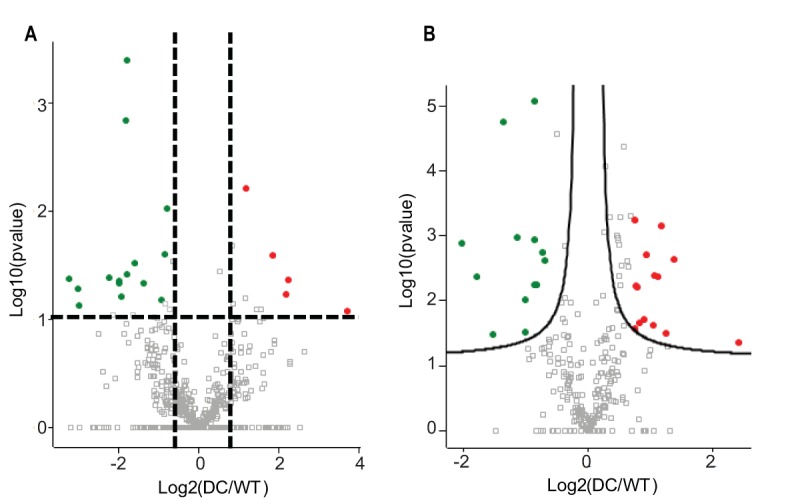
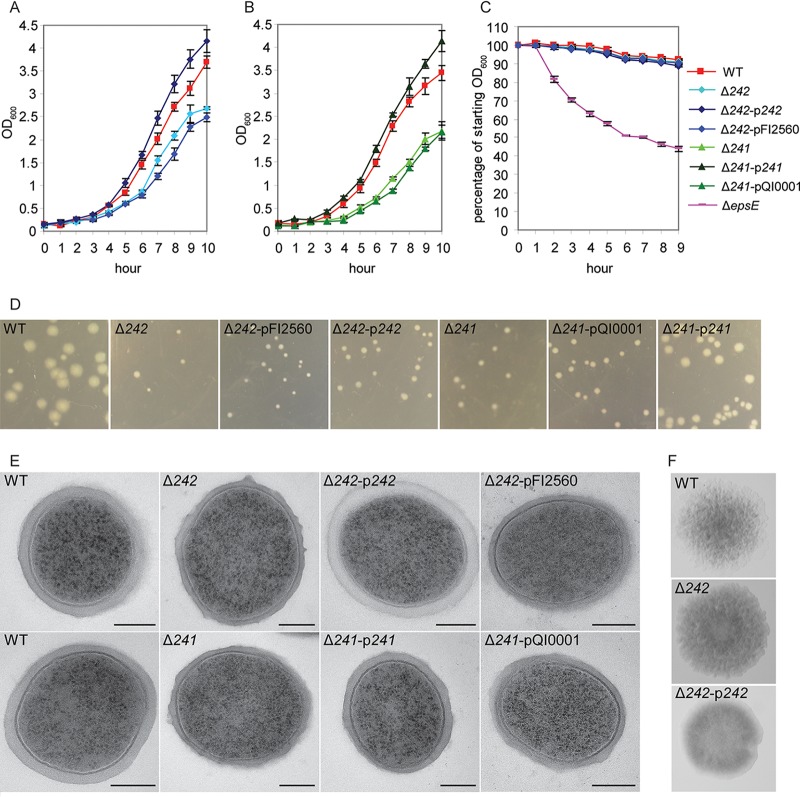
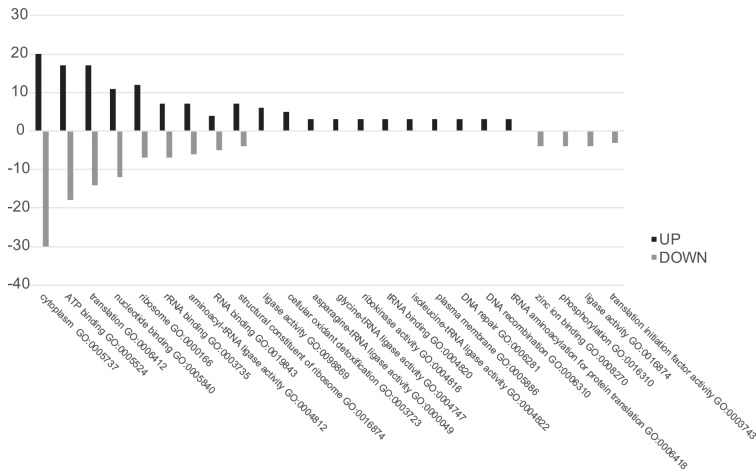
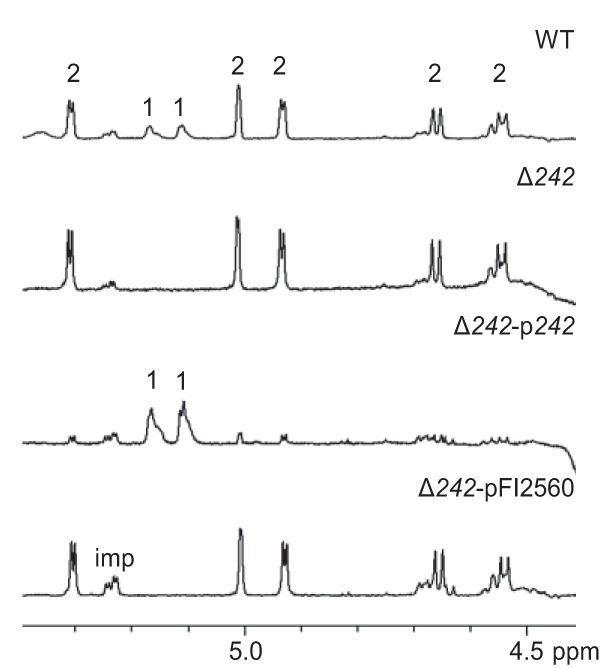
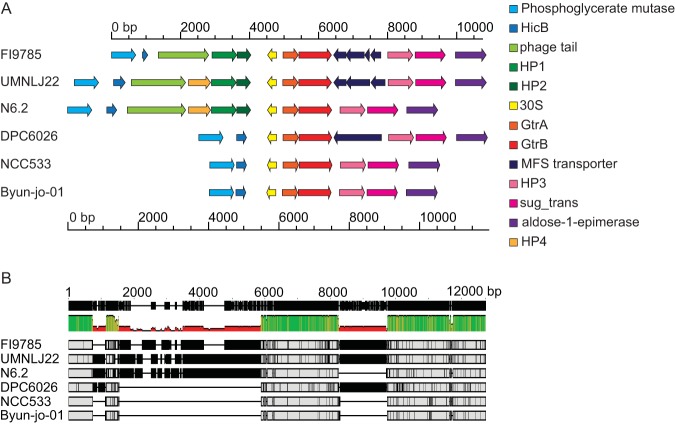
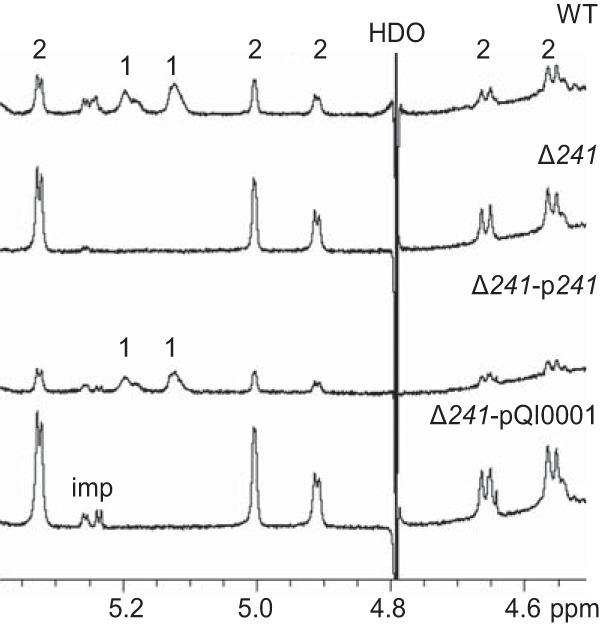
FI9785 makes two capsular exopolysaccharides-a heteropolysaccharide (EPS2) encoded by the operon and a branched glucan homopolysaccharide (EPS1). The homopolysaccharide is synthesized in the absence of sucrose, and there are no typical glucansucrase genes in the genome. Quantitative proteomics was used to compare the wild type to a mutant where EPS production was reduced to attempt to identify proteins associated with EPS1 biosynthesis. A putative bactoprenol glycosyltransferase, FI9785_242 (242), was less abundant in the Δ mutant strain than in the wild type. Nuclear magnetic resonance (NMR) analysis of isolated EPS showed that deletion of the gene () prevented the accumulation of EPS1, without affecting EPS2 synthesis, while plasmid complementation restored EPS1 production. The deletion of also produced a slow-growth phenotype, which could be rescued by complementation. 242 shows amino acid homology to bactoprenol glycosyltransferase GtrB, involved in O-antigen glycosylation, while analysis of the neighboring gene suggested that it encodes a putative flippase with homology to the GtrA superfamily. Deletion of also prevented production of EPS1 and again caused a slow-growth phenotype, while plasmid complementation reinstated EPS1 synthesis. Both genes are highly conserved in strains isolated from different environments. These results suggest that there may be a novel mechanism for homopolysaccharide synthesis in the Gram-positive Exopolysaccharides are key components of the surfaces of their bacterial producers, contributing to protection, microbial and host interactions, and even virulence. They also have significant applications in industry, and understanding their biosynthetic mechanisms may allow improved production of novel and valuable polymers. Four categories of bacterial exopolysaccharide biosynthesis have been described in detail, but novel enzymes and glycosylation mechanisms are still being described. Our findings that a putative bactoprenol glycosyltransferase and flippase are essential to homopolysaccharide biosynthesis in FI9785 indicate that there may be an alternative mechanism of glucan biosynthesis to the glucansucrase pathway. Disturbance of this synthesis leads to a slow-growth phenotype. Further elucidation of this biosynthesis may give insight into exopolysaccharide production and its impact on the bacterial cell.
FI9785 产生两种荚膜胞外多糖——由 operon 编码的杂多糖 (EPS2) 和支链葡聚糖同多糖 (EPS1)。该同多糖在没有蔗糖的情况下合成,且基因组中没有典型的葡聚糖蔗糖酶基因。定量蛋白质组学用于比较野生型和 EPS 产量降低的突变体,试图鉴定与 EPS1 生物合成相关的蛋白质。一种假定的类脂载体糖基转移酶,FI9785_242(242),在突变体菌株中的丰度低于野生型。对分离的 EPS 的核磁共振 (NMR) 分析表明,基因 () 的缺失阻止了 EPS1 的积累,而不影响 EPS2 的合成,而质粒互补则恢复了 EPS1 的产生。基因的缺失也产生了缓慢生长的表型,这可以通过互补来挽救。242 与涉及 O-抗原糖基化的类脂载体糖基转移酶 GtrB 具有氨基酸同源性,而对邻近基因的分析表明,它编码一种与 GtrA 超家族同源的假定翻转酶。基因的缺失也阻止了 EPS1 的产生,并再次导致缓慢生长的表型,而质粒互补则恢复了 EPS1 的合成。这两个基因在从不同环境中分离的菌株中高度保守。这些结果表明,革兰氏阳性菌可能存在一种新的同多糖合成机制。胞外多糖是其细菌生产者表面的关键成分,有助于保护、微生物和宿主相互作用,甚至毒力。它们在工业中也有重要的应用,了解其生物合成机制可能允许生产新型有价值的聚合物。已经详细描述了四种细菌胞外多糖生物合成的类别,但仍在描述新的酶和糖基化机制。我们的发现表明,一种假定的类脂载体糖基转移酶和翻转酶是 FI9785 中同多糖生物合成所必需的,这表明在葡聚糖生物合成途径之外可能存在一种替代的葡聚糖合成机制。这种合成的干扰导致生长缓慢的表型。进一步阐明这种生物合成可能会深入了解胞外多糖的产生及其对细菌细胞的影响。